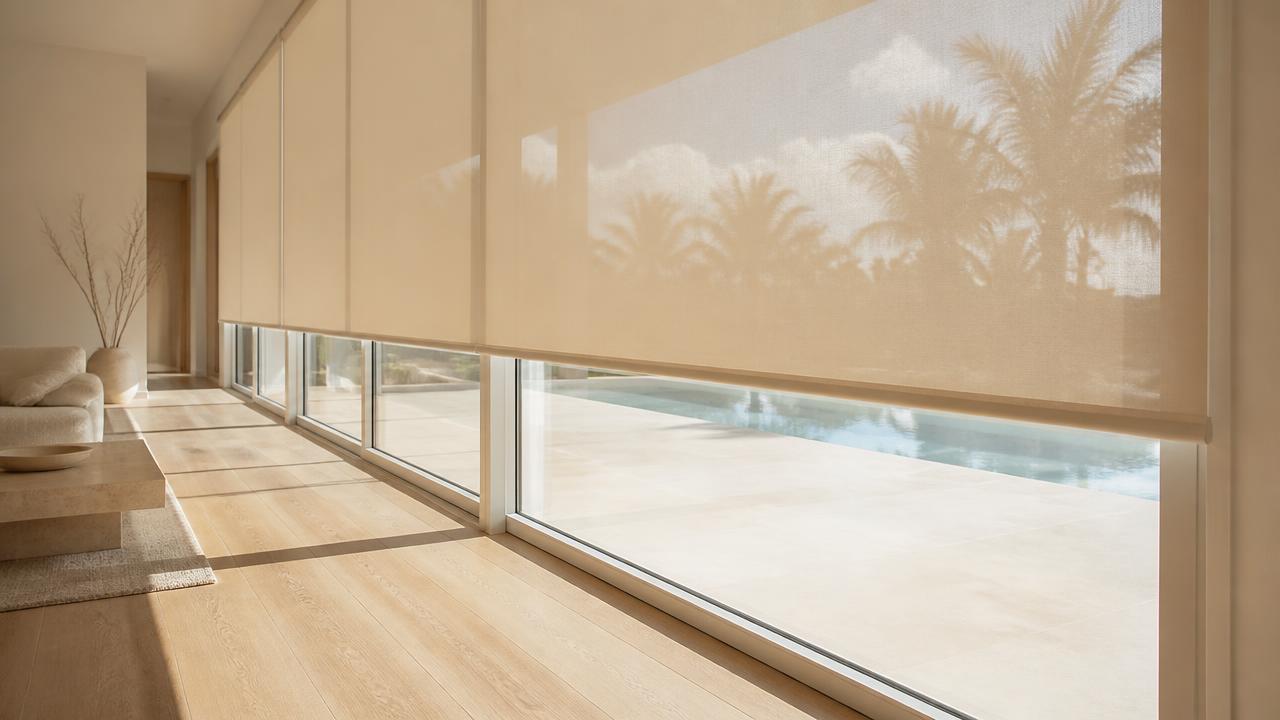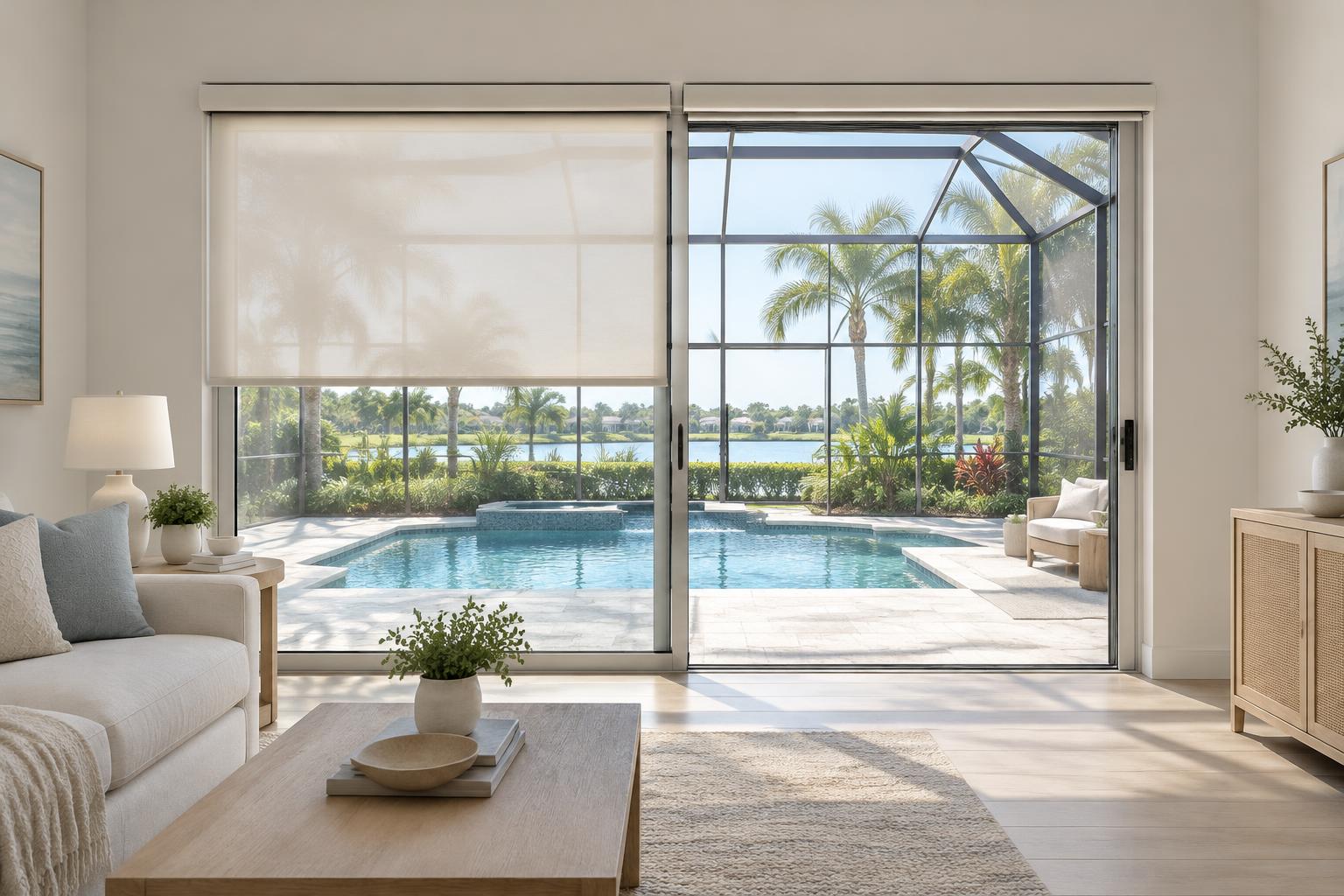
The best shade for a sliding glass door is the one that matches how you use the door. Most Florida homes do well with a roller shade mounted above the door frame, so the fabric clears the handle and rolls up out of the walkway. If only one panel slides, two shades often work better than one: the shade over the fixed glass can stay down while the one over the opening goes up.
A sliding door is a window you walk through
A window just sits there. A sliding door gets used dozens of times a day: coffee on the lanai at 7, the dog out at noon, the grill at 6, a swim before dinner.
That changes the questions. With a window you ask how much light you want. With a door you also ask: where is the shade when someone walks through, what does it do to the handle, and how fast can you get it out of the way?
Most trouble with sliding door shades starts when the door is treated as a big window and nobody plans for the people walking through it.
How big is a typical sliding glass door?
Two-panel sliding doors usually come in widths of 60, 72 or 96 inches. Three-panel doors are often 108 or 144 inches wide, and four-panel doors 144 or 192 inches. Common heights are 80, 82 or 96 inches.
Those numbers matter because a single shade has limits. Very wide openings are often covered with two or three shades side by side, which leaves a small gap between them. The right split depends on which panels move. (Size ranges from Angi; your door is measured on site, not taken from a chart.)
Which shades work on sliding glass doors?
Roller shades
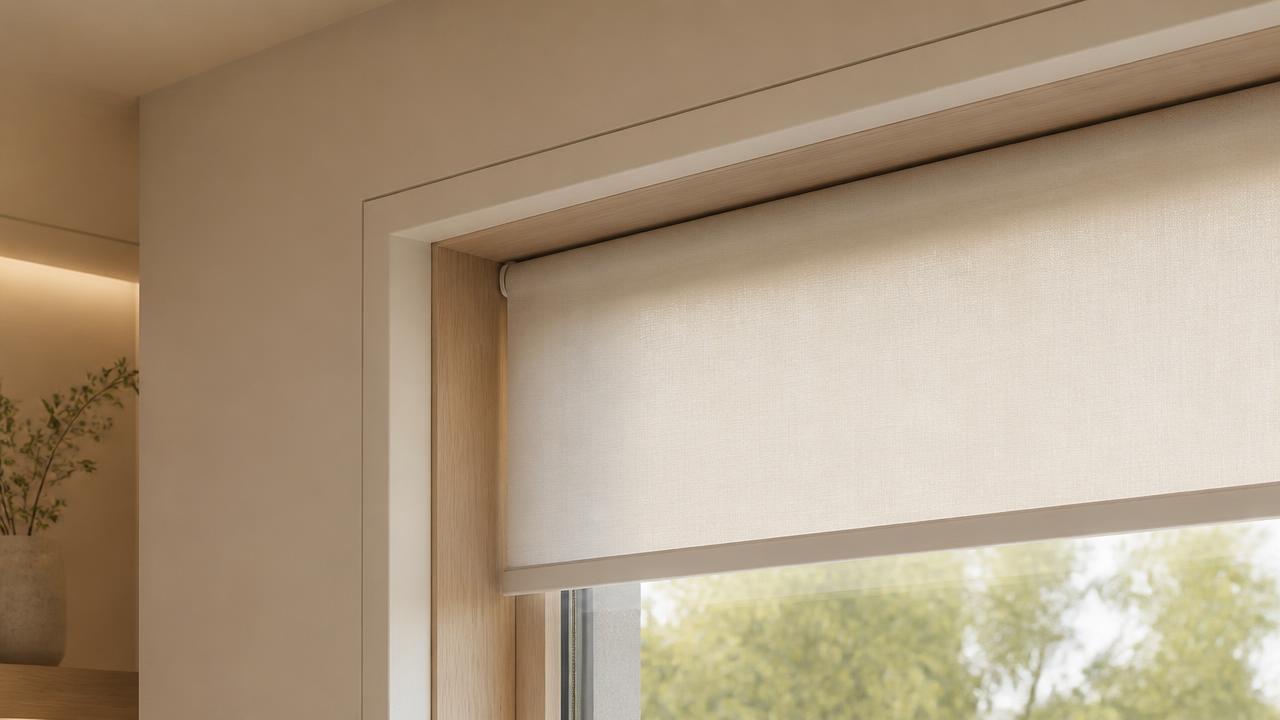
One clean panel of fabric that rolls up into a slim tube or cassette above the door and stays out of sight until you need it. It is what most modern Florida homes end up with, mainly because it gets along with everything: a motor, a screen fabric, a blackout fabric.
Vertical blinds
The classic, and quite possibly what your door has worn since the house was built. They stack to one side, which genuinely suits a door. They also clack in every breeze from the open door, and sooner or later someone walks through them instead of around them.
Sliding panels
Wide fabric panels on a track that glide sideways, the same way the door does. Calm, architectural and good on very wide openings. You move them by hand, which is no hardship until you are already on the sofa and the panels are not.
Vertical cellular shades
Honeycomb fabric that opens side to side. The cells hold a layer of air between the room and the hot glass, and the look is soft and quiet. These are also usually moved by hand.
If you want the whole door handled with one touch, from the sofa or on a schedule, a motorized roller shade is the usual route. The rest of this guide is about that.
Where should the shade stop when it is up?
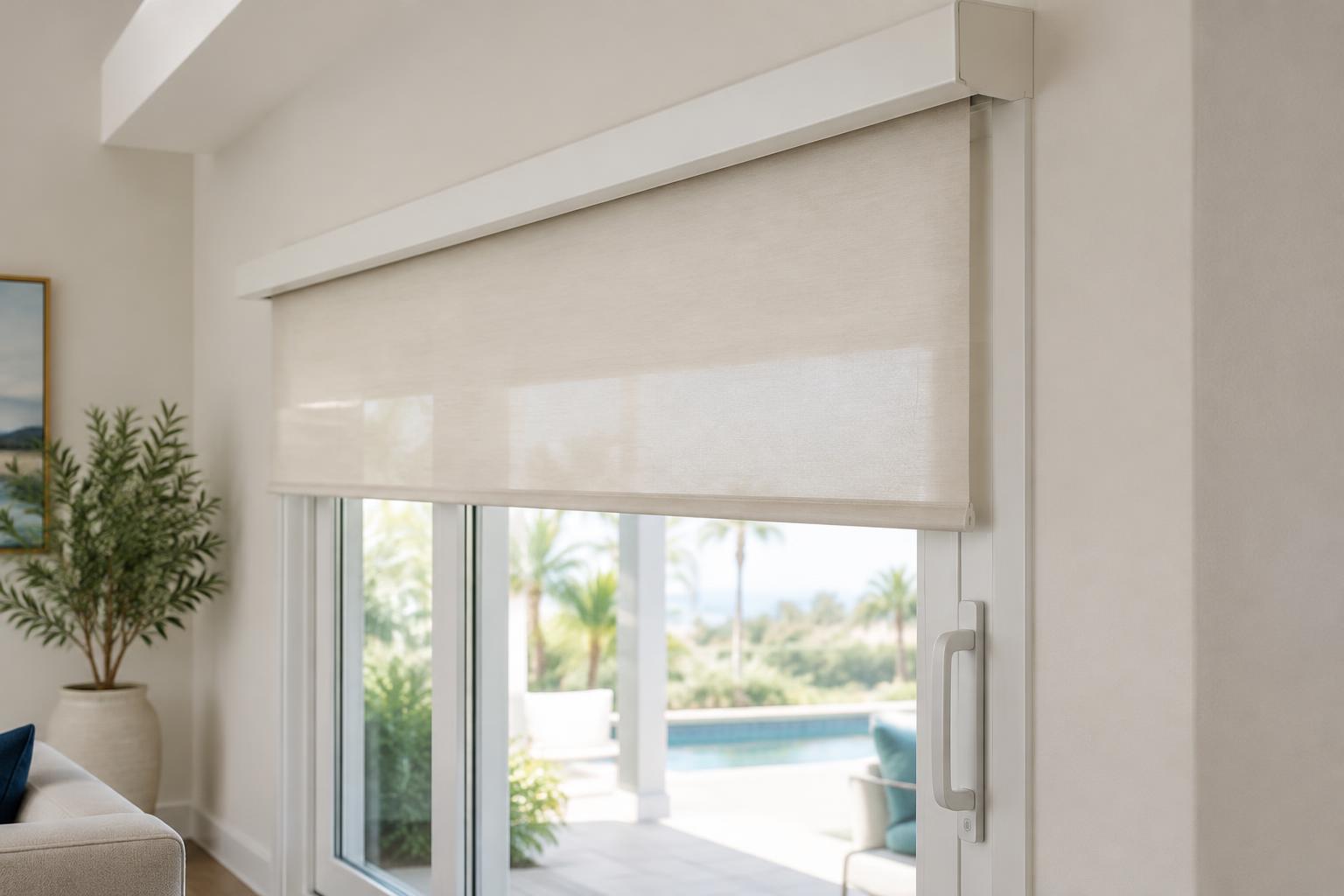
It is an easy question to skip at the measure and a hard one to ignore afterwards, because you walk under the answer every day.
When a roller shade is fully raised, the rolled fabric sits above the door. If the shade is mounted inside the door frame, that roll can hang low enough to brush tall heads or block the top of the glass. Many sliding doors also have frames that are too shallow for an inside mount once you account for the handle.
Mounting the shade on the wall above the frame solves most of this. The roll sits above the opening, the fabric drops in front of the frame, and the handle has room to move. Ask your installer to show you where the bottom bar will sit when the shade is up and how far the fabric will be from the handle when it is down.
One wide shade or two?
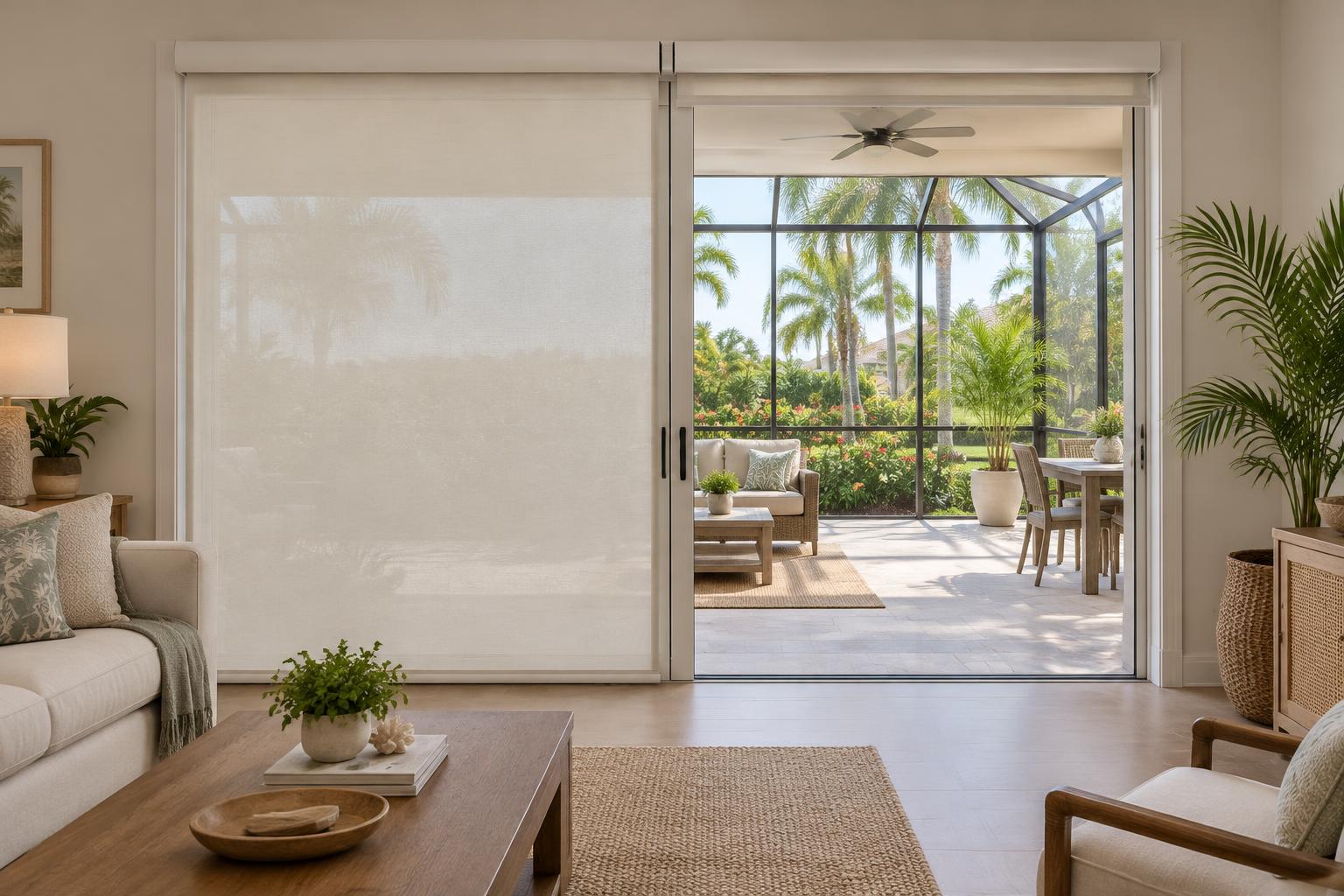
Look at your door. On most two-panel doors, one panel slides and the other is fixed.
One shade across the whole door is simple: one fabric, one motor, one button. The catch is that you can only use the door when the whole shade is up.
Two shades, one over each panel, follow the way the door works. The shade over the fixed glass can stay down all afternoon to block the sun, while the shade over the sliding panel goes up when someone heads outside. On a west-facing door this is often the more comfortable setup. It means two motors and a larger investment, and there is a narrow gap where the two shades meet.
On three- and four-panel doors the same logic applies: match the shades to the panels that move.
Is a motorized shade a good idea on a door?
Often yes, because a door is the one opening you adjust most. But a moving shade over a walkway deserves a little planning.
- Keep the control by the door. A wall switch or remote that lives next to the handle gets used. One in a kitchen drawer does not.
- Use a middle stop. Many motor systems let you save a favorite position, for example just above head height, so the shade blocks the low sun but people can still walk through.
- Schedule around how you live. If the patio is empty after dark, the shade can close at sunset. If the kids or grandkids run in and out until 9, set it later.
- Watch the doorway when it moves. Do not lower a shade while a person or pet is standing in the opening.
The pool cage problem
Many Florida homes have a screened pool enclosure right outside the sliding door. Put a solar screen shade on the inside and you have two mesh layers lined up, one on each side of the glass.
When two fine screens overlap, they can create a wavy, shimmering pattern called a moire effect. Shade manufacturers mention this in their own fabric guides and suggest that a twill weave screen fabric tends to show it less than a basketweave. Before you commit to a fabric, hold the sample against the glass with the pool cage behind it and look from where you usually sit.
View by day, privacy at night
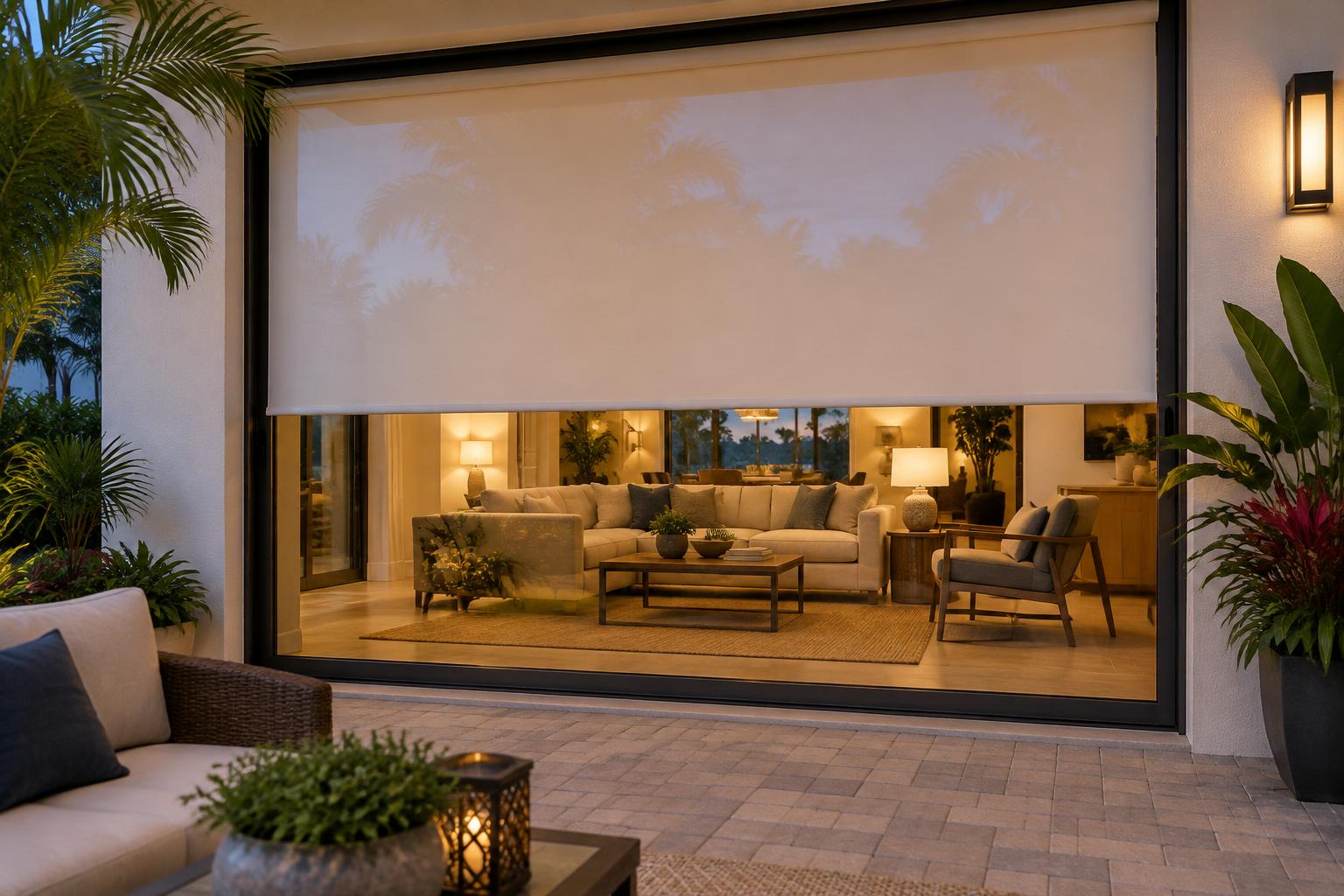
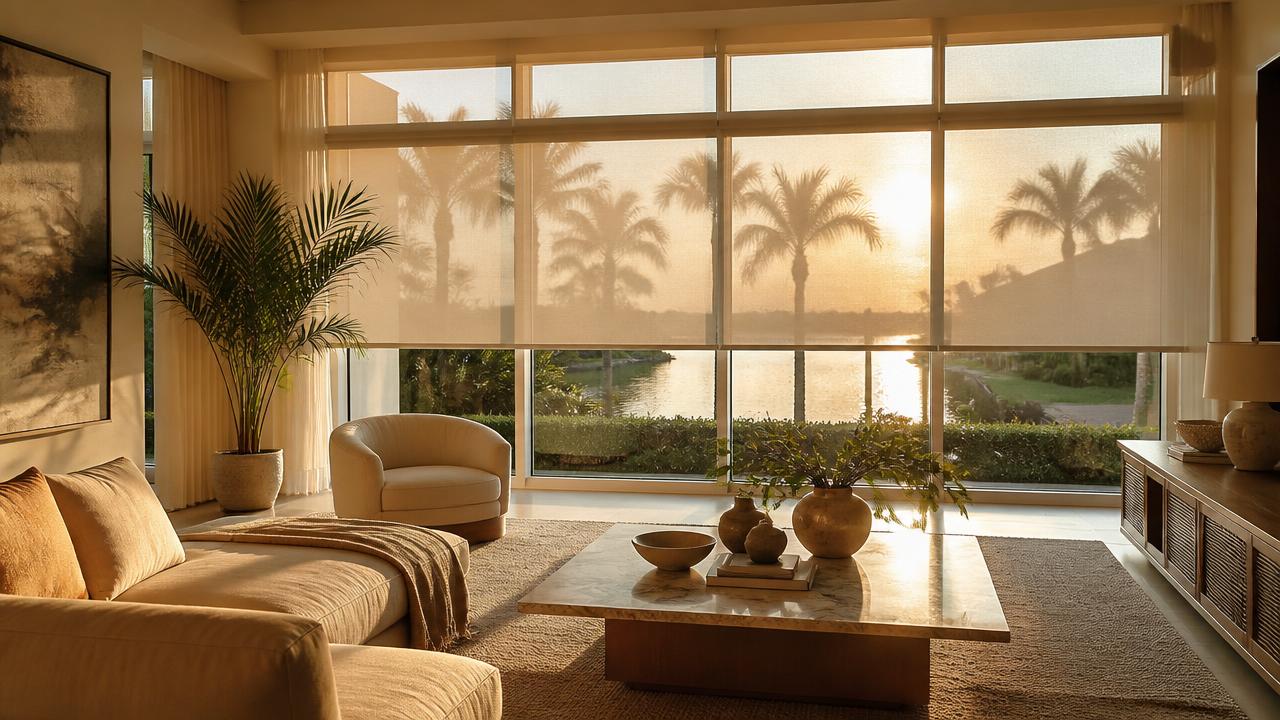
Sliding doors usually face the best view in the house: the pool, the water, the garden. A light screen fabric keeps that view during the day while cutting glare.
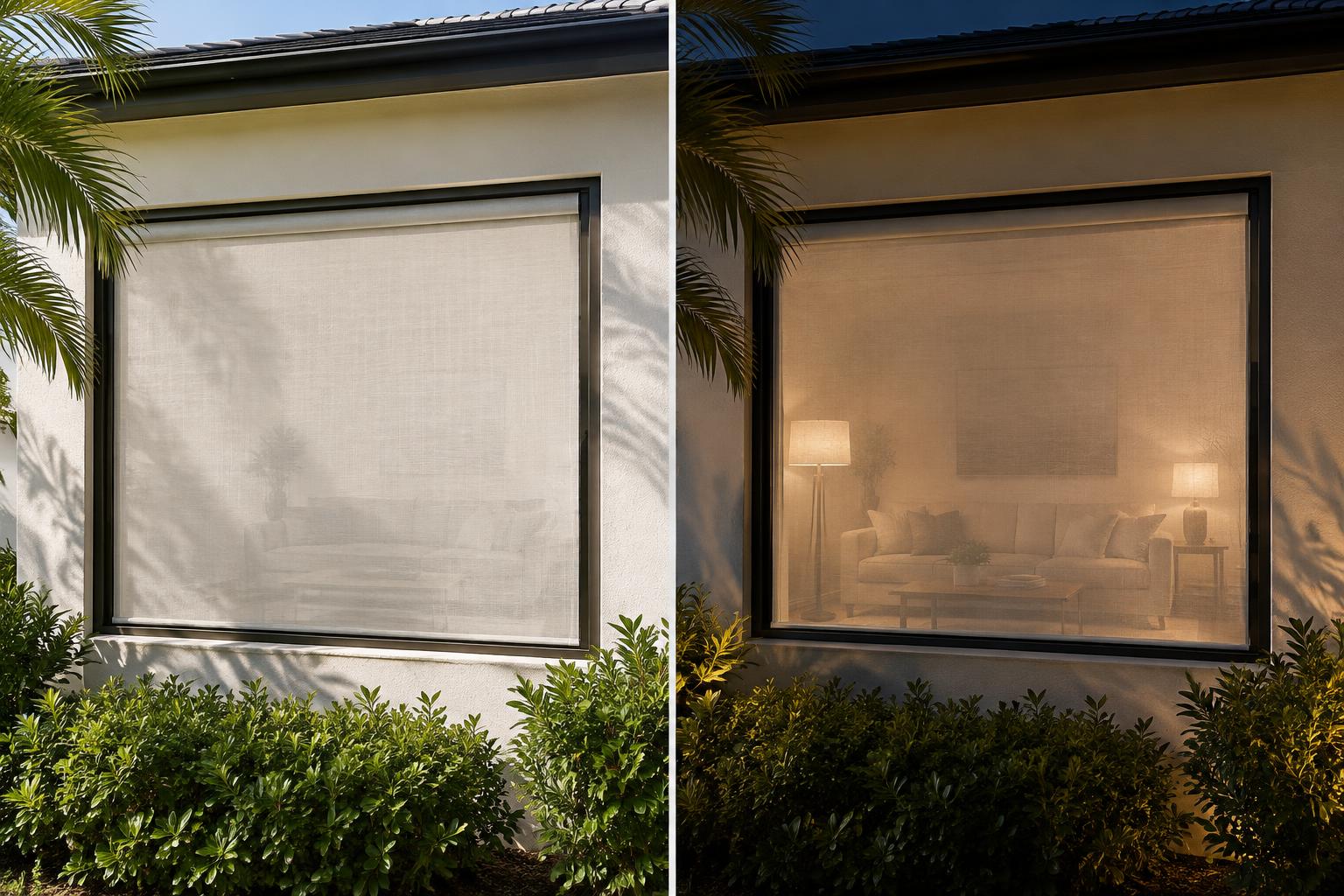
After dark it works the other way round. With lamps on inside, a screen fabric lets people outside see in. If the door faces a neighbor, a canal with boat traffic or a golf course (the tee box sees more than you would think), ask about a second, opaque layer for evenings or a fabric that stays private with the lights on. Our guide to shade privacy at night explains the simple evening test.
What about heat on a west-facing door?
A large west-facing door can turn the room behind it into the warmest spot in the house from mid-afternoon. A shade inside the glass reduces the direct sun on your floor and furniture, and fabric and color make more difference than a sample book would suggest. We cover this in best shades for west-facing windows and solar shades vs blackout shades.
A five-minute check before your visit
Stand at your sliding door and note:
- Which panels slide and which are fixed.
- How far the handle sticks out from the glass.
- What is above the door: wall, crown molding, a beam or an AC vent.
- What is outside: a pool cage, a neighbor, a street.
- When the door is used most, and by whom, including pets.
Bring those notes to the measure. The width takes a tape measure and a minute. Everything on this list takes you.
FAQ
- What is the best type of shade for a sliding glass door?
- For most Florida homes, a roller shade mounted above the door frame. It rolls up out of the walkway, clears the handle and works with motors. Vertical blinds and sliding panels are alternatives if you prefer a side-to-side opening.
- Should I use one shade or two on a sliding door?
- If one panel is fixed and one slides, two shades often work better. The shade over the fixed glass can stay down for sun control while the one over the moving panel goes up for access. One shade is simpler and leaves no gap in the middle.
- Can I mount a shade inside the sliding door frame?
- Sometimes, but many sliding door frames are too shallow once the handle is accounted for, and a raised shade inside the frame can hang into the walkway. Mounting above the frame is the more common solution.
- Are motorized shades practical on a door people use all day?
- Yes, with a little planning. Keep the control next to the door, save a favorite stop above head height, schedule closing for when the patio is not in use, and never lower the shade while someone is standing in the doorway.
- Why do I see a wavy pattern through my screen shade?
- That is likely a moire effect from two mesh layers, such as a screen shade inside and a pool enclosure screen outside. Shade manufacturers suggest a twill weave fabric to reduce it. Test a sample against your glass before ordering.
- Will a screen shade give me privacy at night?
- Usually not when your lights are on. Screen fabrics are made to keep the view by day. For evening privacy, ask about an opaque fabric or a second layer.
- How wide can one shade be?
- It depends on the fabric, the motor and the manufacturer. Very wide doors, such as three- or four-panel openings, are often covered with two or more shades side by side.