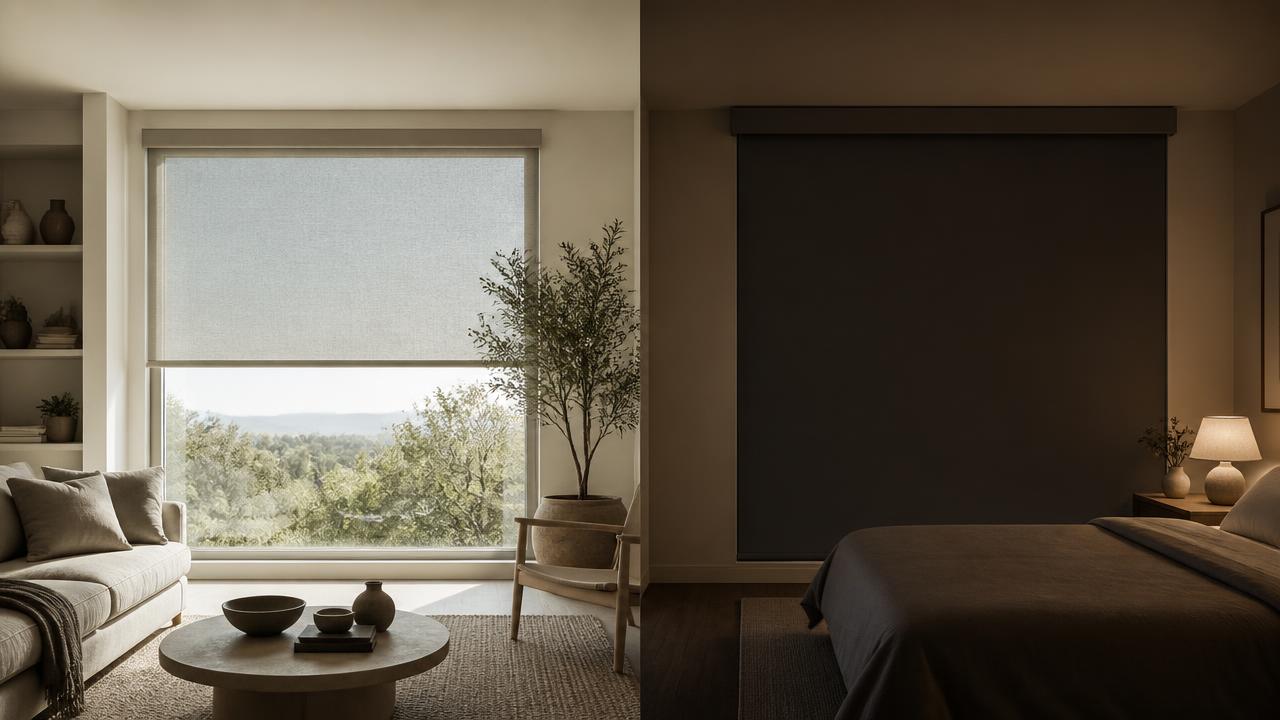
Solar screen and blackout shades solve different problems.
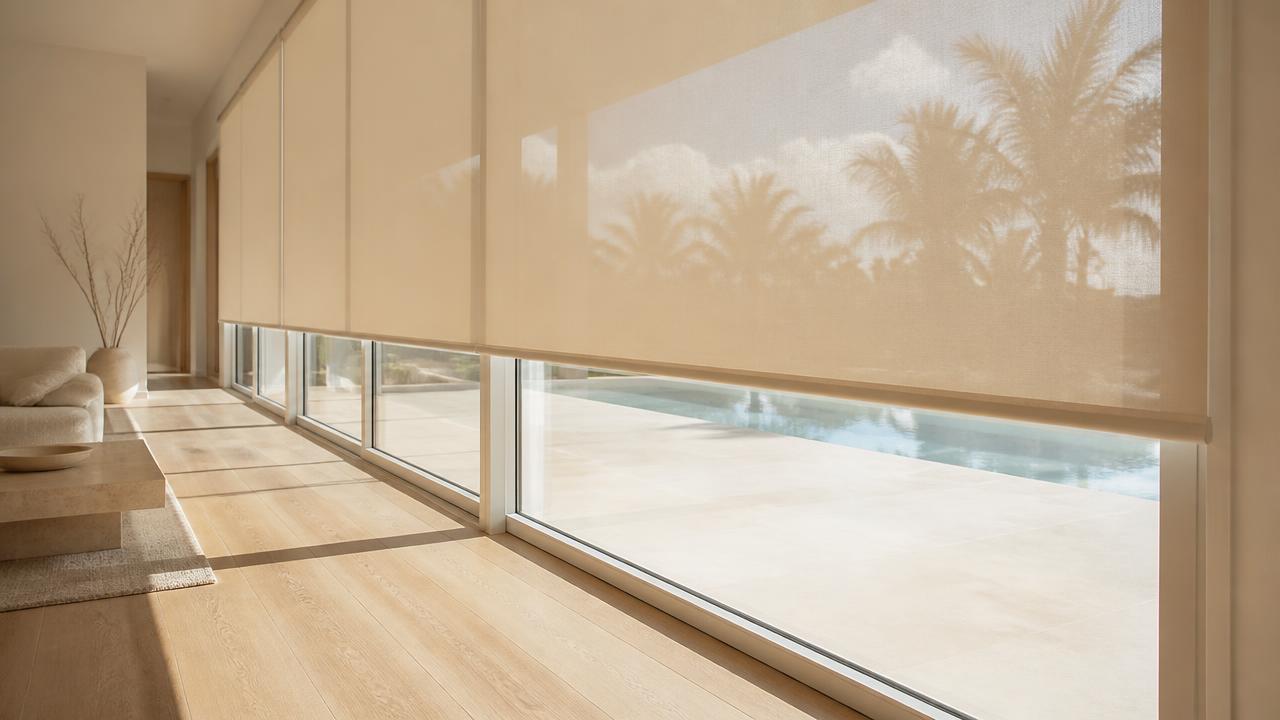
A solar screen is designed to filter light, control glare and preserve some view. A blackout shade is designed to block light and prioritize darkness.
Most homes do not need one fabric everywhere.
The right question is not:
Which shade is better?
It is:
What does this room need the shade to do?
Room by room
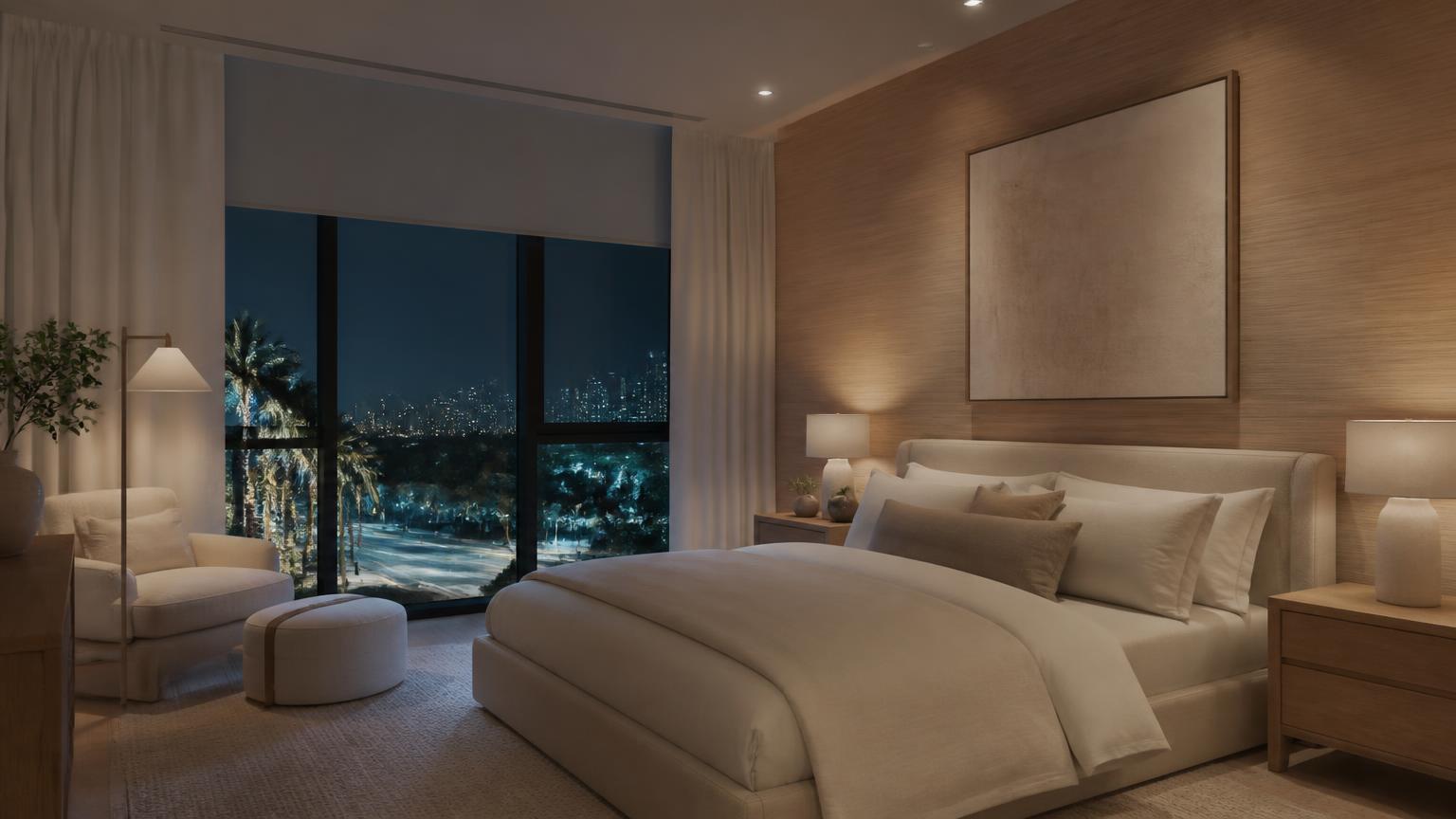
Bedrooms
Blackout is usually the starting point when darkness is important.
The installation configuration matters because clearance around the fabric can allow light through.
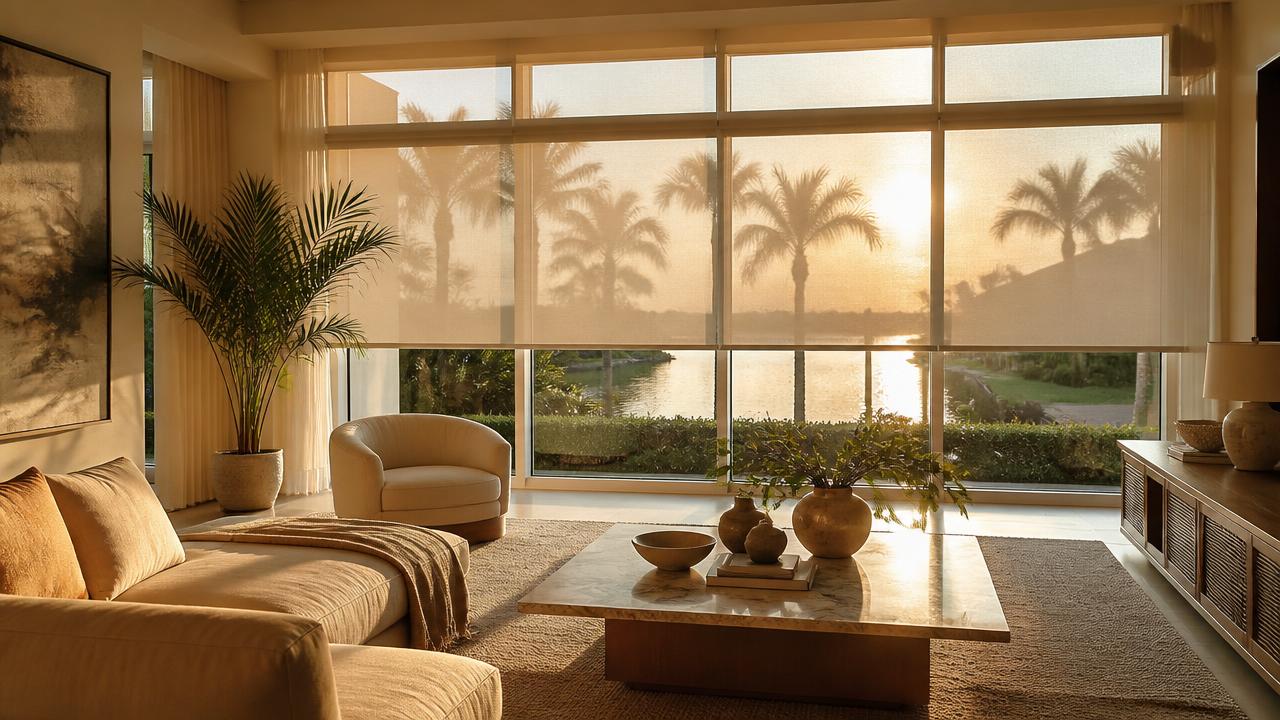
Living rooms
Solar screen is often a strong choice for:
- reduced glare;
- better daytime comfort;
- some outside view;
- strong daylight control.
Kitchens
The priority may be daylight, glare control and privacy rather than total darkness.
Home offices
Screen glare is often the main problem. A denser solar screen can help when a display is positioned near the window.
Media rooms
Darkness becomes more important. Blackout can be appropriate, with installation designed around the desired level of light control.
Bathrooms
Privacy should be evaluated separately. Solar screen should not be treated as a universal bathroom privacy solution.
Where zebra shades fit
Zebra shades alternate sheer and opaque horizontal bands. Changing the alignment changes the amount of filtered light and privacy.
They can be useful when a room needs flexibility rather than maximum darkness.
They should not be positioned as a substitute for dedicated blackout when true darkness is the requirement.
The edges problem
Light can enter around:
- sides;
- top;
- bottom;
- mounting gaps.
That is why these decisions matter:
- inside vs outside mount;
- cassette vs open roll;
- side channels;
- window geometry;
- fabric.
For a bedroom where darkness is critical, specifying "blackout fabric" without discussing installation configuration is incomplete.
Solar vs blackout
| Solar screen | Blackout | |
|---|---|---|
| Daylight | Filters | Blocks strongly |
| Outside view | Preserved to varying degree | Generally lost when closed |
| Glare control | Strong depending on fabric | Very strong |
| Daytime privacy | Often useful | Strong |
| Night privacy | Not reliable by itself | Stronger when properly configured |
| Bedroom | Sometimes | Often preferred |
| Living room | Often | If darkness is desired |
| Media room | Sometimes | Often preferred |
| View preservation | Main advantage | Main trade-off |
For west elevations specifically, see the best shades for west-facing windows in Boca Raton, and for the heat side of the question, do shades actually reduce heat in a Florida home.
FAQ
- Can blackout shades reduce heat?
- They can reduce solar radiation reaching the room, but actual thermal performance depends on fabric, glazing, coverage and installation.
- Do solar shades provide privacy?
- They can provide useful daytime privacy depending on fabric and lighting. At night, interior lighting can reverse the effect.
- Is a dual system worth it?
- It can be useful where the homeowner wants daytime view and nighttime darkness. Whether it is worth the added complexity depends on the room.
- Are zebra shades blackout?
- Not inherently. They provide adjustable light and privacy control.
- Are these shades custom made?
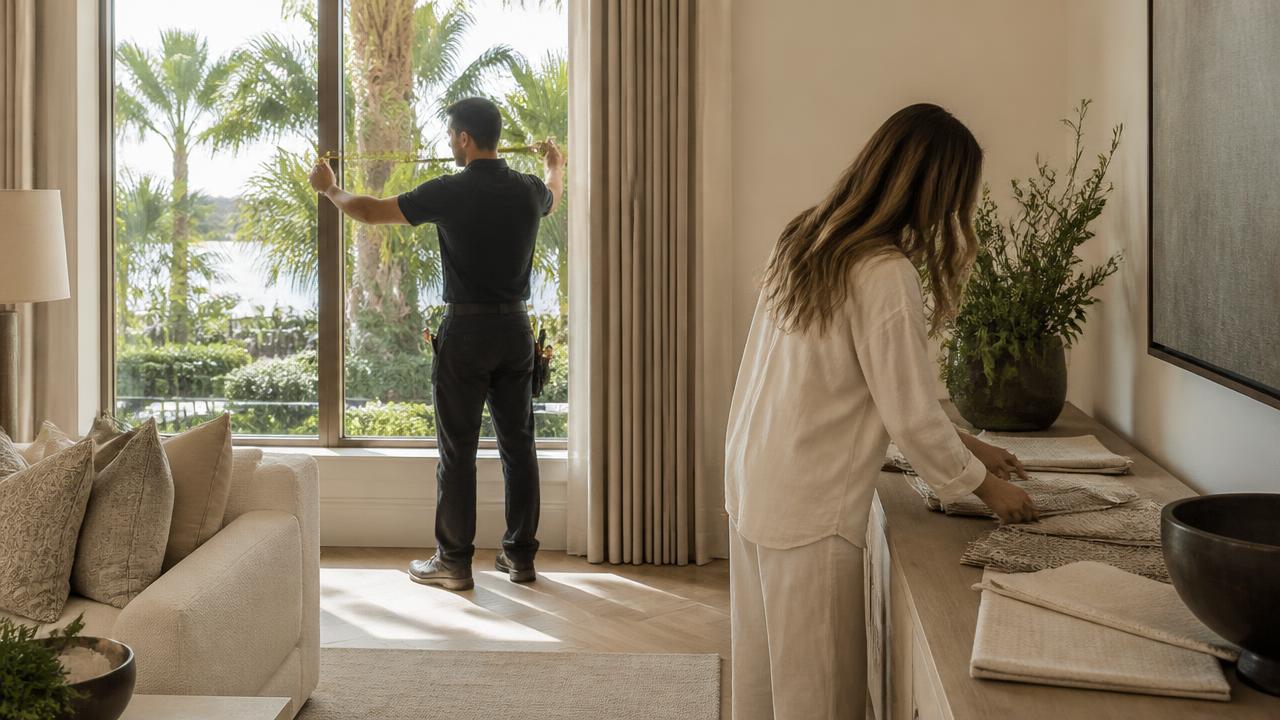
- Yes. Every shade is cut to the exact measurements taken at your home, not a stock size. Production starts only after the order is confirmed. This is also why the measurement itself is treated as the most important step in the process.