Privacy
The view by day. Invisible after dark.
Solar shades give you privacy during daylight and a clear view out. After dark, with your lights on, that reverses - people outside can see in more easily than you can see out. Day and night systems solve this by pairing a daytime filtering layer with a private layer for the evening, on one bracket.
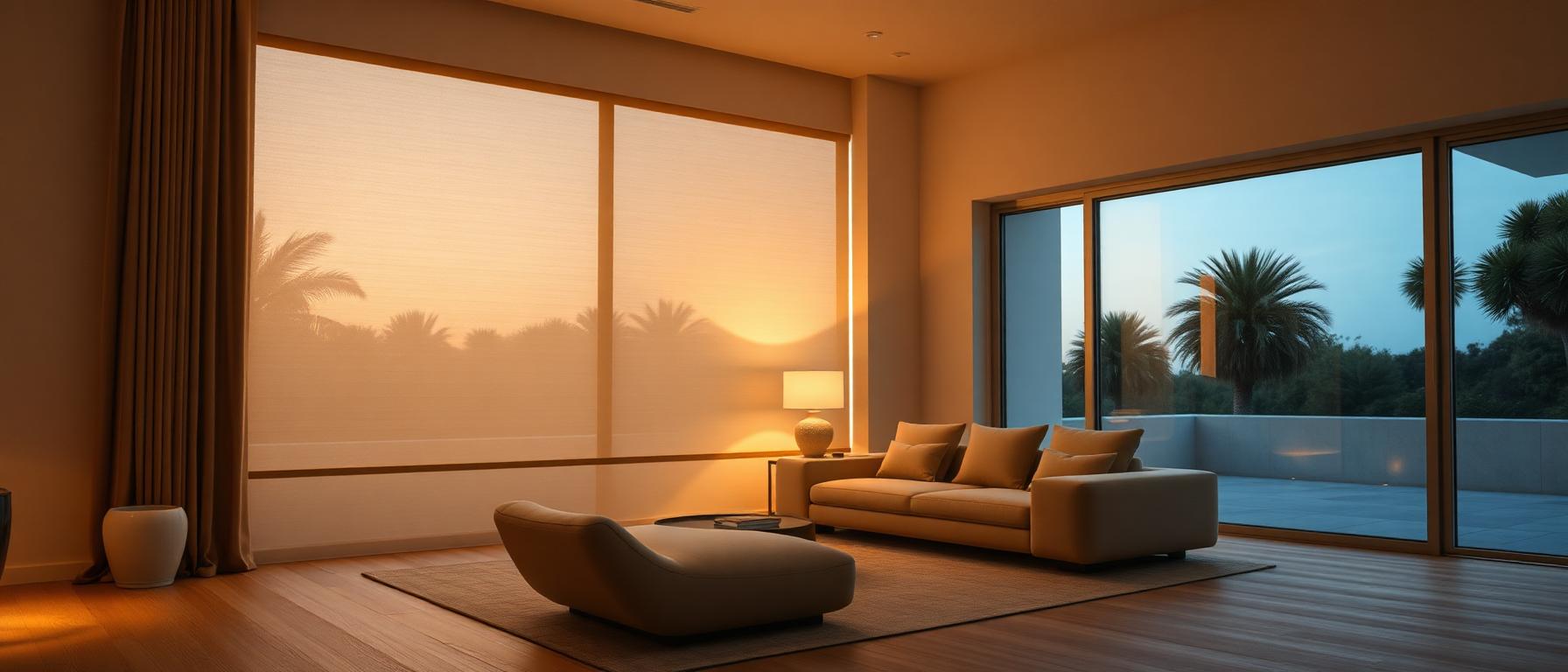
The reversal nobody mentions at the showroom
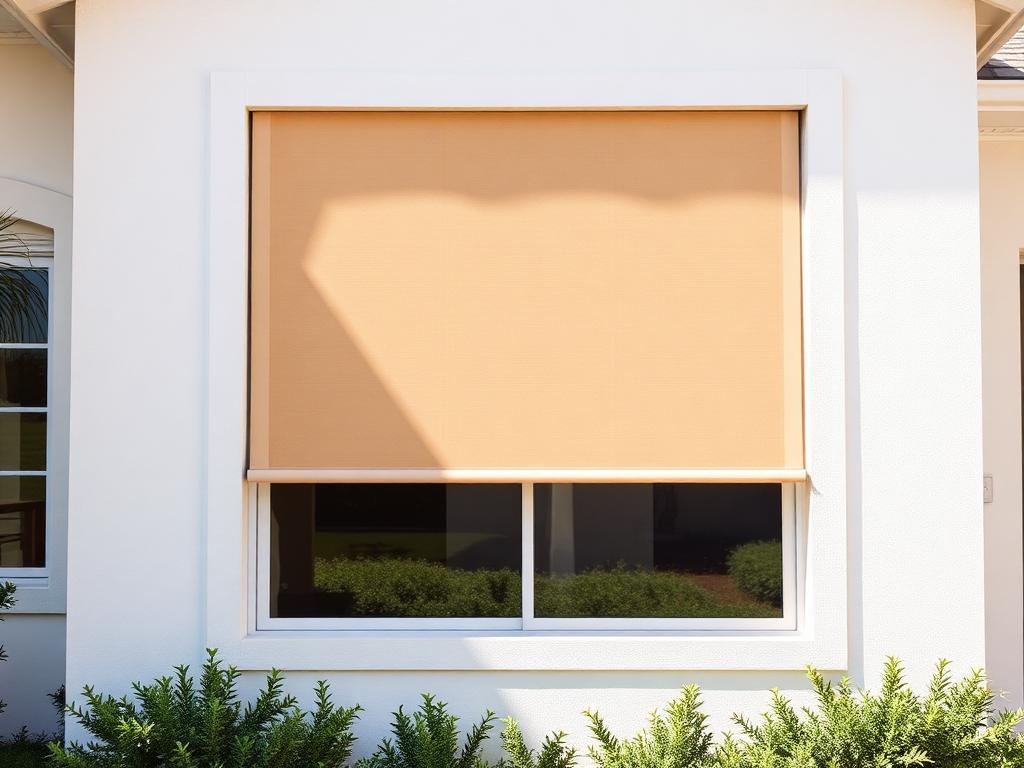
A solar shade works like one-way glass. During the day the outside is brighter than your room, so you see out and nobody sees in. It is genuinely excellent, and for a west-facing living room it is the right product.
Then the sun goes down, you switch the lamps on, and the balance flips. Now your room is the bright side. From the street, a lit room behind a solar shade is visible - and the openness percentage that gave you the best view by day gives you the least cover at night.
This is why so many Florida homes end up with expensive shades that get replaced within two years, or with a second set of curtains hung over them.
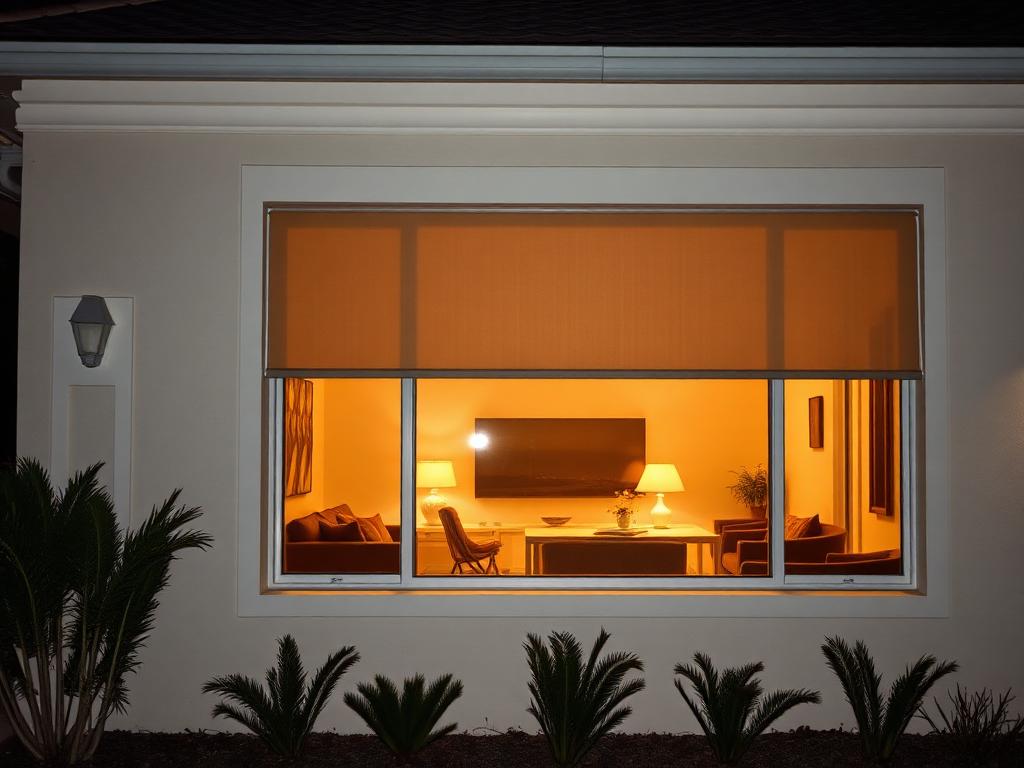
What actually works after dark
Zebra / banded
Alternating sheer and opaque bands. Slide them to tune the light through the day. Note that even fully aligned, banded fabric passes some light - it manages privacy, it does not black out.
Day and night
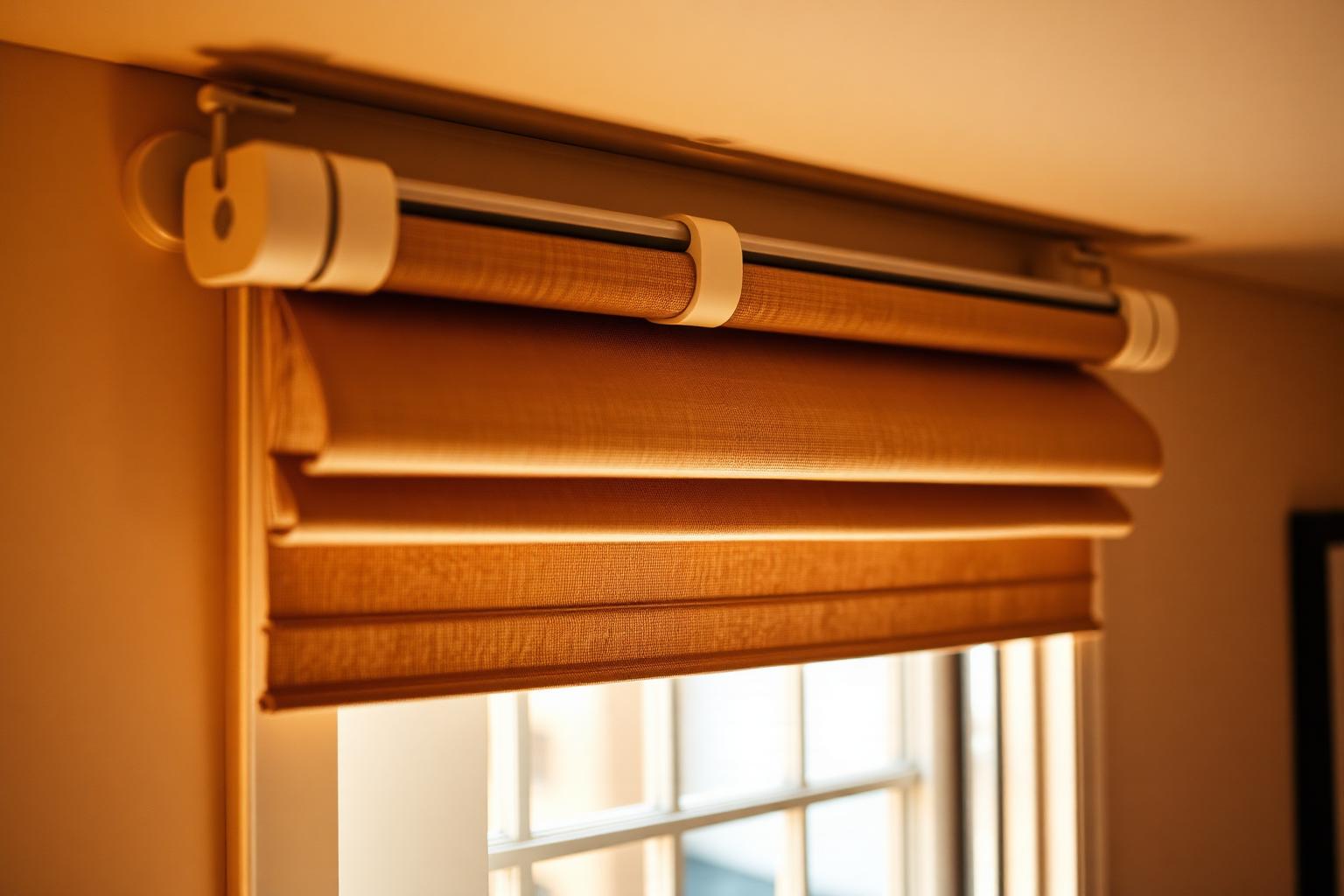
A filtering layer and a private layer on one bracket. Filter by day, close the second layer in the evening. This is the honest answer to the reversal above.
Top-down bottom-up
Light comes in over the top while the lower half stays closed. Built for ground-floor windows and anything facing a walkway.
Where it matters most
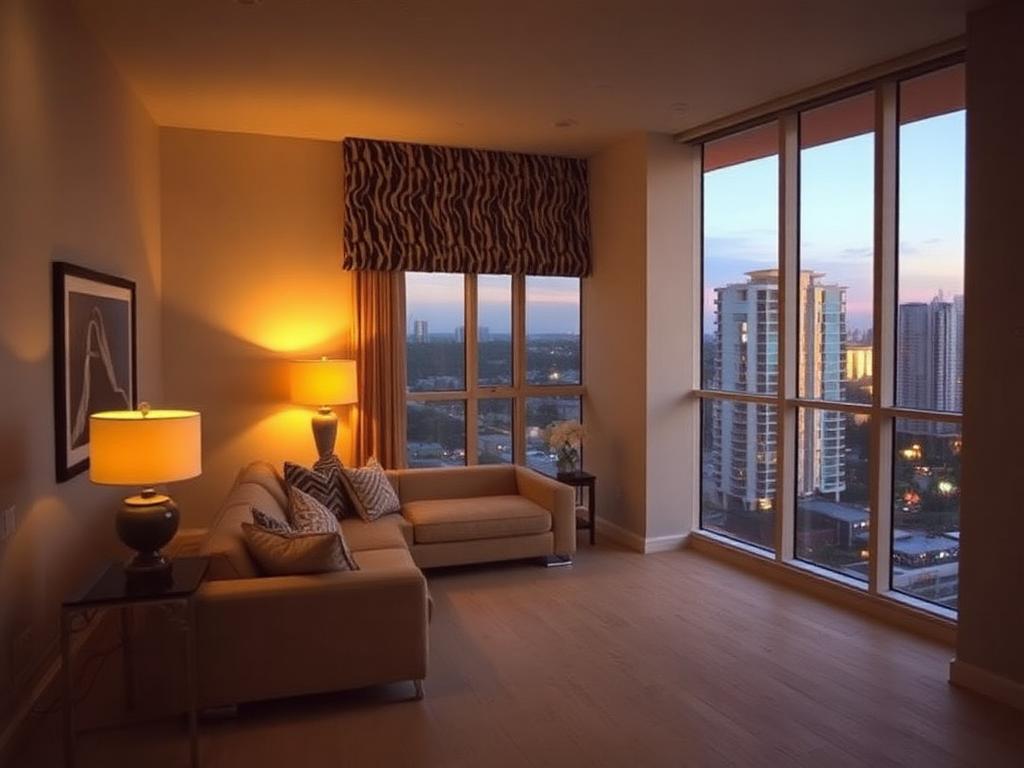
Condos and apartments
Buildings sit close together here. The window opposite is often ten metres away and lit at the same hours as yours.
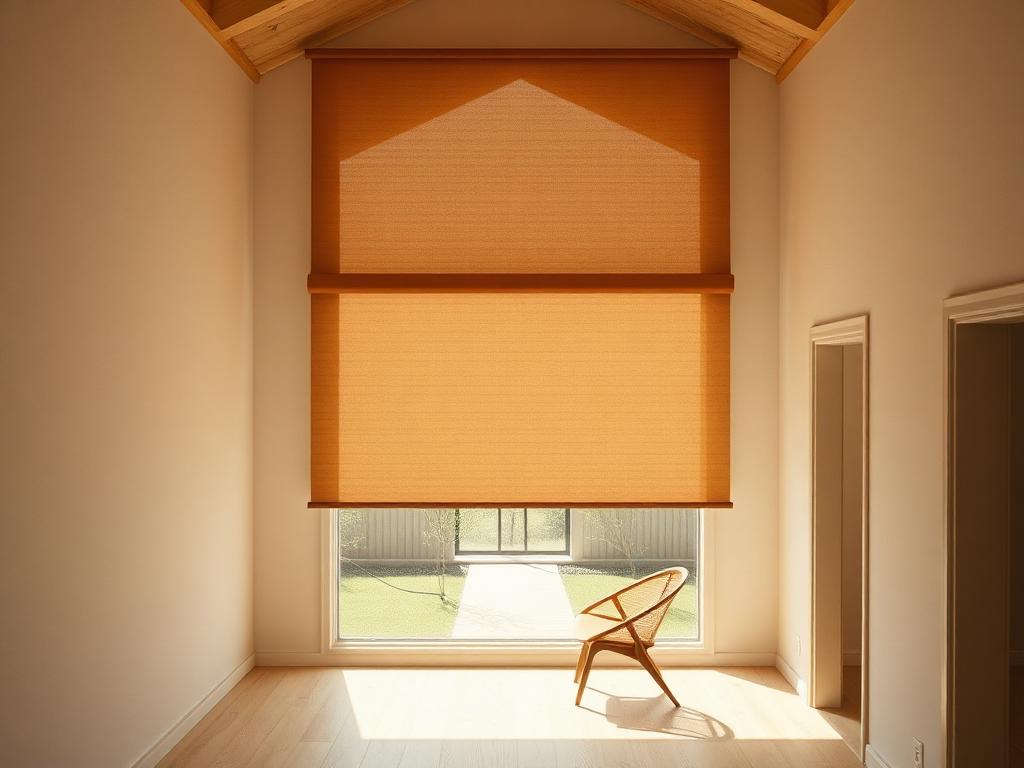
Ground floor and street-facing rooms
Anything at eye level from a pavement, a driveway or a shared path.
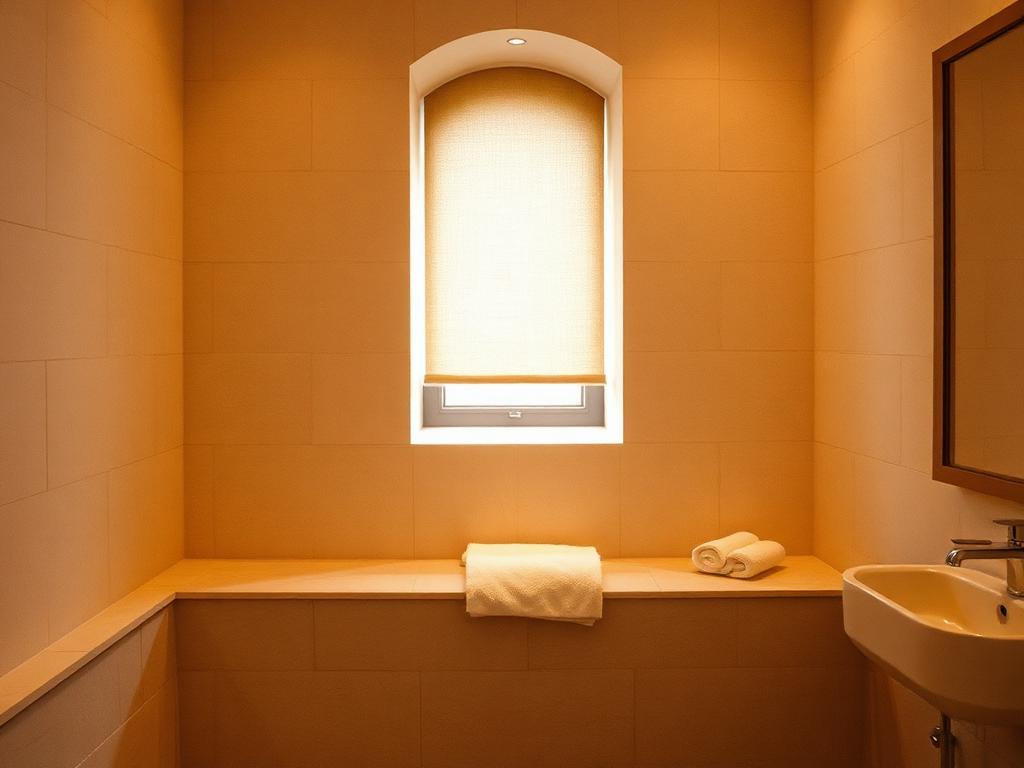
Bathrooms and dressing rooms
Where the answer needs to be certain rather than mostly.
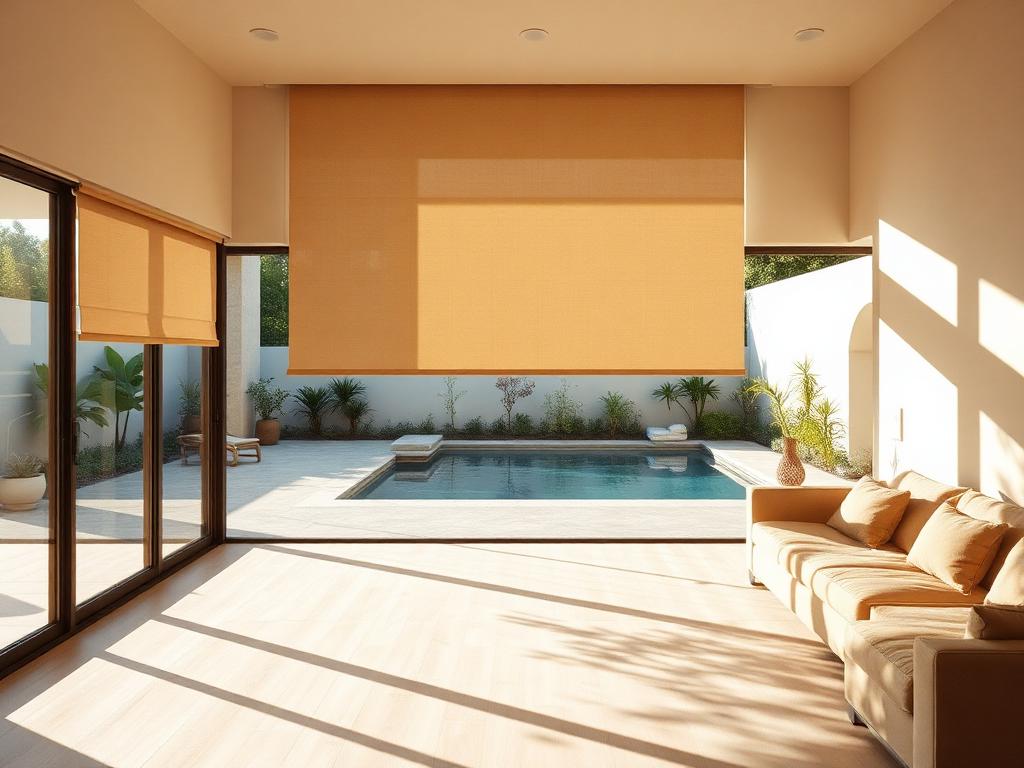
Rooms facing a pool or lanai
Where you want the view during the day and cover in the evening, in the same window.
Being straight about openness
Solar fabric openness runs from 1% to 14%. Lower numbers are more private and darker; higher numbers give a better view and less cover. Only the very lowest openness gives meaningful privacy at night with the lights on, and even then it is partial.
If a room needs certain privacy after dark, the answer is a second layer, not a lower percentage. We would rather fit the right thing once.
Common questions
Can people see in at night?
Through a single solar shade with your lights on, yes. That is how the fabric works, not a fault. If evening privacy matters in that room, you want a day and night system or a blackout layer behind the solar.
Do zebra shades give full privacy when closed?
They give good privacy, not total. The banded construction still passes some light even when the bands align. For a bedroom or bathroom we would fit something else.
Will I lose my view?
Not during the day, which is when you use it. That is the point of a day and night system - the filtering layer stays clear, and the private layer only comes down when you want it.
Is top-down bottom-up worth it?
On a ground-floor window facing a path, it is the best answer there is. You keep daylight and the sky, and nobody sees in at eye level.
Can one window have both?
Yes. A dual roller puts two independent shades on one bracket in the same headrail. It costs more than a single shade and less than replacing the wrong one later.
What about privacy for a glass sliding door?
Same principle, wider panel. We check the width at the measure because it affects the motor and sometimes needs two coupled panels.
Are these shades custom made?
Yes. Every shade is cut to the exact measurements taken at your home, not a stock size. Production starts only after the order is confirmed. This is also why the measurement itself is treated as the most important step in the process.
Cordless
No cords, no loops, no wands
Power
Battery or solar. No wiring, no wall damage
Install
Measured and fitted by our own team, load-tested before we leave