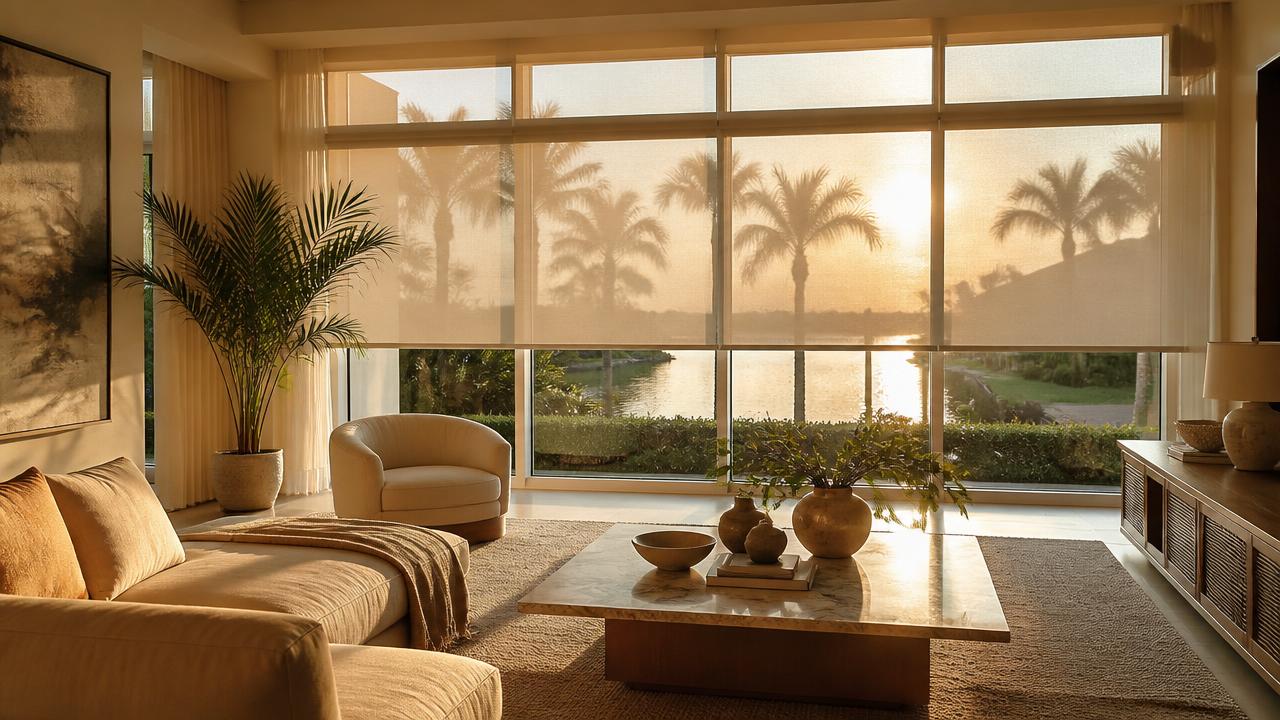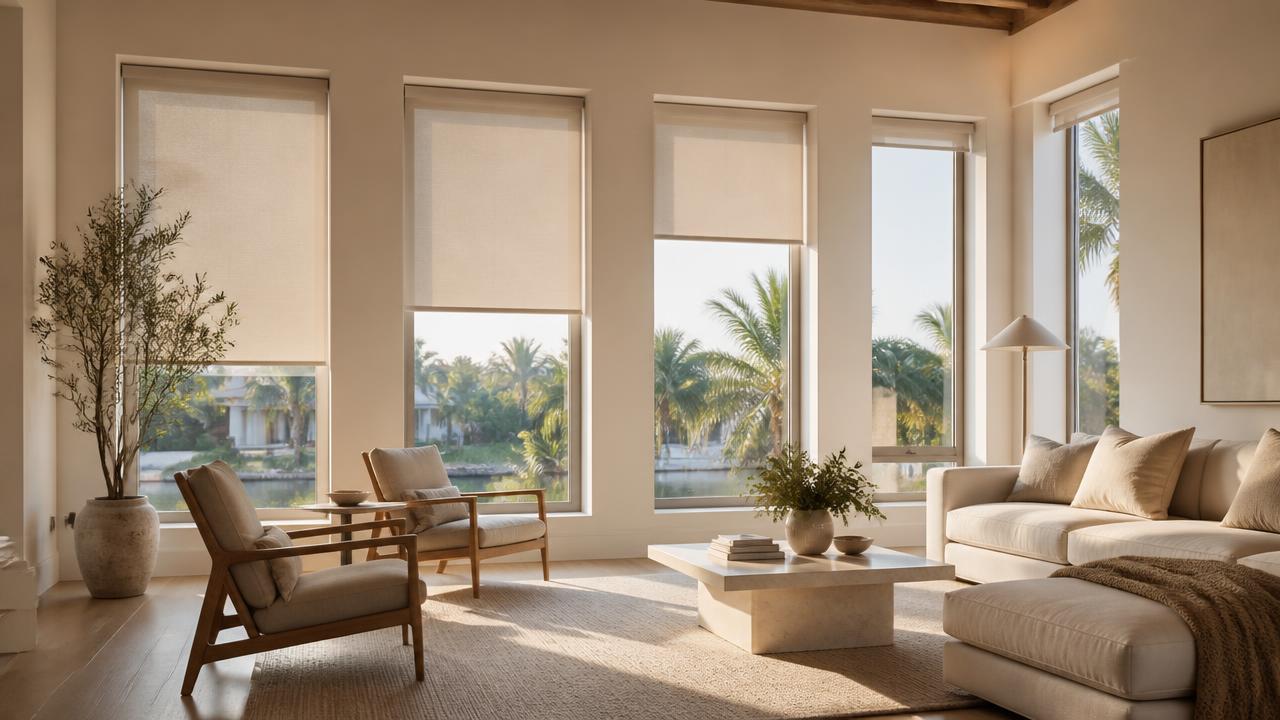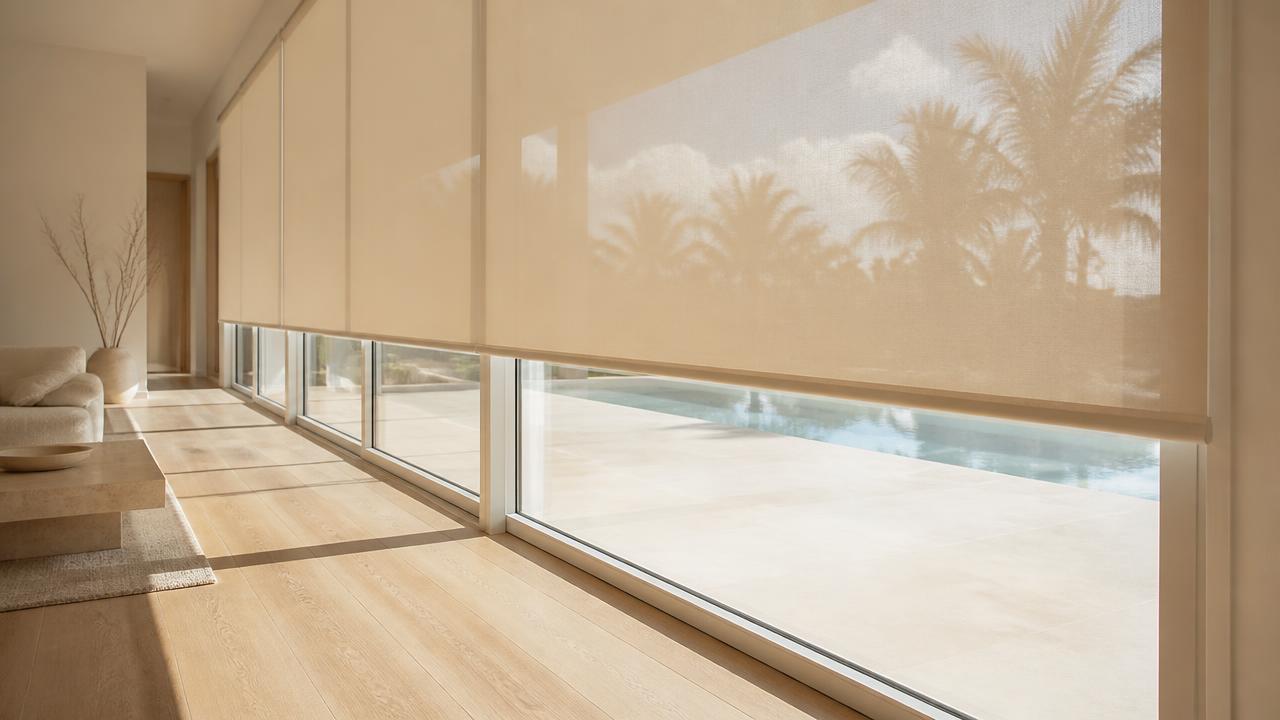
Yes, interior shades can reduce solar heat gain and improve comfort, but they do not eliminate heat entering through the glass.
Performance depends on:
- glass;
- fabric;
- openness and solar properties;
- window orientation;
- coverage;
- installation configuration;
- when the shade is closed.
An interior shade acts after sunlight has reached the window glass. It therefore has a physical limit compared with exterior shading or high-performance glazing.
The realistic promise is better comfort and solar control, not a complete transformation of the home's thermal envelope.
Why interior shades have a ceiling
Solar energy reaches the window first.
Some is reflected, some absorbed and some passes through.
An interior shade can intercept part of that energy after it has passed through the glass, but it cannot undo all heat that has already entered.
This is why window glass, exterior shading, overhangs and the building envelope still matter.
What actually moves the needle
Fabric
Fabric density and solar properties matter.
Lower openness generally means a tighter screen weave and can provide stronger glare and solar control than a more open screen.
But openness alone should not be treated as a complete thermal specification.
Edge coverage
Gaps at the sides and top can allow light and solar energy into the room.
Mount type, cassette design and side channels can therefore matter when glare or darkness is a priority.
Timing
This is where motorization has a practical advantage.
A room that has already heated is harder to make comfortable.
A motorized shade can be scheduled or operated before strong direct sun reaches the room, subject to the capabilities of the selected system.
The value of motorization is partly behavioral: the shade can be in position before the problem appears.
Which windows you treat first
Prioritize windows that create the largest comfort problems:
- west-facing;
- south-facing;
- large glass areas;
- strong afternoon glare;
- rooms where cooling comfort is already a problem.
Light vs view vs heat
There is a trade-off.
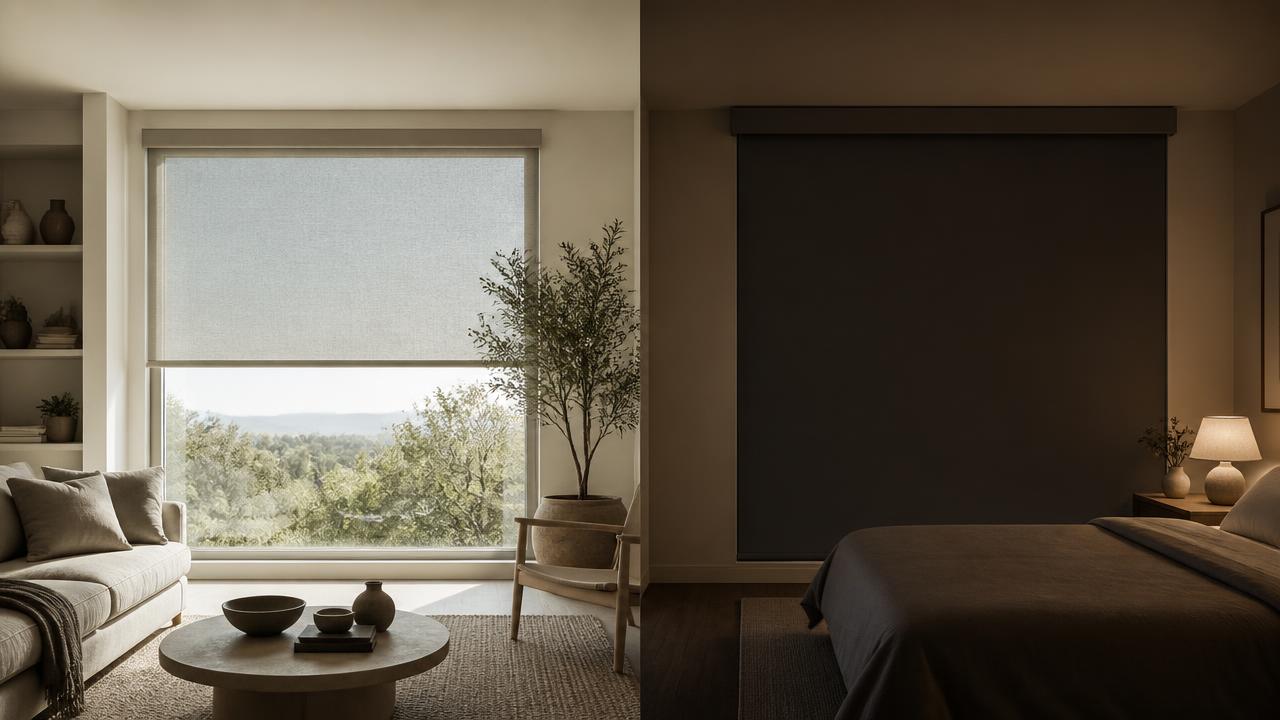
A denser fabric can improve glare and solar control, but can also reduce daylight and view.
A more open screen can preserve more view while allowing more light.
Blackout changes the equation by prioritizing darkness.
The right choice is therefore not "maximum heat rejection." It is the best balance for that room.
Can shades reduce electricity bills?
Potentially, by reducing cooling load associated with solar exposure.
But there is no responsible universal percentage for savings.
Actual impact depends on window area, glazing, orientation, HVAC, insulation, outdoor temperature, fabric and shade operation.
Meridian should avoid promising a specific utility-bill reduction without project-specific evidence.
If the worst room faces the afternoon sun, start with the best shades for west-facing windows in Boca Raton, and see are motorized shades worth it in Florida for the control side of the decision.
FAQ
- Will shades stop my room from heating up?
- No interior shade can eliminate solar heat gain. It can reduce it and improve comfort.
- Do motorized shades reduce more heat than manual shades?
- Not because the motor changes the fabric. Motorization can improve results by making timely operation easier.
- Are lower openness screens always better for heat?
- Not automatically. Lower openness generally means a tighter weave, but actual solar performance should be evaluated using documented fabric specifications.
- Will shades lower my electricity bill?
- They may reduce cooling demand on sun-exposed windows, but the effect varies by home and use.
- Are these shades custom made?
- Yes. Every shade is cut to the exact measurements taken at your home, not a stock size. Production starts only after the order is confirmed. This is also why the measurement itself is treated as the most important step in the process.