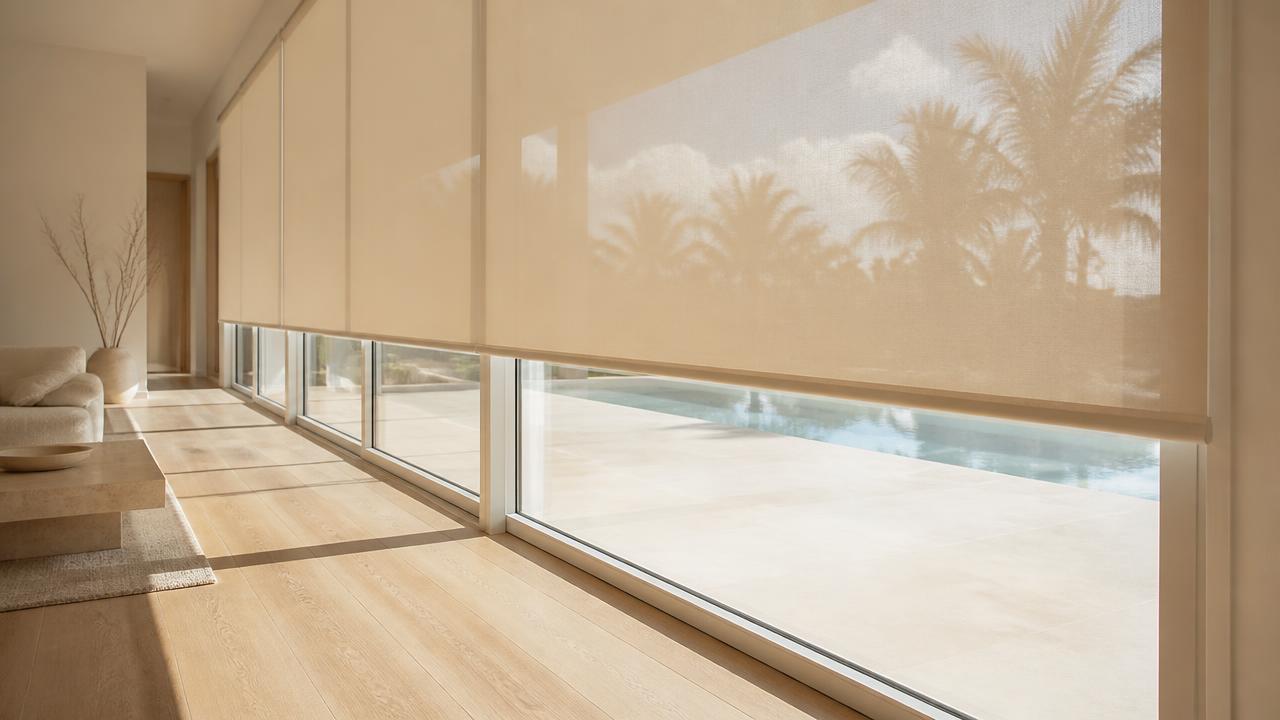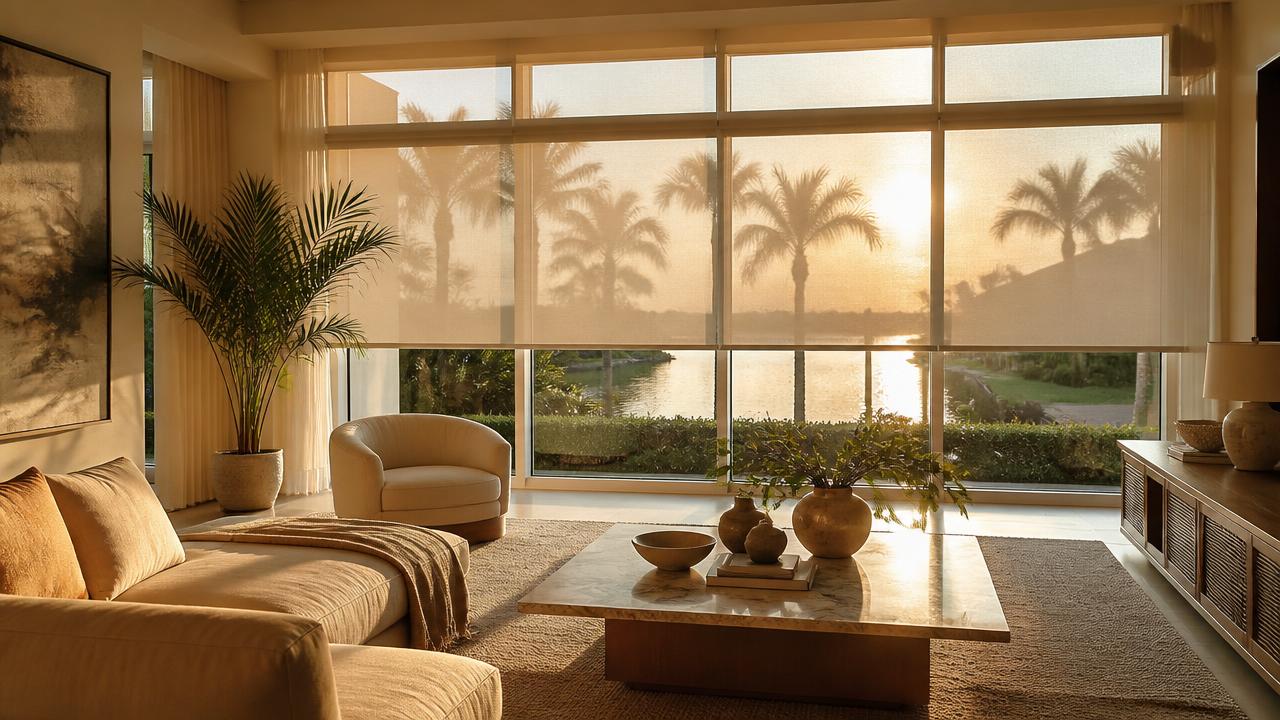
For many west-facing living spaces in Boca Raton, a solar screen with a lower openness factor is a strong starting point because it can reduce glare while preserving some outside view. But there is no single "best" fabric for every west-facing window.
The right choice depends on what the room needs to solve: afternoon glare, solar heat, privacy, darkness, view preservation or some combination.
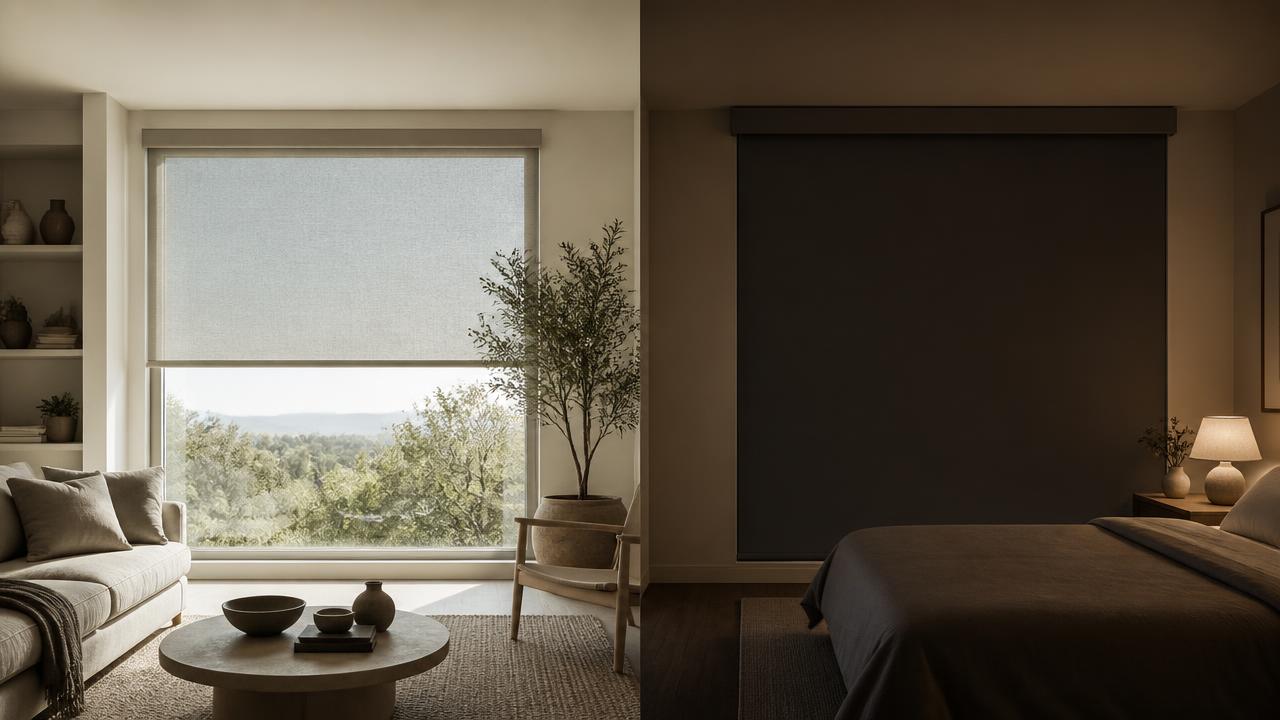
A bedroom may justify blackout. A living room may be better served by a solar screen. A media room may prioritize darkness.
Why west is different
West-facing windows receive direct afternoon sun when the sun is relatively low.
That can create:
- glare on televisions;
- glare on computer screens;
- strong visual contrast;
- solar heat;
- uncomfortable rooms late in the day.
A room can feel comfortable at noon and become difficult to use a few hours later.
Choosing an openness factor
Openness describes the percentage of open area in a screen fabric. Lower numbers generally mean a tighter weave.
Treat this as a selection framework, not a guarantee of a specific thermal result.
| Openness | General view effect | General glare control | Typical use |
|---|---|---|---|
| 1% | More limited view | Stronger | Severe glare, screen-heavy rooms |
| 3% | Reduced detail, some view | Strong | Many high-exposure living rooms |
| 5% | More open view | Moderate | View is a higher priority |
| 10% | More open view | Lower | Milder exposure |
Actual performance depends on the fabric, glazing, orientation and installation.
The night-time reversal
During the day, when the exterior is brighter than the interior, a solar screen can provide useful daytime privacy while preserving some view.
At night, the situation reverses.
When the interior is brighter than the exterior, people outside may be able to see into the room.
If nighttime privacy matters, the room may need:
- a different fabric;
- a second shade layer;
- another window treatment;
- a different operating strategy.
When blackout is better
Blackout makes more sense when the primary requirement is darkness:
- bedrooms;
- media rooms;
- nurseries;
- rooms where screen viewing requires strong light control.
Even blackout fabric does not automatically mean that every ray of light is eliminated. Light can enter around the sides, top and other mounting gaps.
For near-total darkness, the system should be designed to minimize those gaps.
Should you use side channels?
Side channels can help reduce light entering around the edges and can be particularly useful when glare or darkness is important.
They are not automatically necessary for every solar shade.
Can one fabric work throughout the whole house?
Usually there is no reason to assume it should.
A home can contain a west-facing living room, bedroom, office, media room, bathroom and ocean-facing glass. Each has a different problem.
Choose the shade for the room, not the house.
For the room-by-room version of that decision, read solar shades vs blackout shades.
FAQ
- Will a solar shade stop a west-facing room from heating up?
- It can reduce solar heat gain, but no interior shade eliminates heat entering through the window.
- Is 1% always better than 5%?
- No. Lower openness can improve glare control but also reduces view and daylight.
- Should west-facing windows always have blackout shades?
- No. Blackout is appropriate when darkness is the priority. Living rooms often need glare and heat control while retaining the view.
- Can solar shades provide privacy at night?
- Not reliably. Daytime privacy can reverse after dark.
- Are these shades custom made?
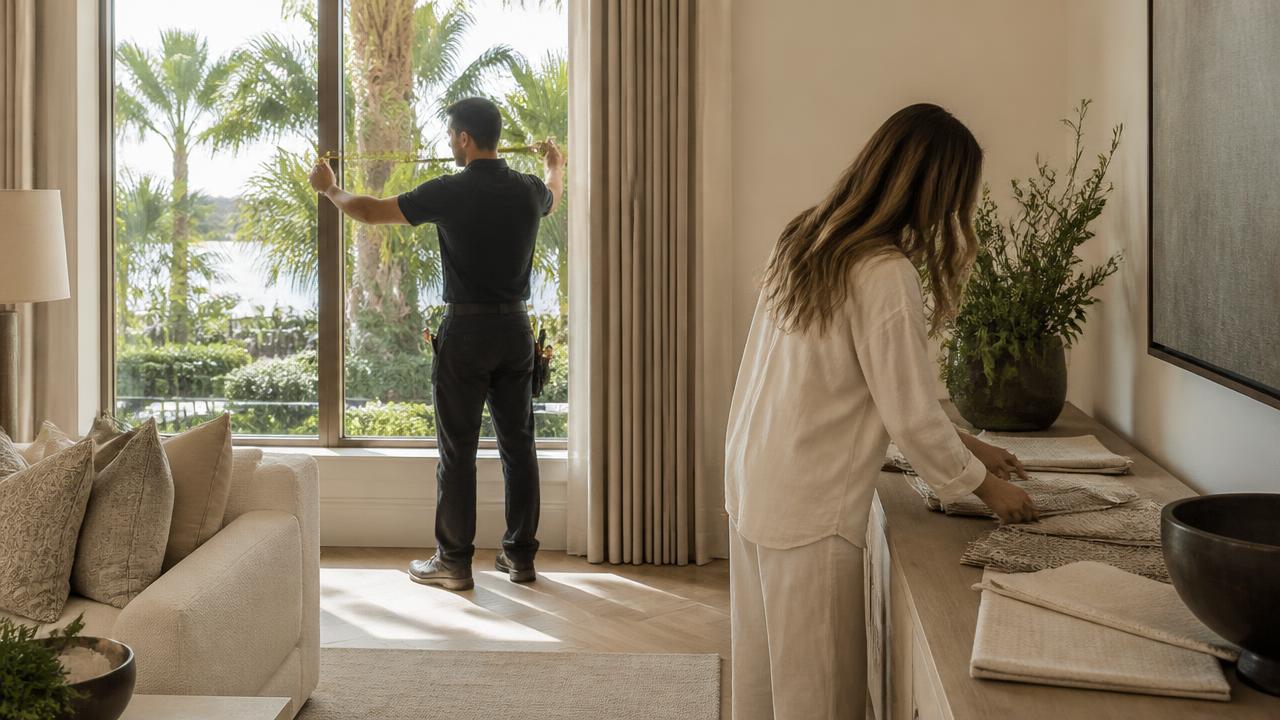
- Yes. Every shade is cut to the exact measurements taken at your home, not a stock size. Production starts only after the order is confirmed. This is also why the measurement itself is treated as the most important step in the process.