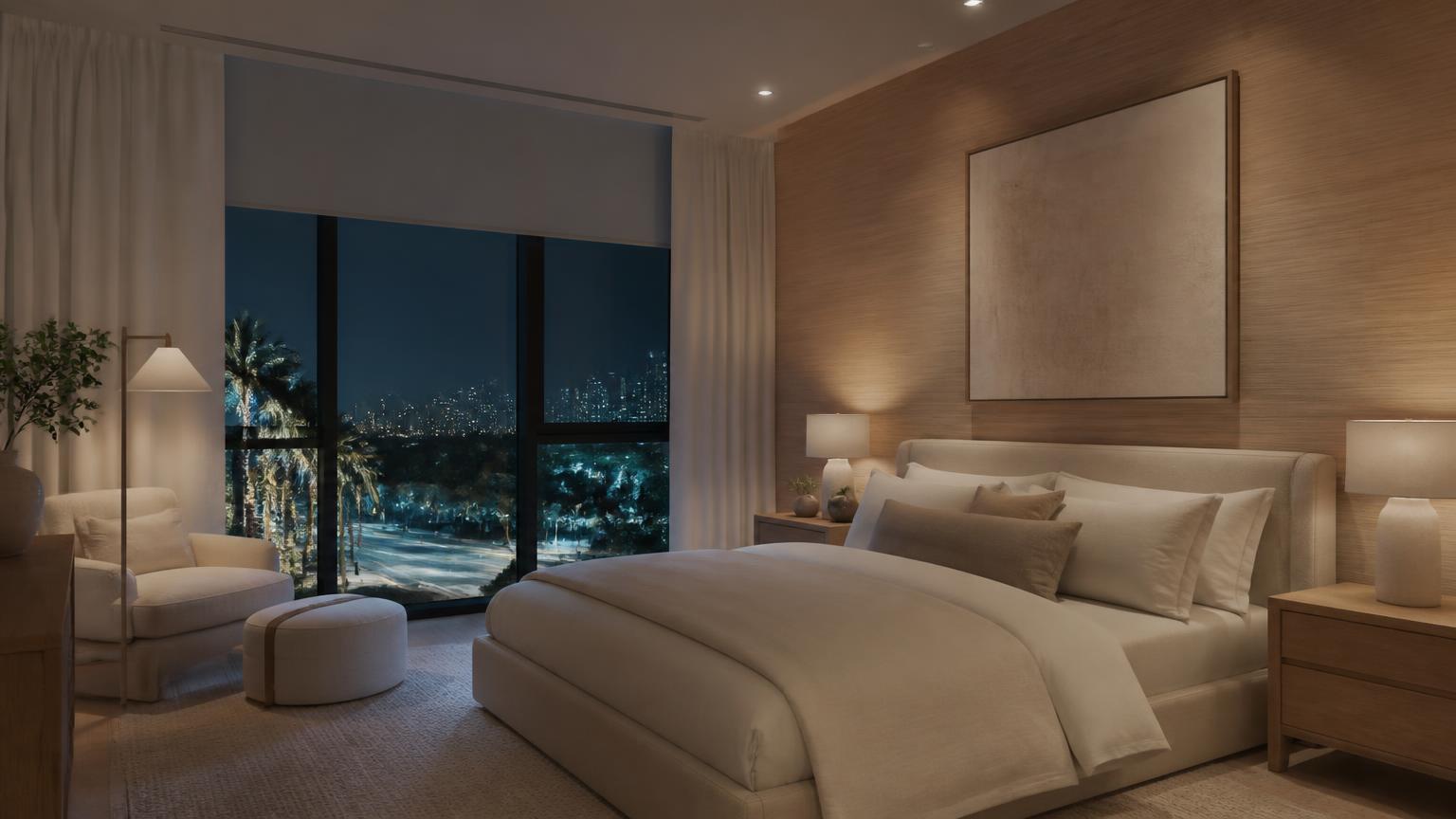
Blackout shades are usually sold for better sleep, less morning glare, and a cooler bedroom. A new study gives us one more reason to pay attention to nighttime light - and it has to do with the heart.
Most people think about bedroom light in a simple way.
- Too much morning sun? Use blackout shades.
- Streetlights coming through the windows? Close the shades.
- Early sunrise waking you up? Make the room darker.
All of that makes sense. But a new study published in the European Heart Journal suggests that nighttime light may deserve a little more attention than we have traditionally given it.
Not because you should be afraid of the light coming through your bedroom window. But because darkness at night appears to be more important to the body than simply making a room feel comfortable.
A new look at nighttime light
Researchers analyzed data from 11,071 adults in the UK Biobank who wore a wrist sensor measuring light exposure for seven days.
About three years later, the participants underwent cardiac MRI scans.
The researchers found that people exposed to higher levels of light at night had measurable differences in the structure and function of their hearts. Higher nighttime light exposure above 3 lux was associated with greater left ventricular mass, thicker heart walls, and a small reduction in myocardial contraction fraction. The associations became stronger as nighttime light exposure increased.
That does not mean that sleeping with a little light coming through your window will give you heart disease.
The study was observational. It found an association, not proof that nighttime light caused the changes. The researchers also note several limitations, including measuring light exposure over only one week.
So this is not a reason to panic.
It is a reason to pay attention.
Why would light at night matter?
Light is one of the signals your body uses to understand when it is daytime and when it is time to sleep.
Even relatively low levels of nighttime light can interact with this system. Previous research has associated bedroom light exposure with poorer sleep and changes in sleep quality.
The new heart study adds an interesting piece to that picture.
Researchers found that shorter sleep explained only part of the association between nighttime light and the cardiac changes they observed. That suggests the relationship may also involve the body's circadian system - the internal timing system that helps regulate processes such as hormones, blood pressure, heart rate and inflammation.
Again, this is an area of ongoing research.
But it gives us a useful question to ask:
How dark is your bedroom actually at night?
Your bedroom may be darker than you think - or not
A bedroom can feel dark while still receiving quite a lot of light.
- Streetlights can come through uncovered windows.
- A neighboring building may have exterior lighting.
- Security lights can turn on during the night.
- Early morning sunlight can enter before you are ready to wake up.
- A glowing clock, router, charger, air purifier, or another electronic device can add smaller sources of light.
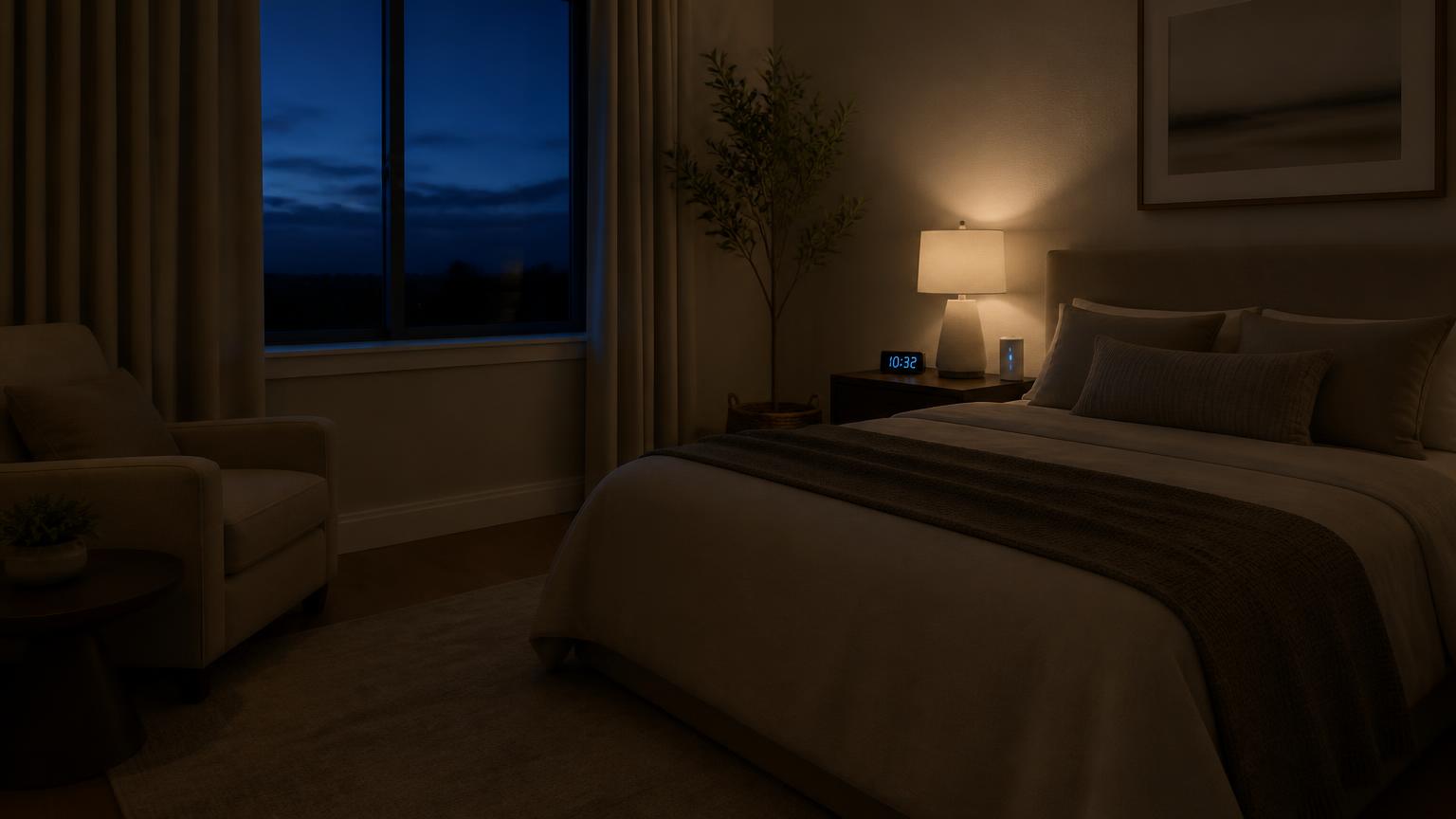
This is where blackout shades have a very practical role.
They cannot turn off the LED on your router.
They cannot stop every source of light inside your bedroom.
But they can address one of the largest sources of nighttime light: the window.
Blackout does not have to mean "dark all the time"
This is also why we don't think every bedroom needs to become a permanently dark box.
During the day, natural light is useful. Your body needs a clear distinction between daytime and nighttime.
The goal is simple:
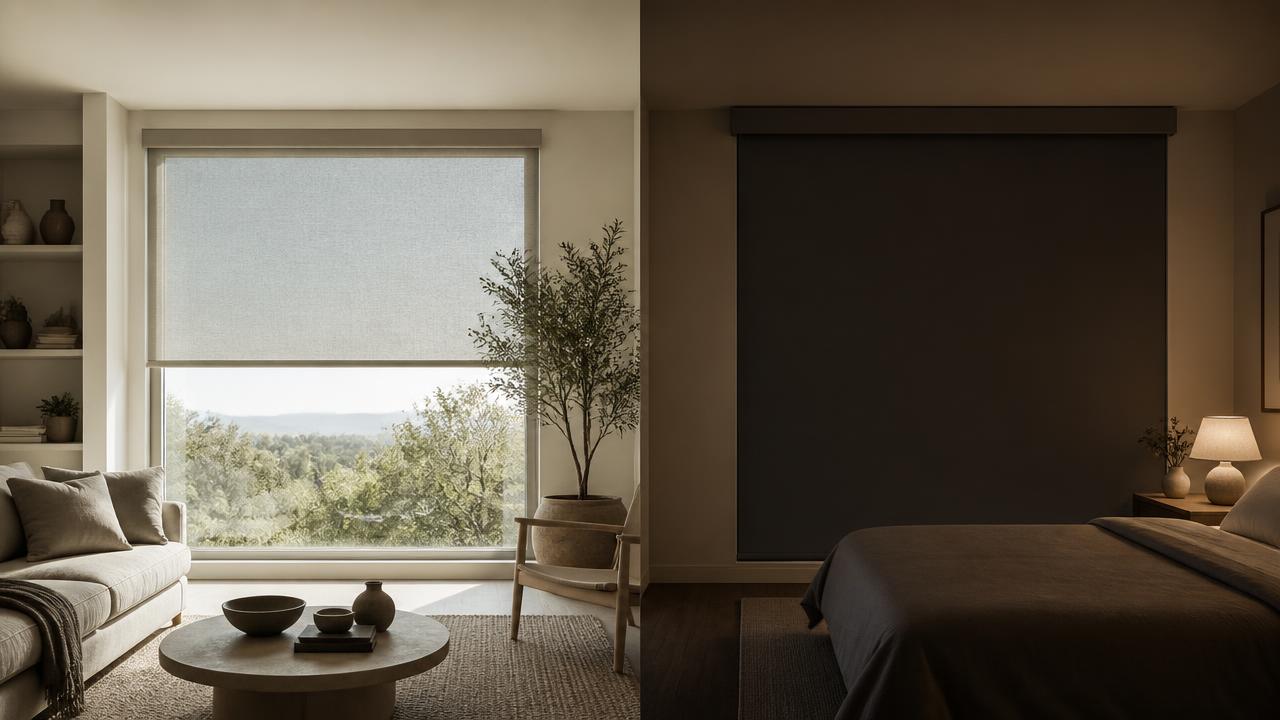
Let the daylight in when you want it. Keep unwanted light out when you are trying to sleep.
That is one of the advantages of a well-designed blackout shade.
With a motorized system, you can even make the transition automatic.
- Open the shades in the morning.
- Close them in the evening.
- Keep the bedroom dark when you are sleeping.
- Open them again when the day starts.
One more reason to consider blackout shades
There are already plenty of practical reasons to use blackout shades:
- Better control of morning sunlight
- Less glare
- More privacy at night
- Better control of bedroom brightness
- Reduced solar heat entering through the glass
- Protection for furniture and fabrics from direct sunlight
- A more comfortable sleeping environment
The new research adds another possible consideration: reducing unnecessary light exposure during the night.
It is not proof that blackout shades prevent heart disease.
And we would never tell you that installing blackout shades is a substitute for good sleep habits, medical care, or a healthy lifestyle.
It is simply one more reason to think about what your bedroom environment looks like after the lights go out.
For a room-by-room comparison of fabrics, see Solar Shades vs Blackout Shades: Which Goes Where?. For the broader decision, read Why Do We Cover Windows?.
Start with the window
If your bedroom is exposed to a bright street, parking lot, neighboring property, or strong early-morning sun, the window is often the obvious place to start.
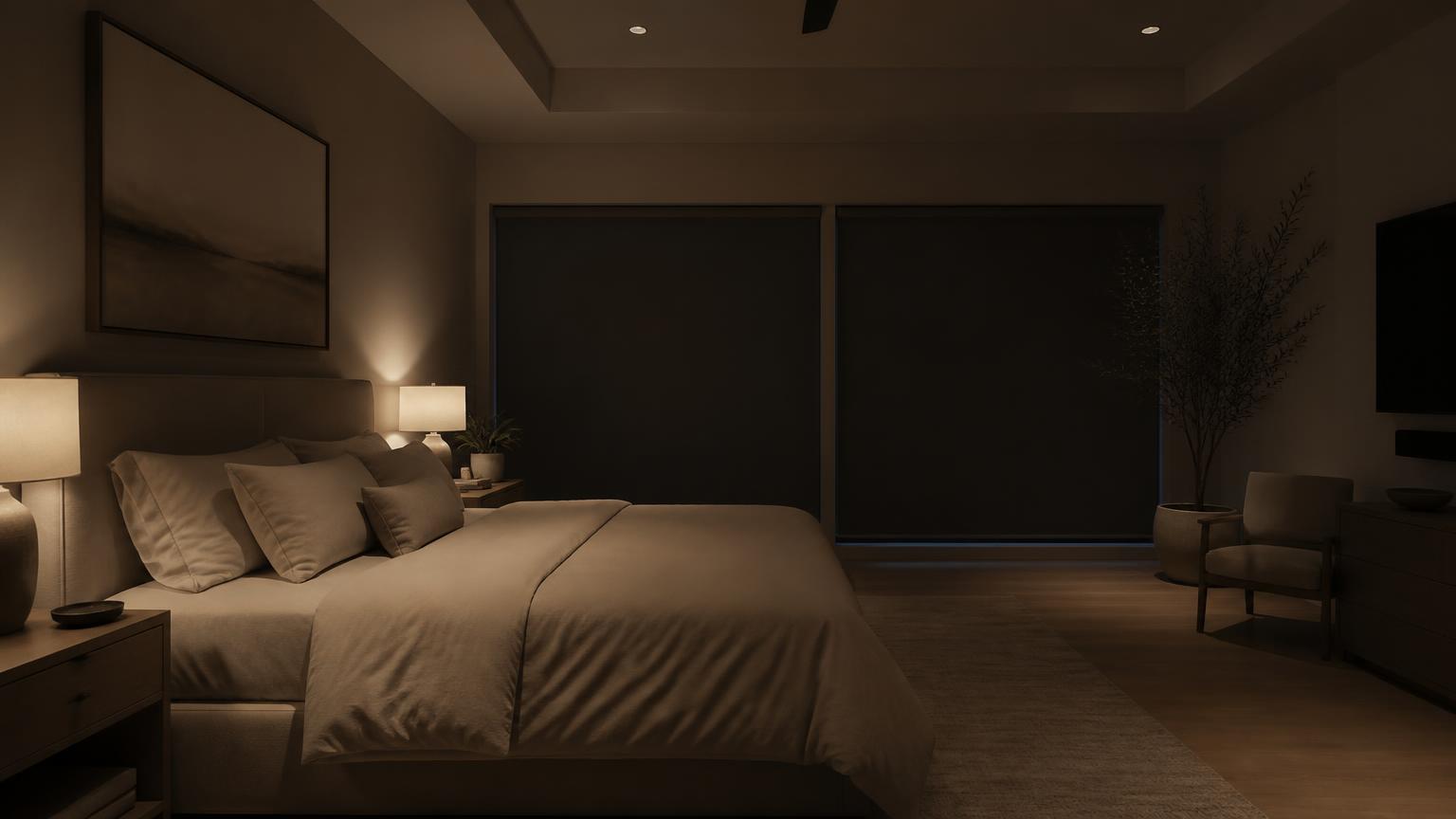
You may not be able to control the streetlight outside.
You may not be able to turn off every LED in the room.
But you can control how much light comes through the glass.
That is what blackout shades are good at.
And sometimes the simplest improvement to a room is not adding something.
It is making it darker when darkness is actually what you want.
A note about the research
The study discussed here was published in the European Heart Journal in September 2026 and analyzed data from 11,071 UK Biobank participants who had nighttime light exposure measured with a wearable sensor and later underwent cardiac MRI. The study found an association between higher nighttime light exposure and changes in cardiac structure and function. Because it was an observational study, it does not establish that nighttime light directly caused those changes.
FAQ
- Can nighttime light really affect sleep?
- Research has associated nighttime light exposure with poorer sleep and changes in sleep quality. The effect can vary with the amount, timing and source of the light.
- What did the new 2026 study find?
- In 11,071 UK Biobank participants, higher nighttime light exposure was associated with measurable differences in heart structure and function several years later.
- Does the study prove that nighttime light causes heart problems?
- No. It was an observational study, so it found an association and did not establish causation. The researchers also reported limitations, including light measurement over only seven days.
- Can blackout shades reduce nighttime light?
- Yes. Blackout shades can reduce outside light entering through a bedroom window. Their effectiveness also depends on the fit and how much light can pass around the edges.
- Do blackout shades block every source of light in a bedroom?
- No. They address window light, but they do not remove light from alarm clocks, chargers, routers or other devices inside the room.
- Should a bedroom be completely dark at night?
- A darker room can support sleep, but individual needs differ. This article is not medical advice, and anyone with health or sleep concerns should speak with a qualified clinician.
- Are blackout shades useful even if I already have blinds or curtains?
- They can be. Existing blinds or curtains may leave gaps or filter rather than block light. A blackout shade can add stronger window-light control, depending on the installation.