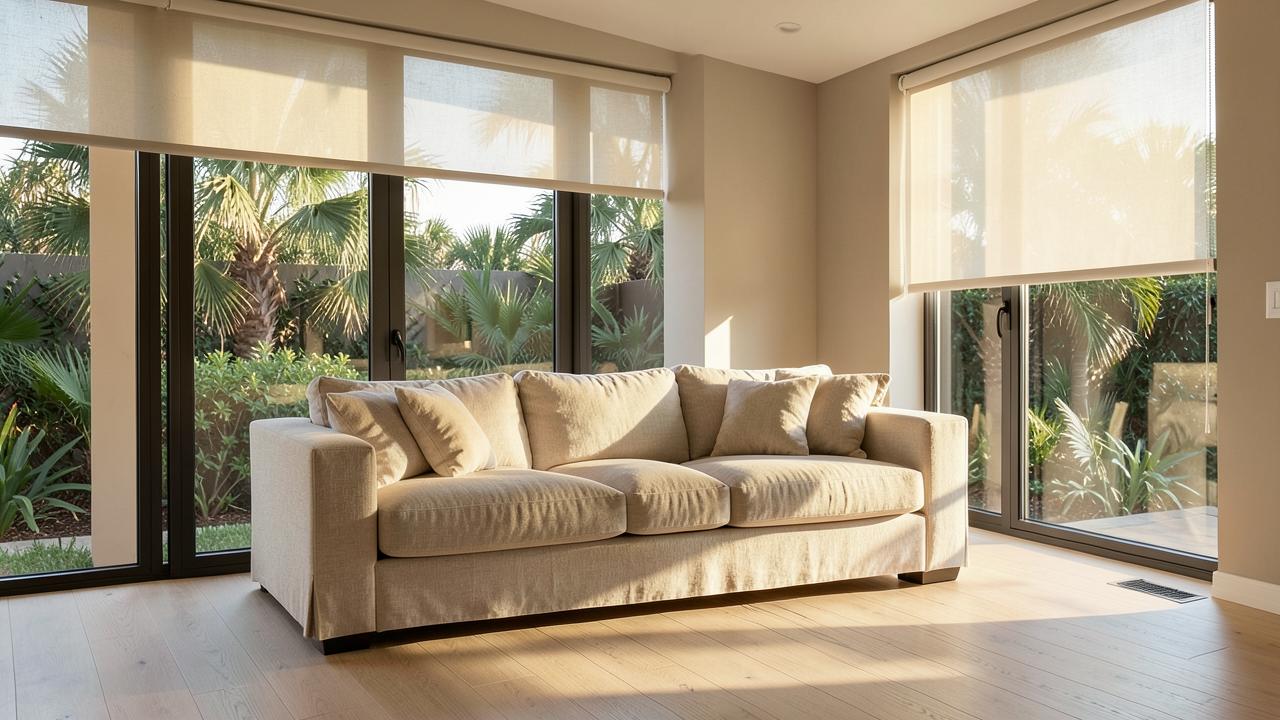
Most people start with the wrong question.
They ask: "Should I get curtains or shades?"
A better question is: "What is my window actually doing to this room?"
Glare on a screen. A living room that runs hot from three o'clock onward. A bedroom that gets light at six in the morning. A wall of glass facing a neighbour's yard. Furniture fading in a spot you can point to.
Answer that first, and the choice between curtains, blinds, shades, film, shutters, and motorized systems gets much simpler.
An Old Problem With New Dimensions
Covering a window is not a modern idea. People have hung textiles over openings for as long as there have been openings, for the same reasons we do now: light, heat, privacy, and the ability to decide how much of the outside comes in.
What changed is the window itself.
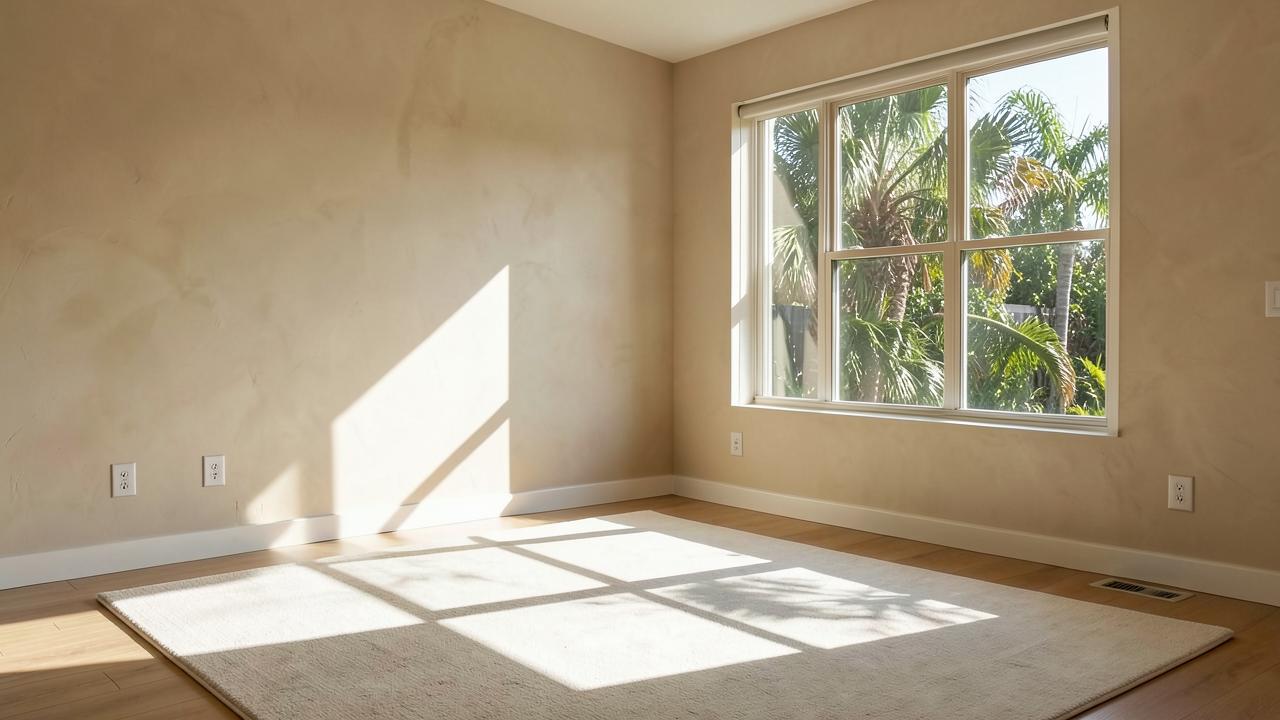
A window today can be twelve feet wide, run floor to ceiling, sit above a staircase where nobody can reach it, or open onto a patio through a slider that weighs more than the person operating it. In South Florida it also faces sun that is genuinely punishing for most of the year, at an angle that puts it directly in your eyes in the late afternoon.
The old problem got harder.
So Why Cover a Window at All?
A window does several useful things at once. It brings in daylight. It gives you a view. It makes a room feel larger.
An uncovered window also gives the sun a direct path into the room. That means glare, heat, brightness you did not ask for, and after dark, a lit room visible from the street.
A window covering lets you change the relationship between the glass and the room without permanently changing the window.
That distinction matters more than it sounds. You keep what makes the window valuable, and control the rest.
Why Not Just Use Darker Glass?
Tinted and solar control glazing can genuinely reduce heat coming through a window, and in the right project it works well.
The catch is that glass is a permanent decision. Once the glass is darker, it is darker at eight in the morning, at two in the afternoon, in December, and on the one grey week Florida gets all year. You cannot ask for full daylight in the morning and glare control after lunch.
There is also a practical Florida detail. In hot climates, sun control film is generally recommended for east, west and south facing windows, which is most of a typical Boca Raton home. That helps with heat. It does nothing for the bedroom that needs to be dark, and nothing for privacy after sunset, when the lit interior is the brighter side of the glass.
An adjustable covering has one advantage that glass structurally cannot have: it changes with the conditions.
What About Smart Glass?
Switchable glazing takes the same idea further. Rather than moving a covering, the glass itself changes.
It is impressive technology, and in some architectural projects it is the right answer. But it is still a window technology, not a furnishing layer. It does not give you fabric, texture, opacity, or the visual softness of a shade, and it does not automatically solve privacy or full darkness.
For most homes the practical framing is not glass or shades. It is good glass plus the right shade.
What About Shutters?
Shutters are durable, architectural, and distinctive. They give strong light control and privacy, and they suit a homeowner who wants the treatment to read as part of the building rather than as a furnishing.
The trade off is flexibility and visual weight. A roller shade can disappear almost entirely above the window when it is open. A shutter is always part of the room.
Neither is better. It is a design decision about what you want to see when the window is uncovered.
What About Curtains?
Curtains remain one of the most versatile choices in interior design. They add softness, texture, colour and height. For bedrooms, formal rooms, and interiors where fabric carries the design, they can be exactly right.
Their limits are practical. They need wall space beside the window to stack when open. Wide glass needs a lot of fabric. And opening and closing panels by hand stops being charming somewhere around the fourth window.
Shades and curtains solve different problems
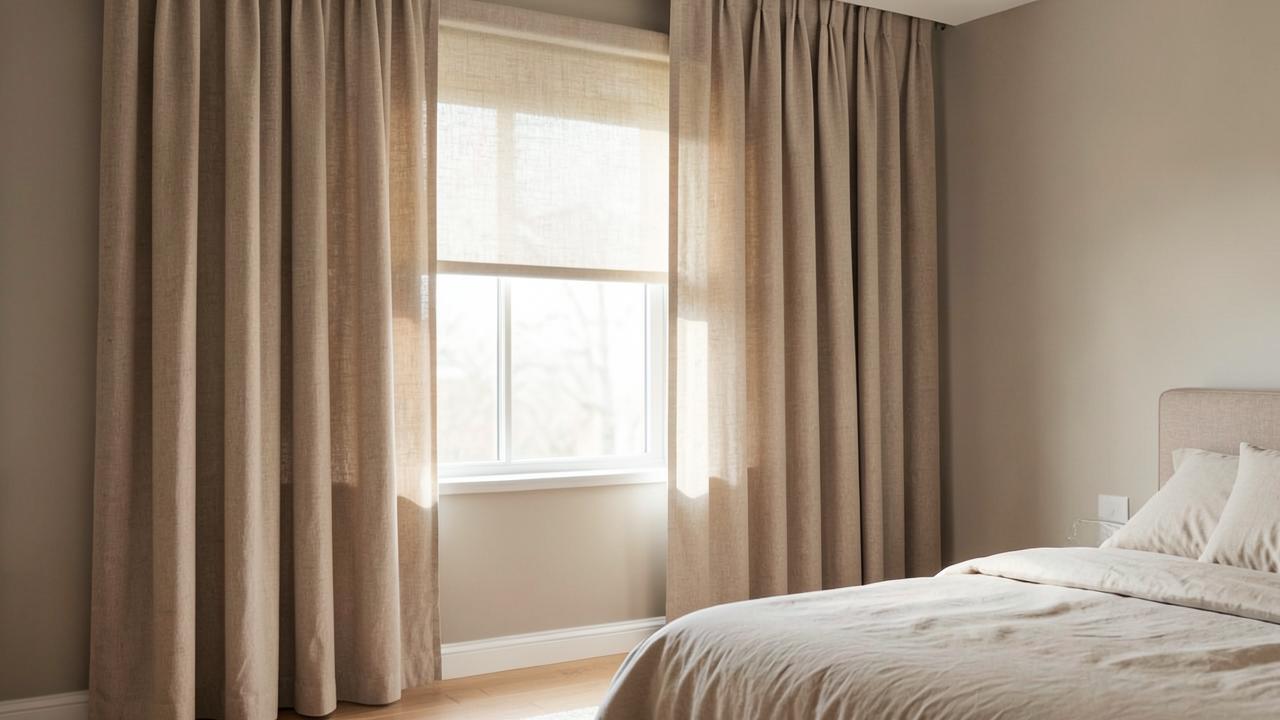
Curtains are the better answer when you want softness, decorative impact, a layered traditional interior, or coverage beyond the glass itself.
Shades are the better answer when you want a cleaner architectural look, precise light control, a compact installation, coverage directly across the glass, or specific fabric performance such as solar screen or blackout.
In a lot of well designed homes the answer is both. The shade does the technical job. The curtain does the decorative one.
Shades or Blinds?
The words get used interchangeably, but they are different products.
Blinds use slats or vanes. Shades use a continuous piece of fabric that raises and lowers.
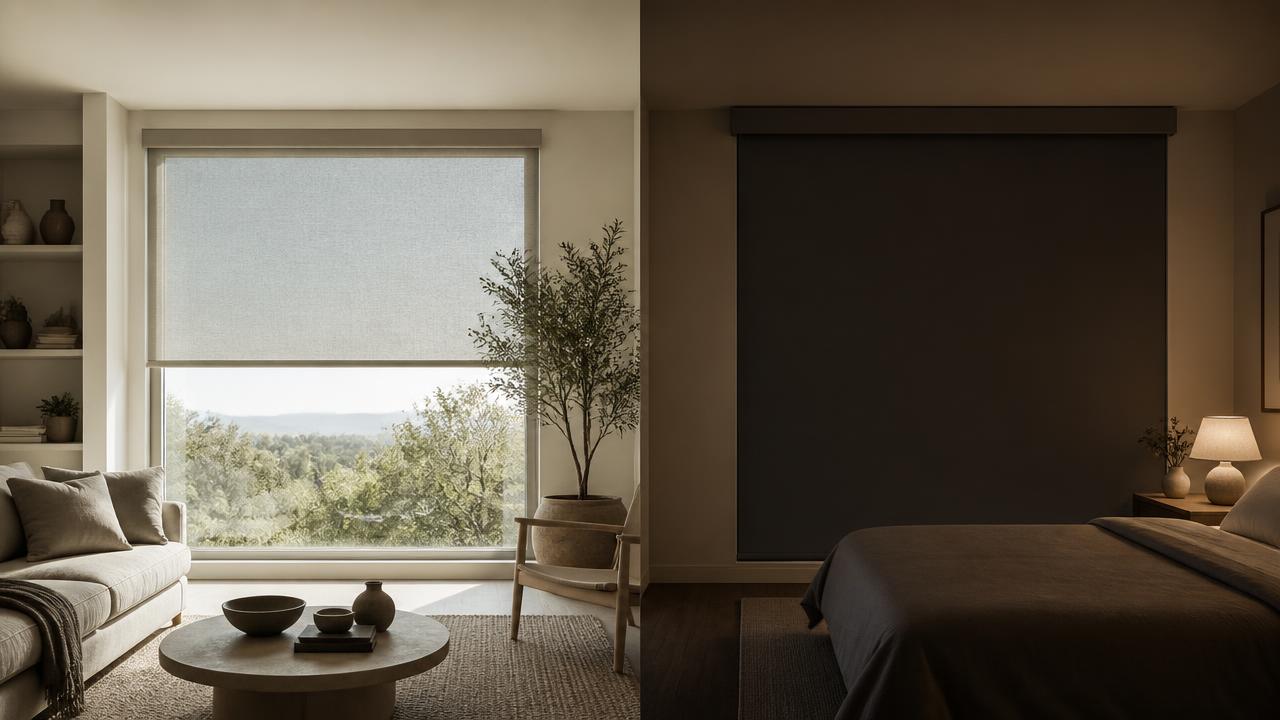
That difference decides what you see when the covering is closed. A solar screen shade filters daylight and keeps a softened view outward. A blackout shade gives you darkness and no view at all. A light filtering fabric gives you a bright room and no view in either direction.
So the real question is not *"do I want shades"*. It is "how much light do I want, and what do I want to see when it is closed?"
The Three Jobs a Shade Actually Does
Privacy
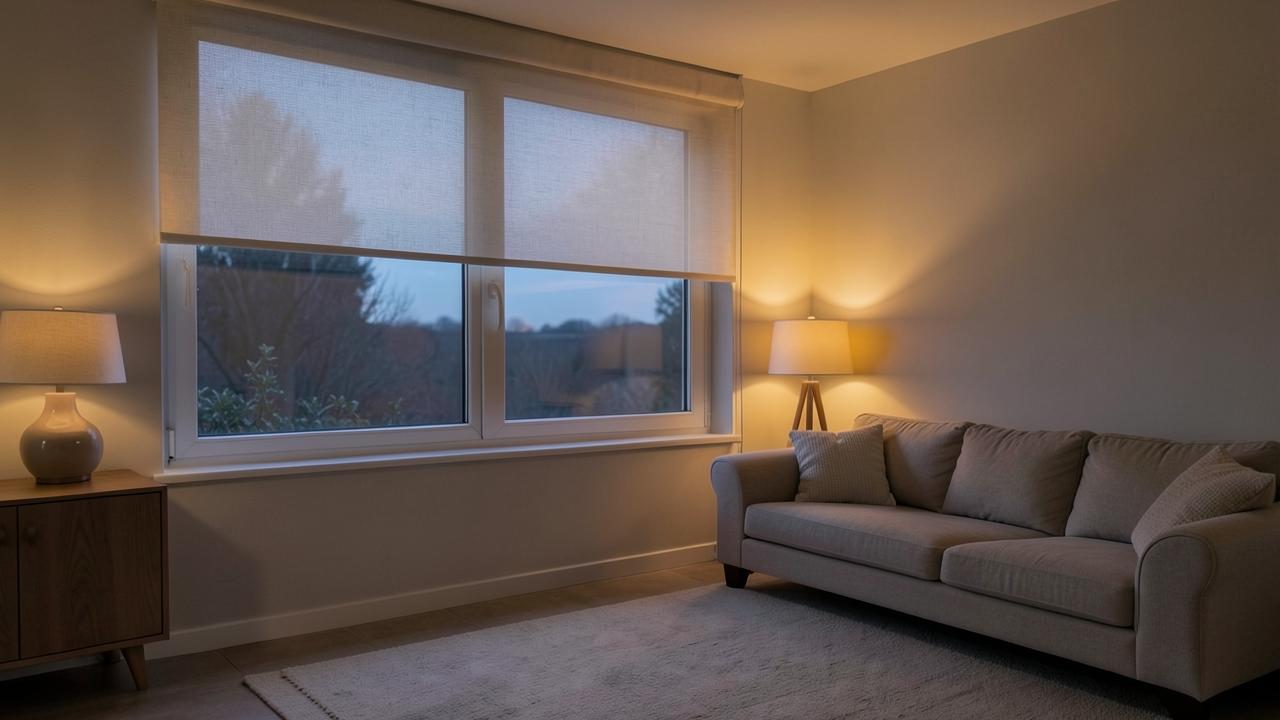
In daylight, an open weave fabric can cut visibility from outside while still letting light through. After dark this reverses. When the room is lit and the outside is dark, that same fabric stops doing the same job.
This is why choosing fabric purely on how it looks in a showroom is misleading. It needs to be judged under the light it will actually live in, which usually means asking what the window looks like at nine in the evening, not at noon.
Glare
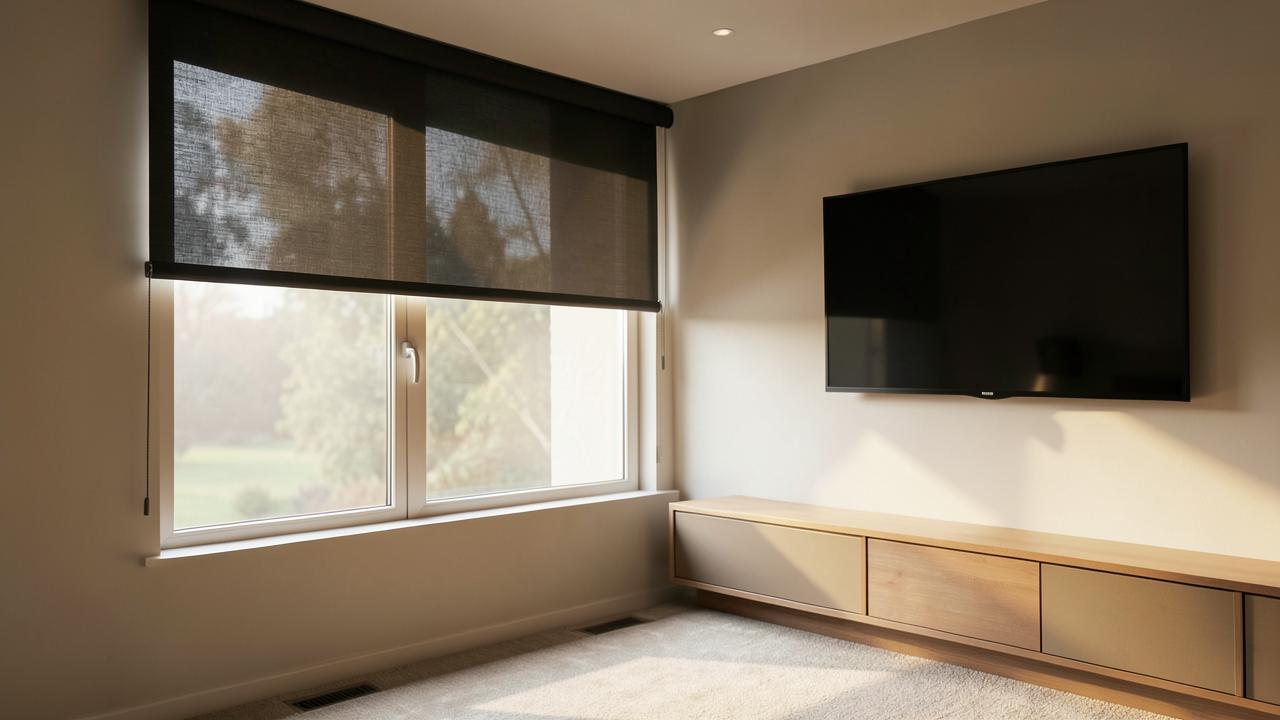
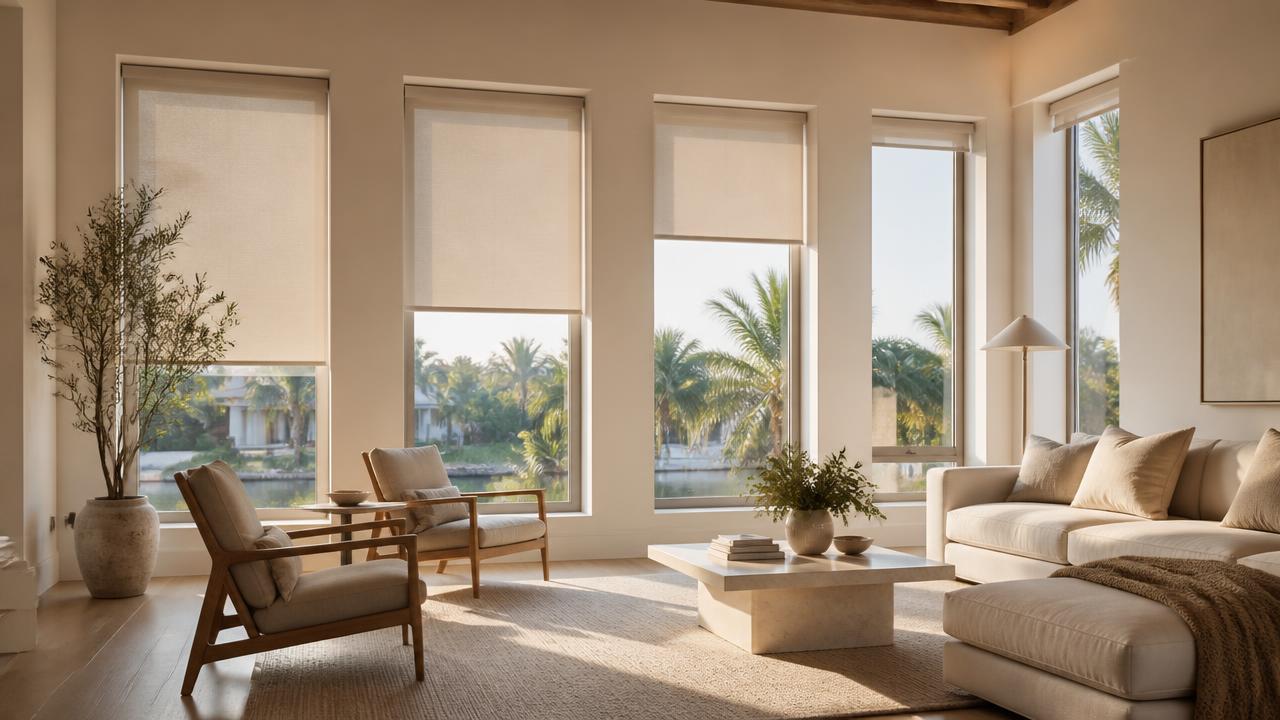
A view is not much use if the afternoon sun makes the television unwatchable. Solar screen fabric exists specifically for this: cut the glare, keep the view.
In Boca Raton this is close to a universal problem on west facing rooms, which get the worst of it in the hours people are actually home.
Heat
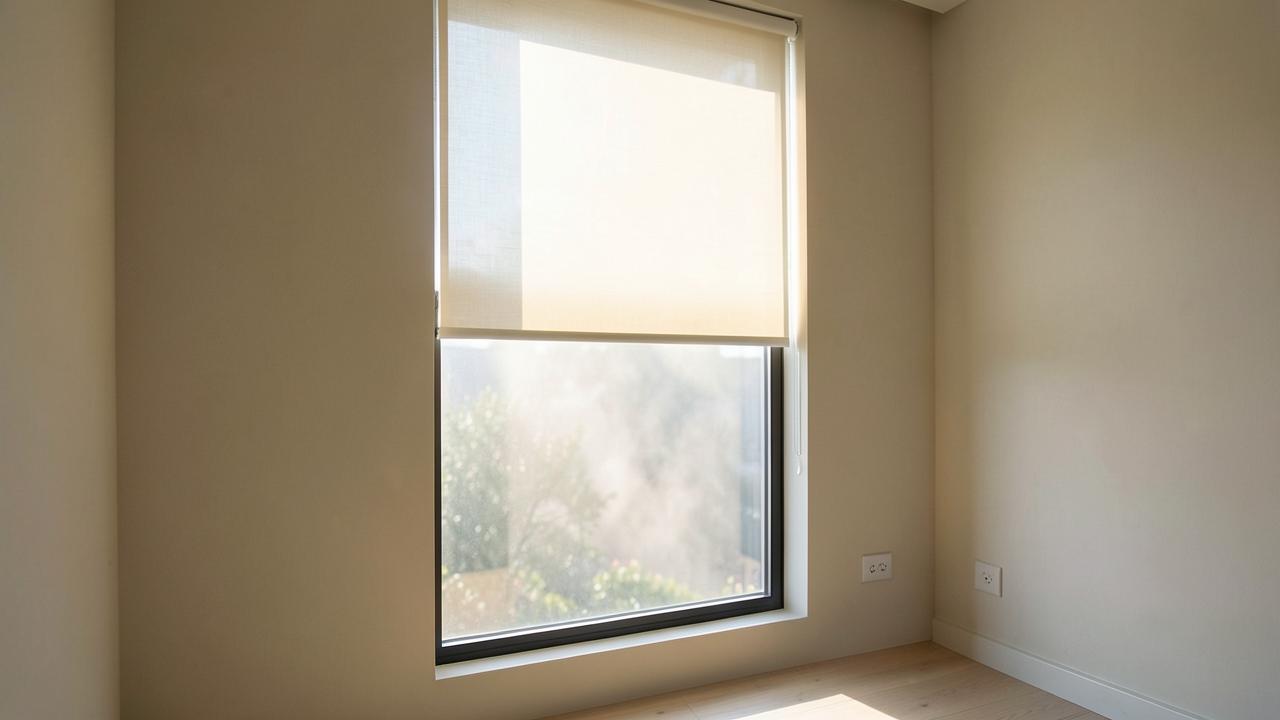
Windows are a major route for unwanted heat gain. The U.S. Department of Energy recommends installing white window shades, drapes or blinds to reflect heat away from the house, and closing curtains on south and west facing windows during the day.
That is worth reading carefully, because it is about operation, not just product. A shade that is never lowered on a west facing window does nothing. The performance comes from the shade being in the right position at the right time, which is exactly the part people stop doing after the first month.
How much a shade helps depends on orientation, glazing, fabric, openness, fit, and how consistently it gets used. Anyone quoting you a specific percentage off your power bill is guessing.
Manual Shades Are Often The Right Answer
Manual shades get dismissed too quickly.
For a room with one or two windows you can reach, manual operation is inexpensive, reliable, and completely adequate. You pull the shade. It stops where you want. Nothing to charge, nothing to pair, nothing to program.
Simplicity is sometimes the better technology, and a good installer should be willing to tell you when that is the case.
When Motorization Starts To Make Sense
Motorization becomes worth it when operating the shades stops being a single action and becomes a routine.
One window is not a routine. Twenty shades across four rooms is. So is a single window you physically cannot reach, or a slider so wide that operating it by hand is a two handed job.
The clearest cases are high windows above stairs or entryways, floor to ceiling glass, wide patio sliders, bedrooms and media rooms where darkness matters, and homes that sit empty for part of the year.
If you want the detailed comparison between manual, corded and motorized operation, that is covered separately in how motorized shades work.
What A Professional Installer Should Actually Do
This is where a real installation differs from putting a motor in a roller shade and handing over a remote.
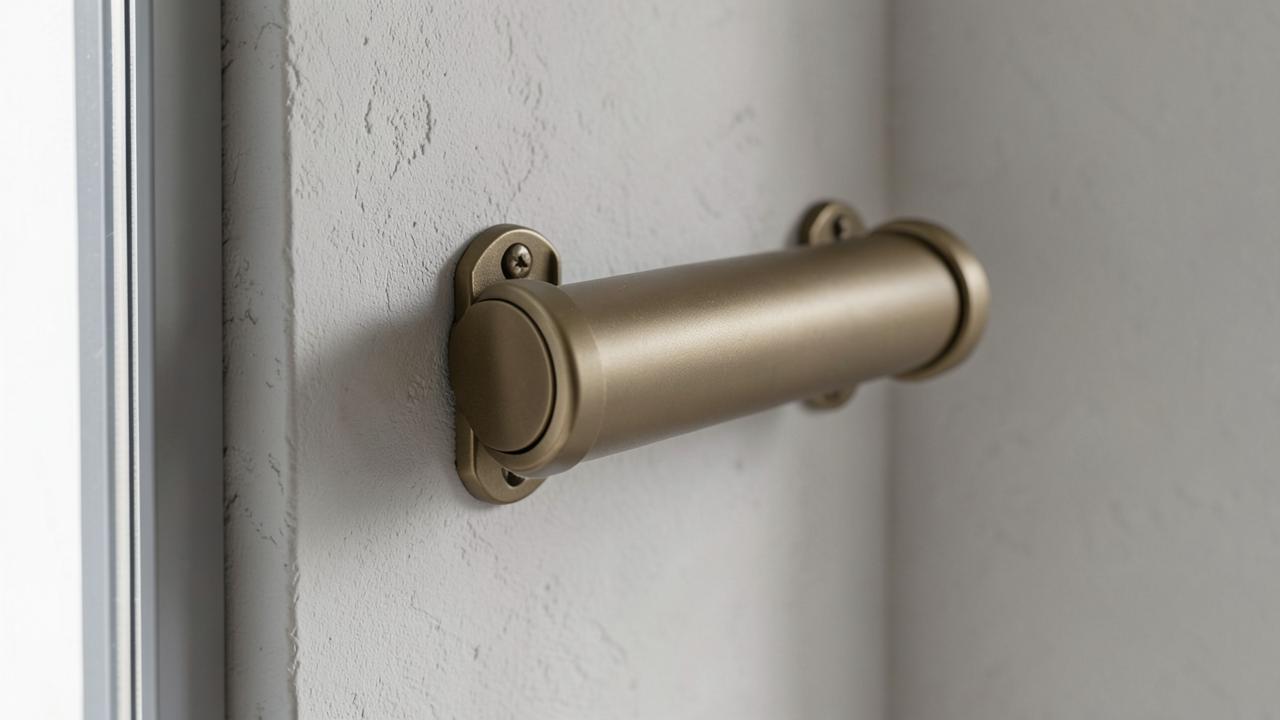
A good project starts with the window and the room, not the hardware. Before anything is ordered, the installer should understand the window dimensions, what the wall is actually made of, the mounting depth available, which way the window faces, how much sun it gets, whether you want the view or darkness, and how you use the room.
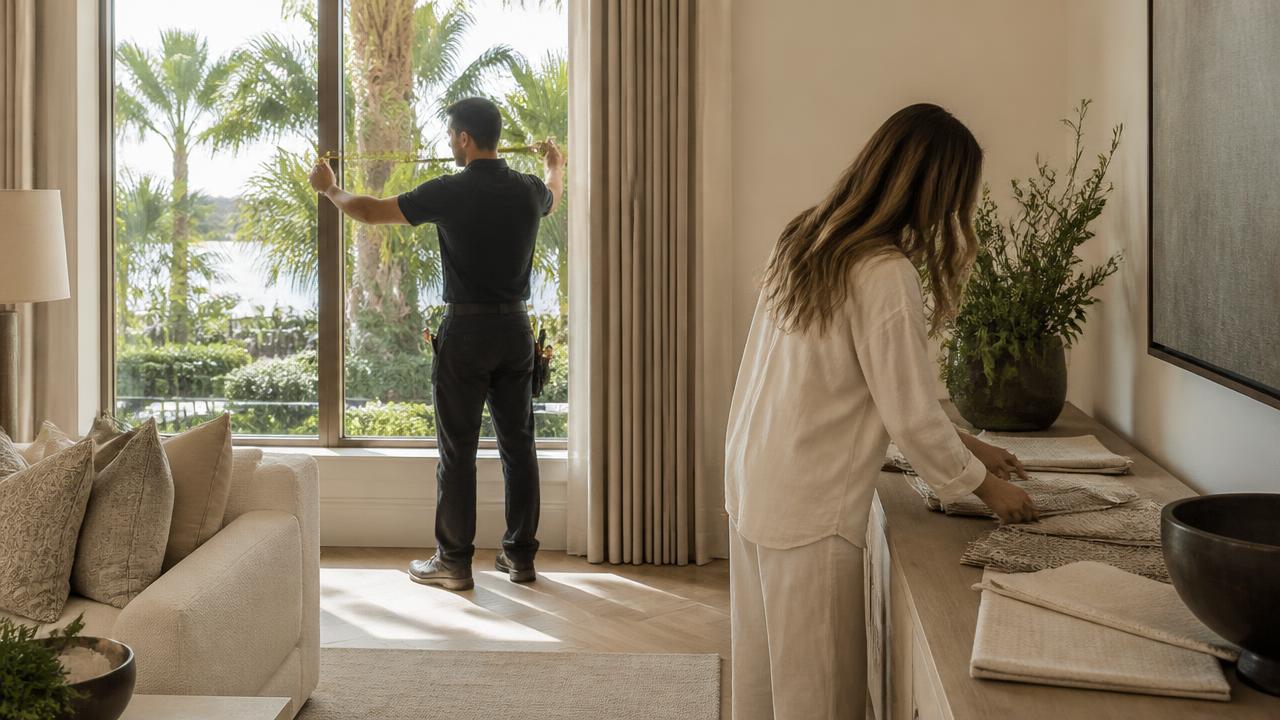
Measure
Every window measured individually. Inside mount or outside mount decided per opening, not assumed for the whole house. Bracket position, clearance, and the wall substrate identified before the order goes in, because what the wall is made of decides what the shade is fixed with.
Specify the fabric
Fabric determines most of what you will actually experience. A west facing living room needs something very different from a bedroom where the goal is darkness.
The questions worth asking here: do you want the view, do you want glare cut, do you want darkness, do you want privacy at night. There is rarely one fabric that does all four equally well, and an installer who says otherwise is selling rather than specifying.
Install to a standard
Brackets fixed to structure where structure exists, and to appropriately rated anchors where it does not. Shade level. Hardware sitting cleanly against the architecture rather than announcing itself.
This is the part nobody sees after the first week and the part that determines whether the shade is still working in five years.
Test everything before leaving
Every shade run through its full travel. Every control confirmed against the right shade. Every bracket checked under load. A walkthrough where you actually operate it yourself rather than watching someone else do it.
A finished installation should feel like one coherent job, not a collection of separately mounted products.
The Decision, Simplified
Start with the problem, not the product.
Does the window need covering at all? If not, leave it.
What is the primary job? Privacy, glare, heat, darkness, or decoration. Name one before naming three.
Could glass or architecture solve it permanently? Sometimes, and that is a legitimate answer.
Would curtains, shutters, blinds, or manual shades solve it? Often, and cheaper.
Do you have many windows, large windows, windows you cannot reach, or a routine you have stopped keeping up with? Now motorization is worth costing out.
The goal is not to motorize every window because it is possible. It is to motorize the windows where it genuinely changes how the room works.
The Bottom Line
The history of window coverings is not really a story about curtains becoming motorized. It is a story about control.
The same handful of problems keep coming back: light, heat, glare, privacy, darkness. What changes is how precisely you can solve them, and how much effort it takes to keep solving them every day.
Sometimes the right answer is a curtain. Sometimes a manual roller shade. Sometimes a shutter, or better glass, or a combination of several.
Start with what the window is doing to the room. Then choose the simplest thing that fixes it.
FAQ
- Are shades better than tinted windows?
- They solve different problems. Tint is permanent and works the same way all day and all year. A shade adjusts, which matters when you want daylight in the morning and glare control by mid afternoon. In hot climates, film is often recommended for east, west and south facing glass, and it can be combined with interior shades rather than replacing them.
- Are motorized shades better than curtains?
- Not universally. Curtains are usually better where fabric, softness and decorative impact are the priority. Shades are stronger where precise light control, large or unreachable windows, and specific fabric performance matter more.
- Do shades reduce heat?
- They can contribute. The Department of Energy recommends white shades, drapes or blinds to reflect heat away, and closing them on south and west facing windows during the day. How much difference it makes in your home depends on the glass, orientation, fabric and how consistently the shades actually get used.
- Does every window need to be motorized?
- No. A sensible plan motorizes the windows where automation genuinely helps and leaves the rest manual.
- What should a professional installer do beyond mounting the shade?
- Measure each opening individually, identify the wall substrate before ordering, specify fabric against the actual problem in each room, fix to structure or rated anchors, and test every shade under load before leaving.
- Are these shades custom made?
- Yes. Every shade is cut to the exact measurements taken at your home, not a stock size. Production starts only after the order is confirmed. This is also why the measurement itself is treated as the most important step in the process.