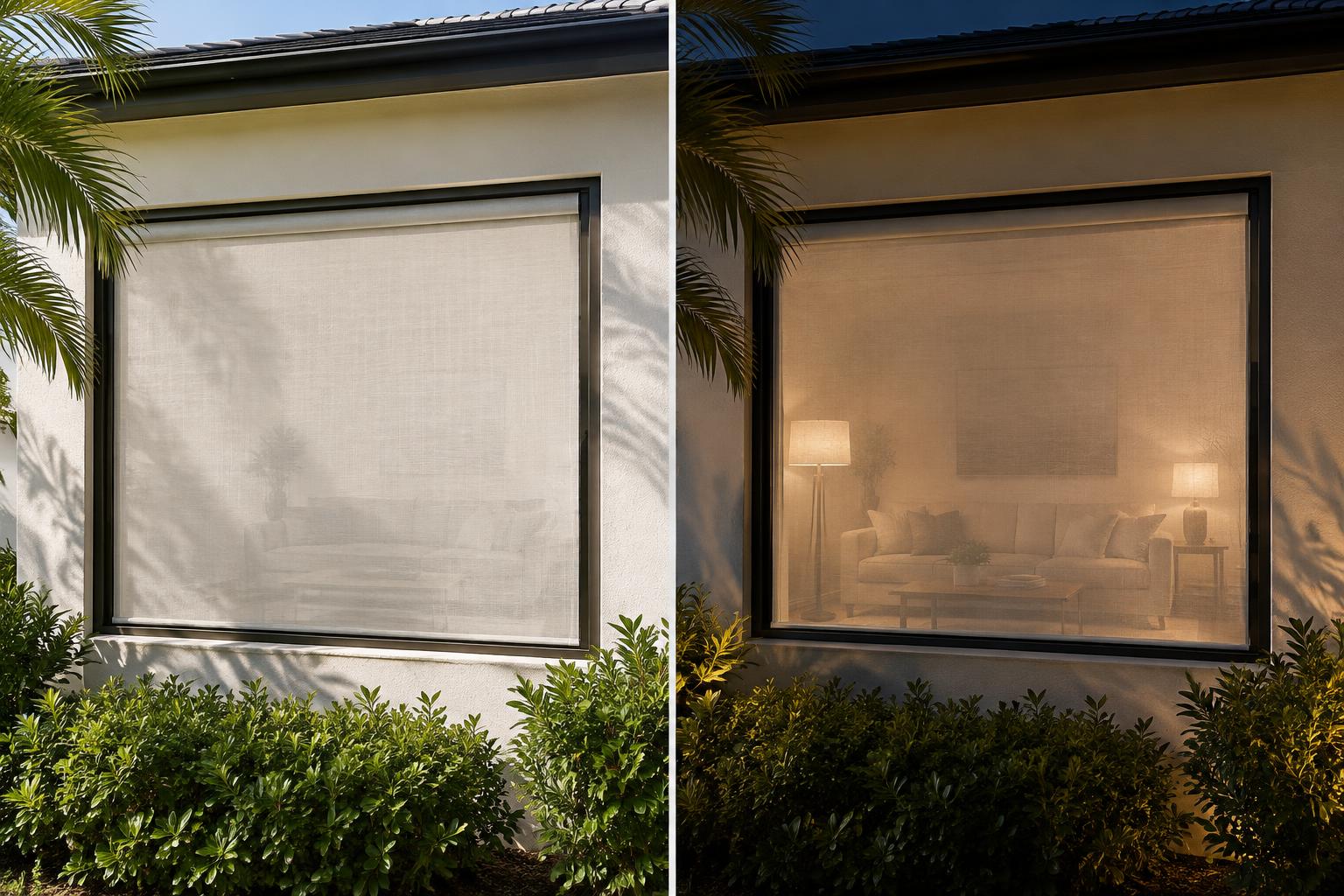
Yes, people can often see through shades at night. Light passes through a fabric in both directions, and people see from the darker side into the brighter one.
During the day the street is brighter than your room, so the shade hides you. After dark, with the lamps on, your room is the bright side, and an open-weave screen shade can show the street almost everything.
Fabrics that block light keep their privacy at night. Screen fabrics mostly do not.
Picture a typical Boca Raton evening. Dinner is on the table, the lights are on, and the neighbor walking his dog sees your whole kitchen. You lowered the shades an hour ago. That same afternoon, from the sidewalk, you could not see a thing through them.
Most people pick shades at 2 in the afternoon, look at the window from the street once, see nothing, and decide the job is done. Nobody repeats the check at 9 in the evening.
Why do shades become see-through at night?
Your eye always sees from the dark side into the bright side.
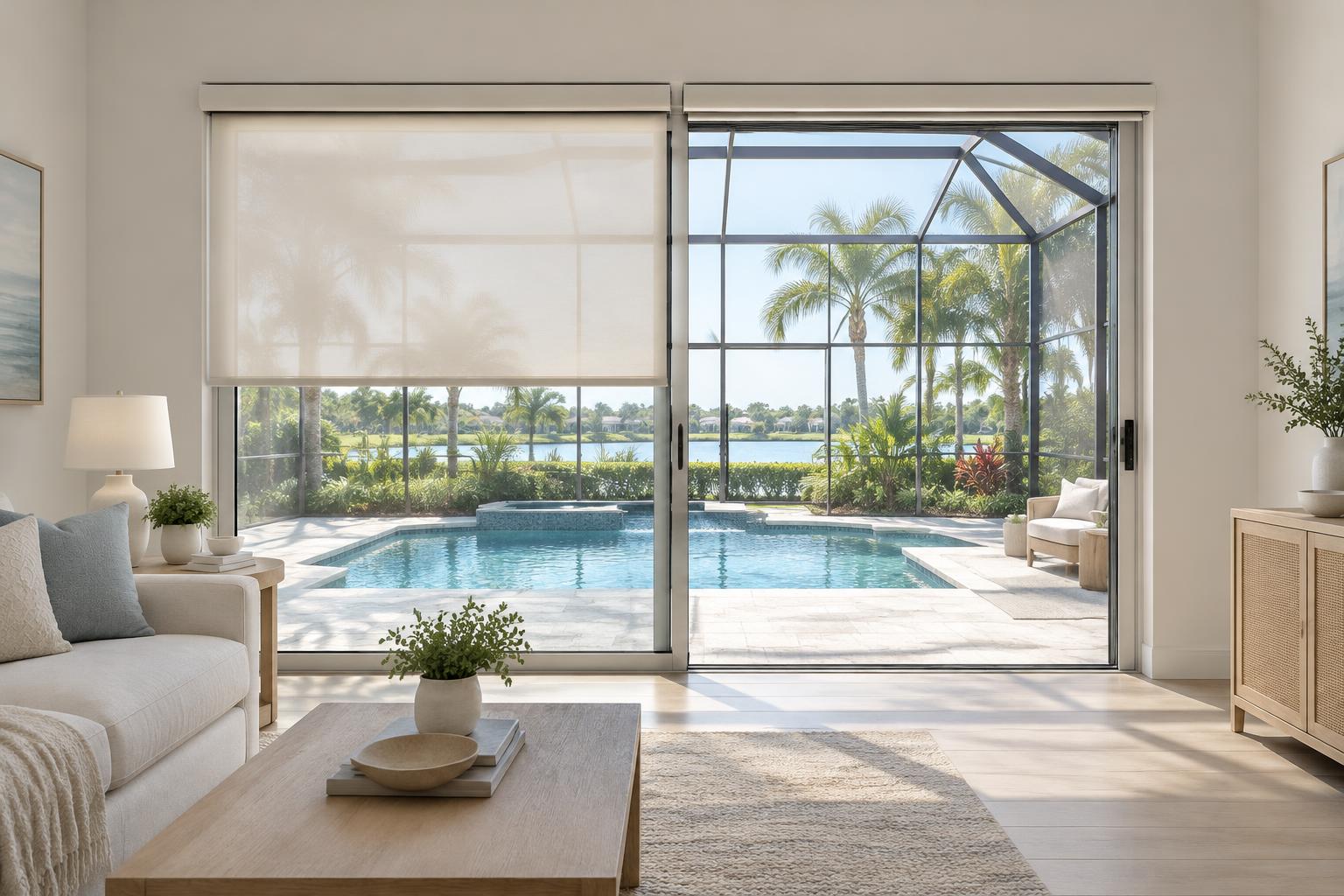
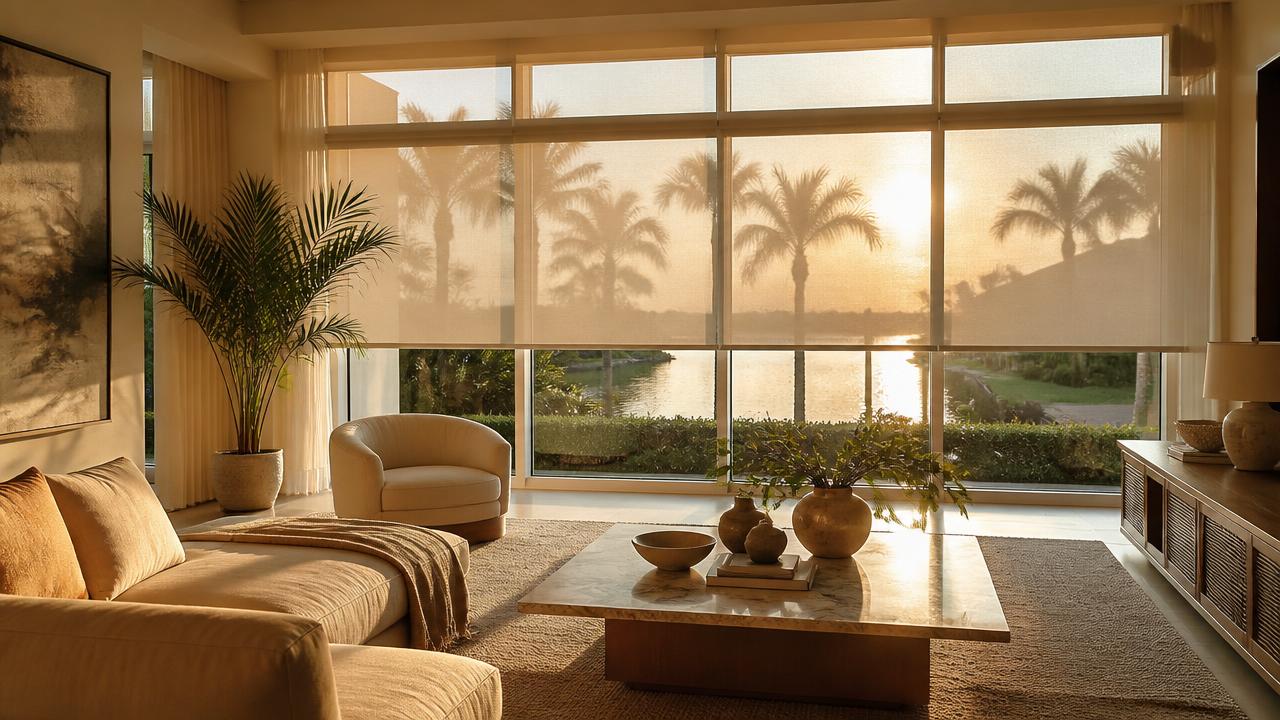
At noon the Florida sun outside is far brighter than any room. From the street, the shade looks like a solid surface with daylight bouncing off it, and from inside you see right through it to the palms.
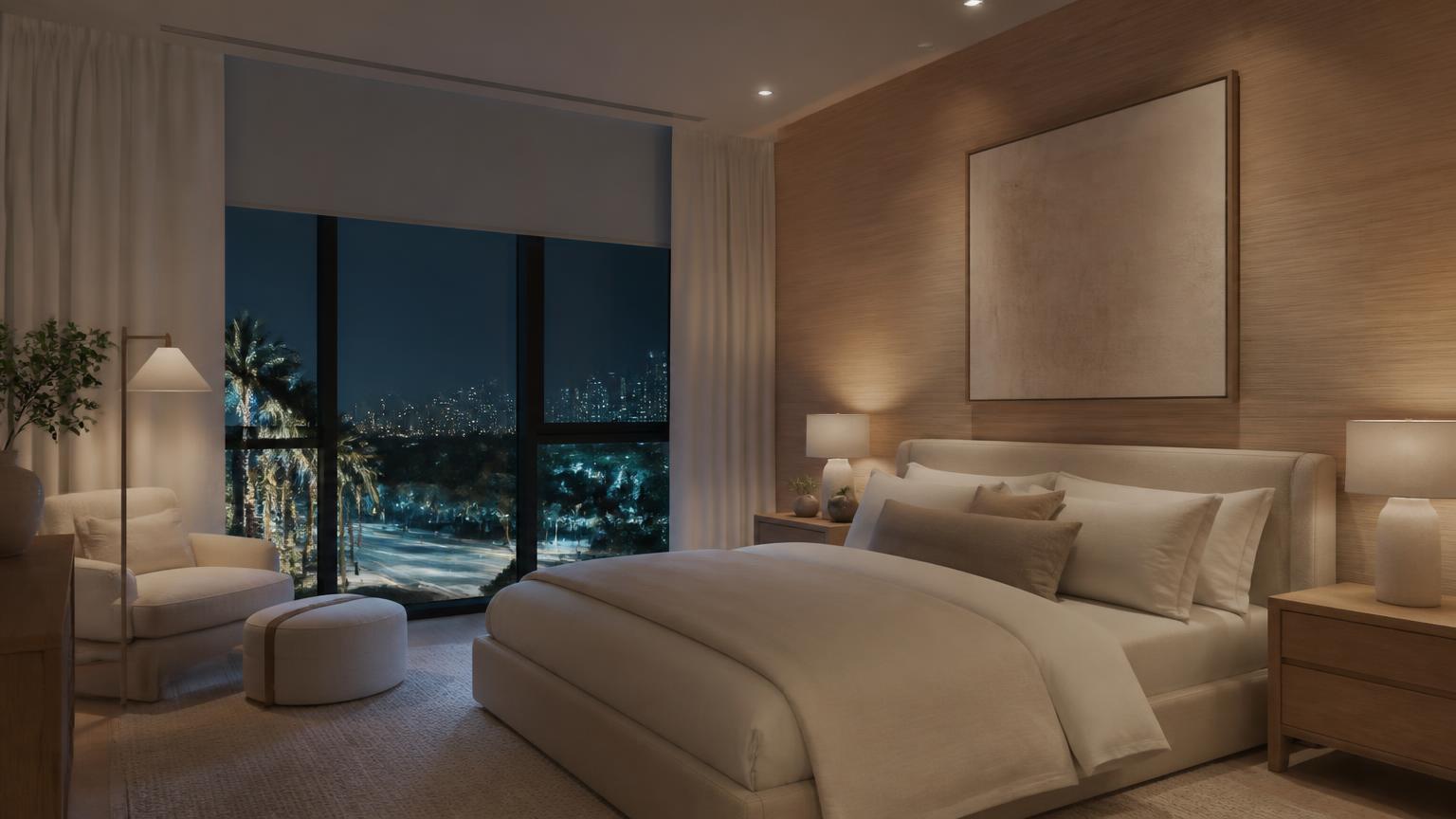
At night the picture flips. The lamps make your room the bright side, the street goes dark, and the small openings in a screen fabric now work for the people outside. From inside you mostly see your own reflection.
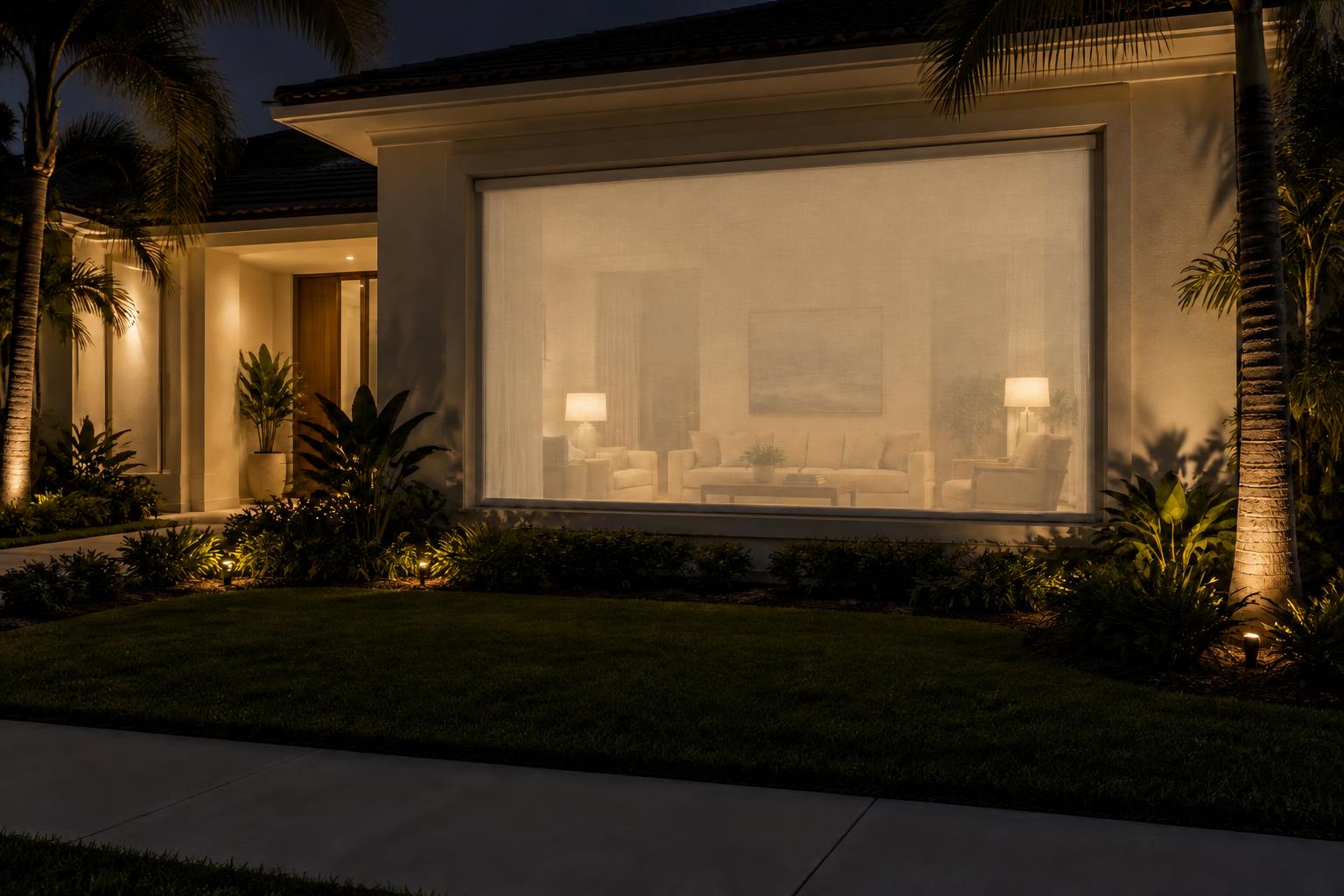
The retailer Blinds.com explains it the same way: at night, indoor lighting lets people outside see in. One manufacturer's 2026 fabric guide sums it up in a single line: what you see out during the day is what can be seen in at night with the lights on.
Which shade fabrics stay private after dark?
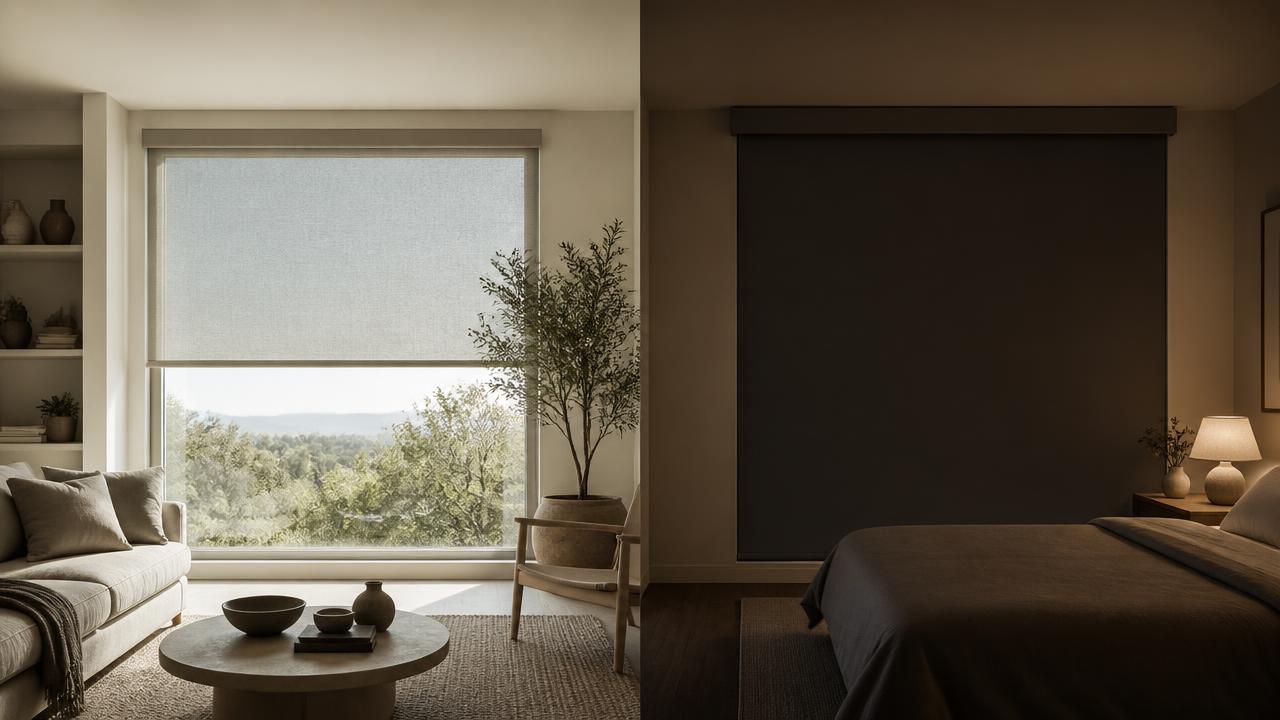
Screen (solar) shades. You will see a number like 1%, 3%, 5% or 10%. That is the openness, the share of the weave that is holes. 10% gives you a clear view of the water at noon and gives the neighbors a clear view of your living room at night. 1% is much tighter, but it is still a screen.
Light filtering shades. No view through, soft light comes in. After dark they hide faces and details, but a bright lamp right behind the fabric can still show a silhouette.
Room darkening and blackout shades. They block light, so they block the view too, in both directions. If a window has to be private at night, this group is the safest.
Which windows should you check first?
The bathroom first. Even frosted glass shows a shape with the light on.
Next, the bedroom. You care about privacy at night more than about the view, and often about darkness too.
The living room facing the street is the tricky one. You want the view by day and privacy by night, and a single shade rarely does both well.
Ground floor windows facing the pool or the lanai are often only a few feet from the neighbors.
Finally, if you live in a high-rise condo: the 14th floor feels private until you notice the tower across the Intracoastal. At night every lit window there is a small TV screen, and so is yours.
How do you get the view by day and privacy by night?
The usual answer is two shades on one window. A screen in front keeps the view and cuts the glare during the day. Behind it, a light filtering or blackout shade comes down in the evening.
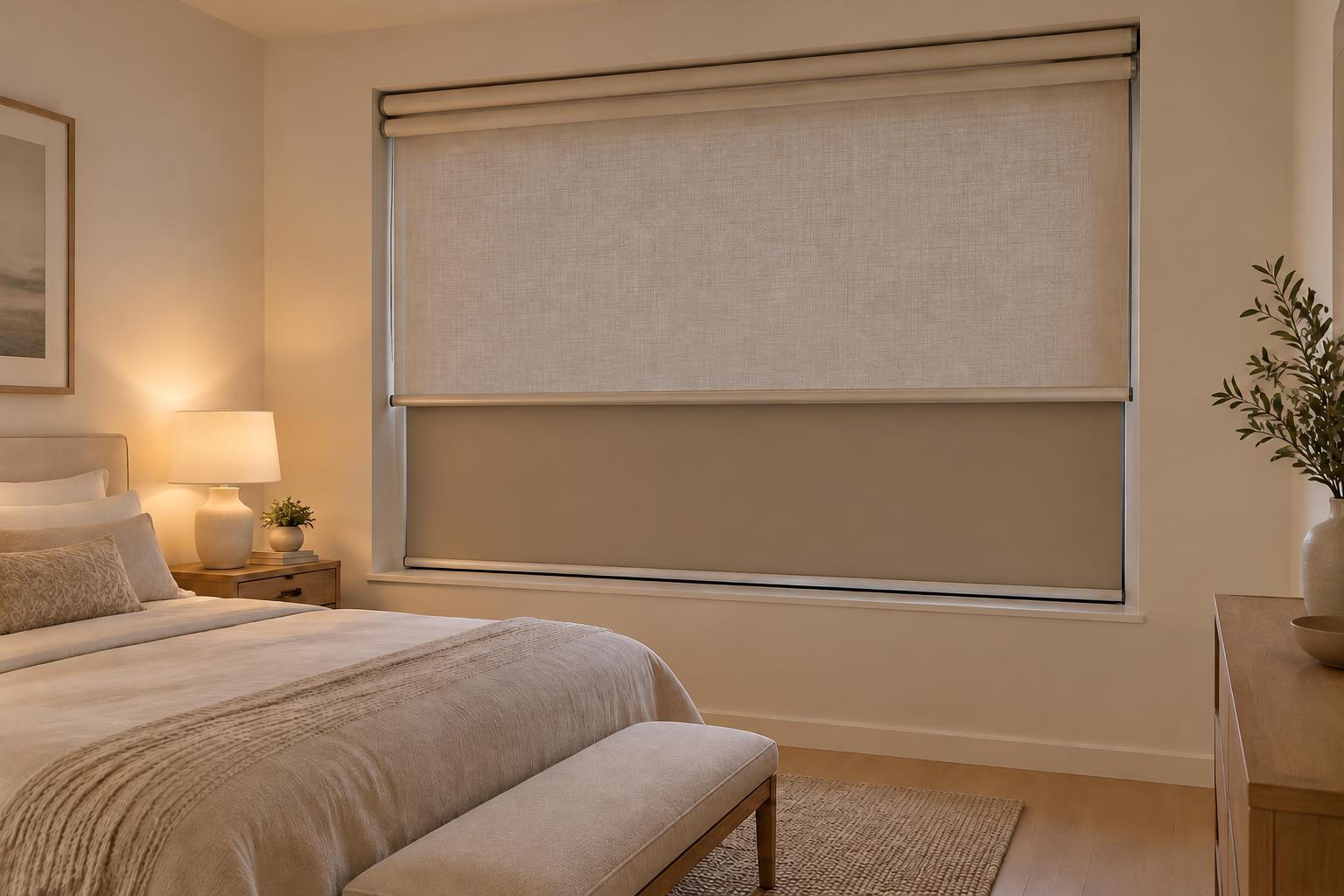
The other option is discipline. You lower the more private shade at sunset. Motorized shades can do this on a schedule, so nobody has to remember at 7:30 every evening.
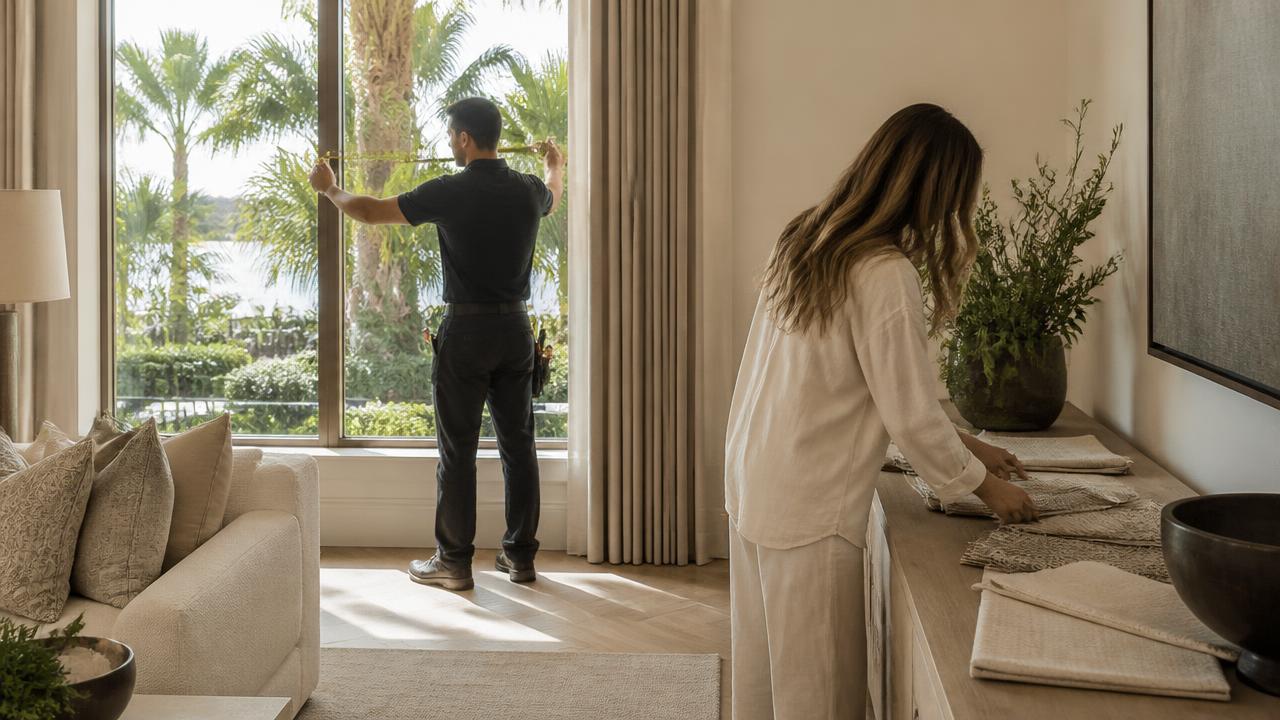
Whether two shades fit depends on how deep the window frame is and how big the glass is. This is worth measuring on site, not guessing.
For a room-by-room comparison of fabrics, see Solar Shades vs Blackout Shades: Which Goes Where?. For privacy options in general, see Privacy.
A 5-minute test you can do tonight
- Wait until it is fully dark.
- Turn on the lights you normally use in the evening.
- Lower the shades the way you usually do.
- Walk outside to where a neighbor or a passer-by would stand.
- Write down what you see in each window: the room, people, the TV, or just a warm glow.
That list of problem windows is the most useful thing you can bring to a shade consultation. If you have fabric samples at home, hold them against the glass in the evening as well, not only during the day.
FAQ
- Can people see through solar shades at night?
- Usually yes, when your lights are on and it is dark outside. The higher the openness percentage, the more they can see.
- Is a 1% screen enough for privacy at night?
- It shows much less than 3% or 5%, but it is still a screen fabric made to keep the view, not to give full privacy after dark.
- Do light filtering shades work at night?
- They hide detail. A strong lamp directly behind the fabric can still show a silhouette.
- What is the most private option at night?
- Room darkening or blackout fabric, because it blocks light and the view in both directions.
- Do I need this on a high floor?
- If there is a building across from you, yes. Towers across the water can see into lit rooms.