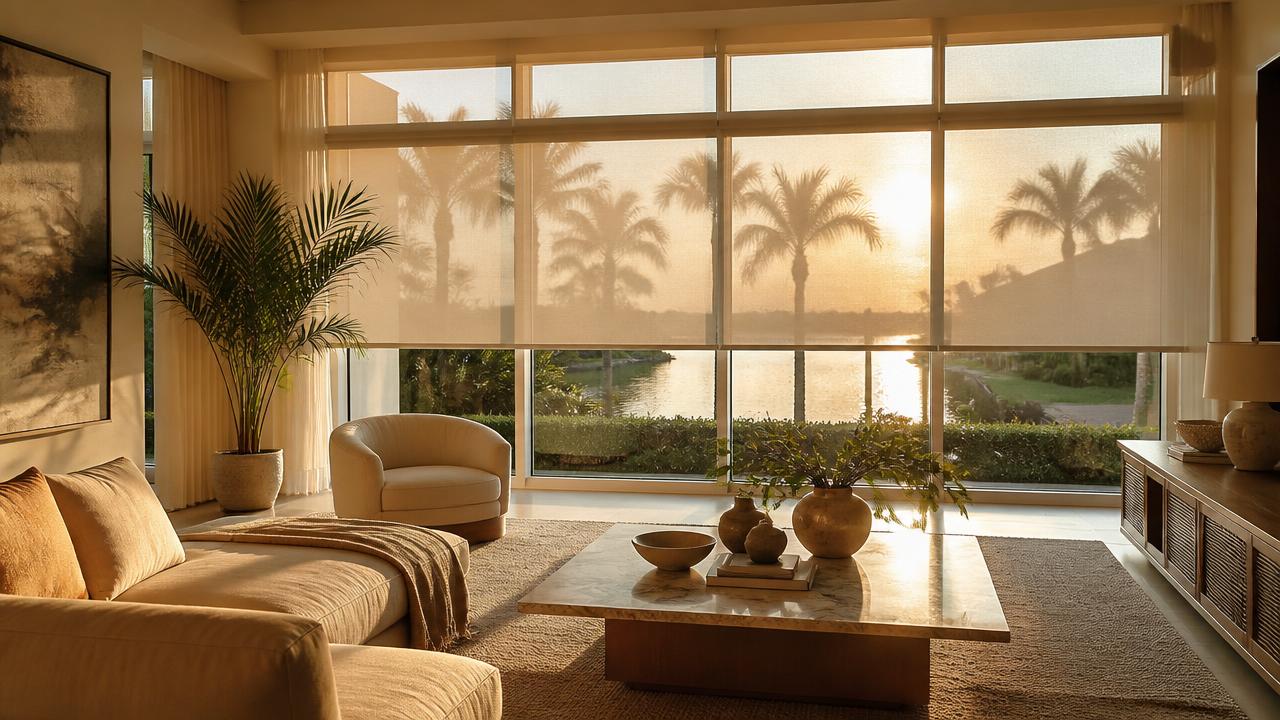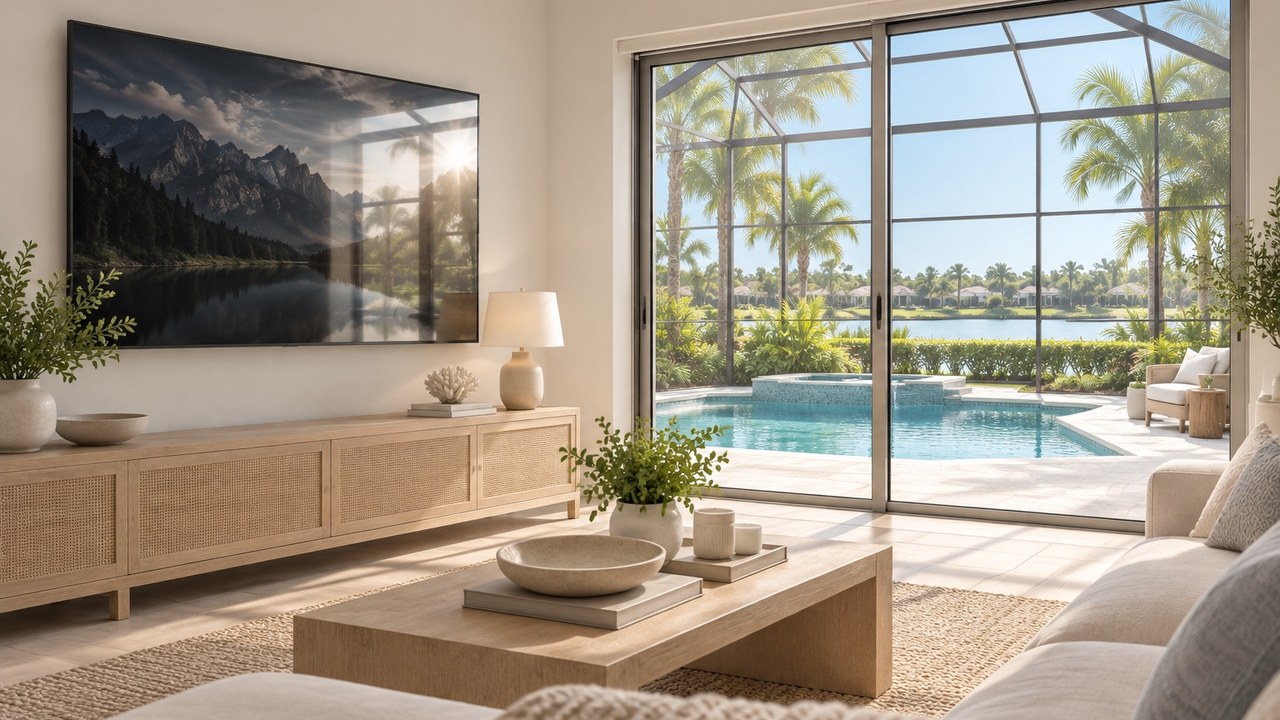
When you can see the window more clearly than the game, start by changing the screen angle. If the screen has to stay put, try a solar shade at the window causing the reflection. A solar shade can soften glare while keeping some of the view. If direct sun still washes out the picture, compare it with a more opaque shade.
Find the window that's causing the glare
Do this when the glare usually shows up. A room that looks fine at breakfast can be hard to work in by late afternoon.
- Sit where you normally watch or work. Pause on a dark scene or open a dark image. It makes reflections easier to see.
- Cover one window at a time. Close the existing shade or curtain if you have one. If the reflection disappears, you've found the window to work on. If it stays, try switching off nearby lamps one at a time.
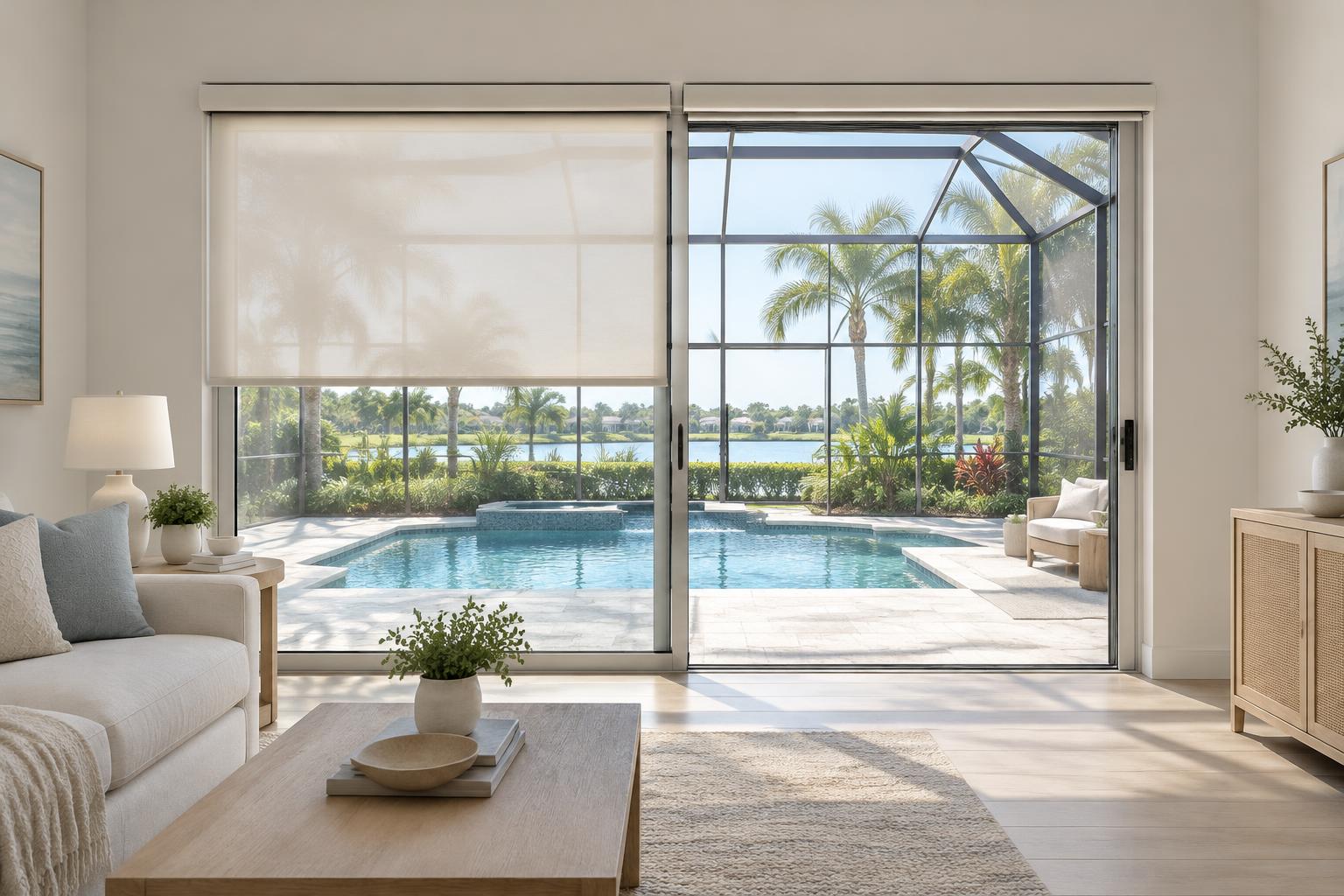
- Note the time and what you see. Is there a clear reflection of the window, or is a bright patch washing out the picture? In a Boca Raton living room that faces a pool or canal, check whether the bright spot lines up with the water, too.
- Decide what you want to keep. You might want a clear view during the day, or you might be happy to give it up while watching TV.
Try turning the screen before covering the window
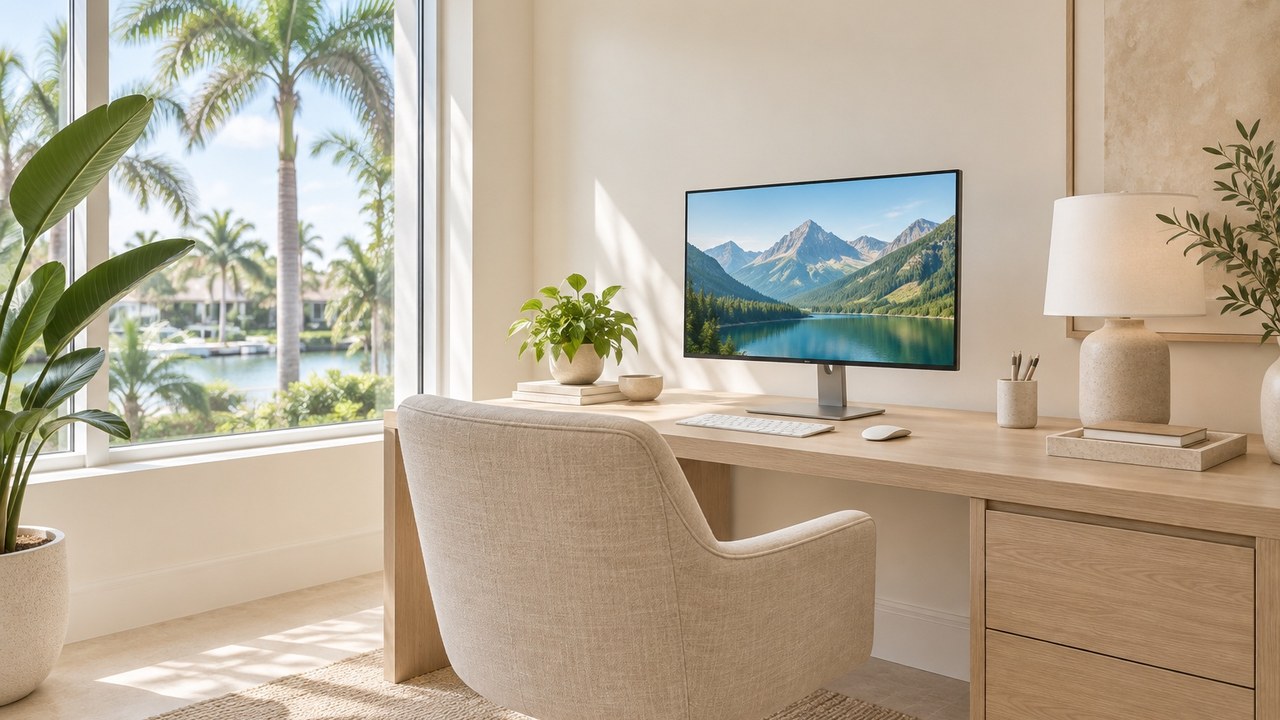
If you can see a window reflected in your monitor, try putting the window to the side of your desk. That's the layout OSHA recommends to reduce monitor glare. A small turn may be enough. If your TV is on a swivel mount, change the angle slightly, then check the picture from your usual seat.
Which shade reduces glare without hiding the view?
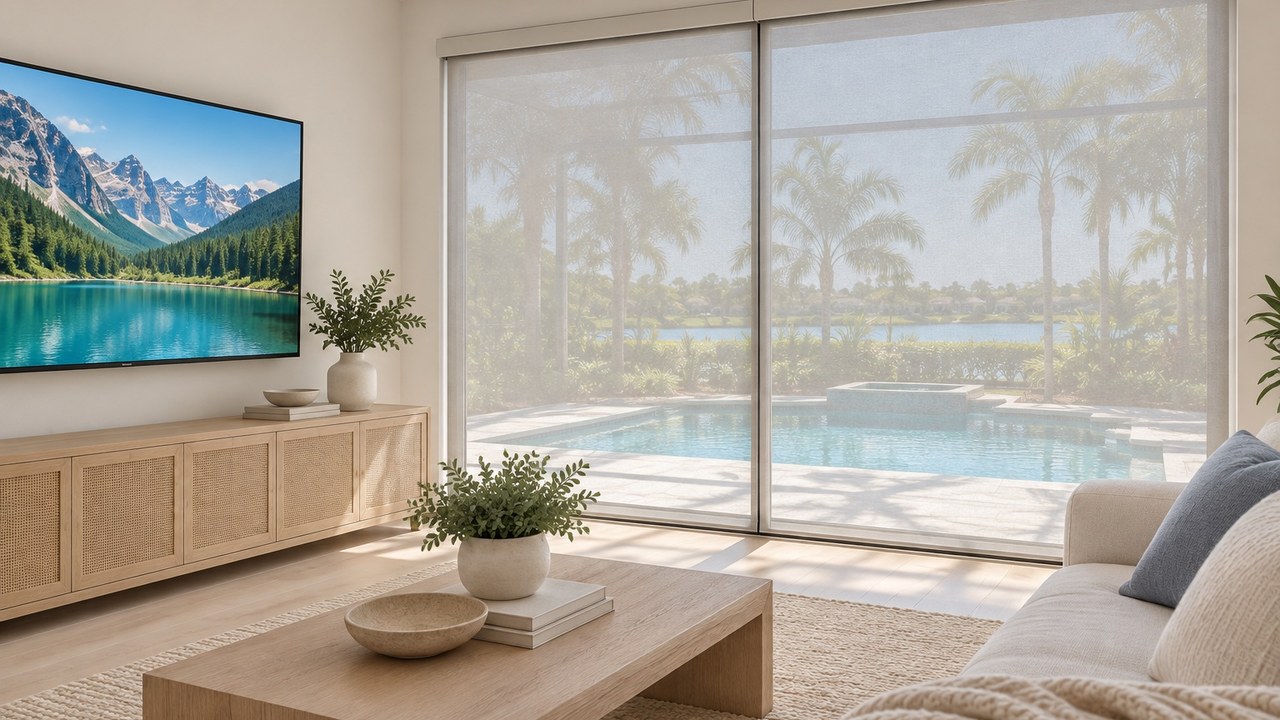
Start with a solar shade, a woven window shade you can see through in daylight. For a living room or home office, compare two samples of the same color with different openness. Then try a lighter and a darker sample at the same openness. Hold each one at the problem window at the time the glare normally starts. Look back at the screen from your seat, then look through the fabric. Which sample makes the picture easier to see without taking away more of the view than you're willing to lose?
| What matters most | What to try |
|---|---|
| Keeping the garden or water view | Start with the more open solar fabric. Check whether it cuts enough glare from your seat. |
| Reading a monitor during the day | Try a tighter weave. Compare it with the more open sample before deciding. |
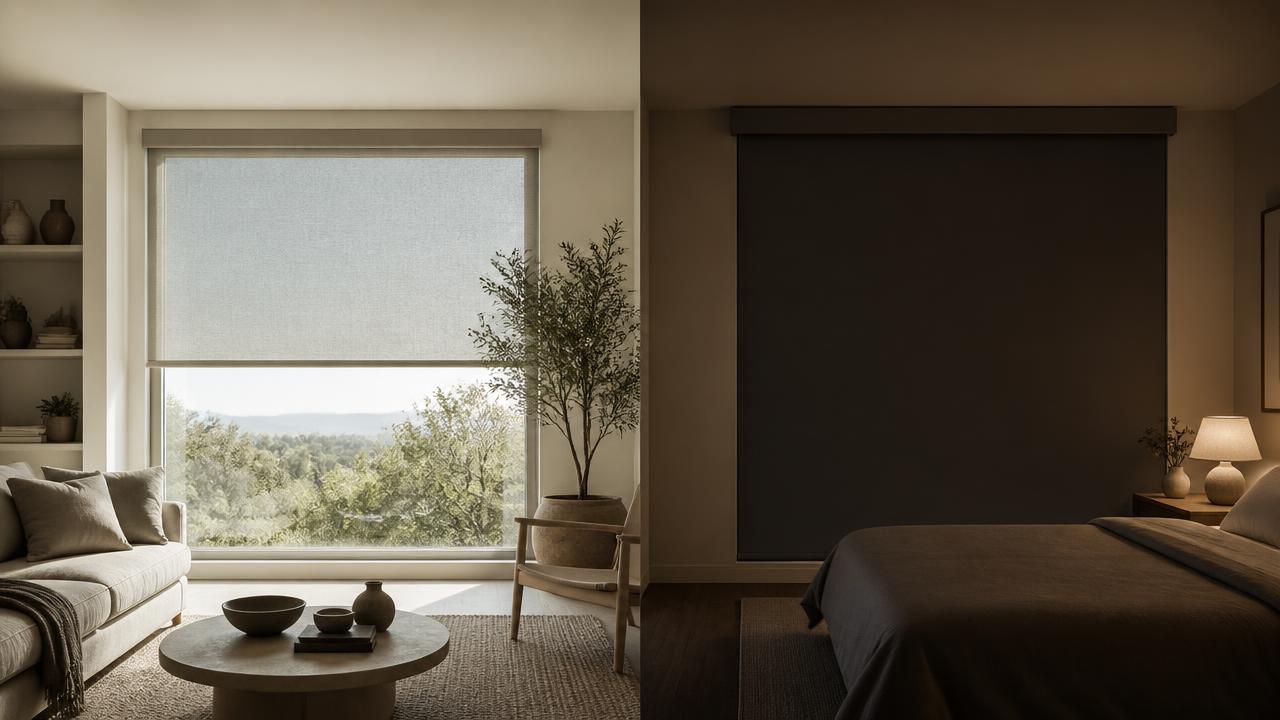
| Getting a darker room for movies | Try a room-darkening or blackout shade. Check for light around the edges of the window opening. |
| Keeping the view by day and darkening the room for movies | Consider a solar shade and a separate, more opaque layer you can lower when you need it. |
What does openness mean?
Openness is the percentage of the fabric made up of gaps between the threads. A fabric with 3% openness has open space across 3% of its area. That number isn't a measure of total light transmission. Draper's fabric guide explains that a tighter weave generally cuts more glare but makes it harder to see outside. A darker mesh can make it easier to see out. Color and weave work together, so compare actual samples.
When is blackout a better fit?
If the room is mainly for movies or a beam of sun still hits the screen through the solar fabric, try a more opaque shade. Phifer describes blackout fabric as blocking light and views through the fabric, used on its own or paired with a more open shade on a dual roller. Blackout fabric blocks light through the fabric itself. Ask where light can still come in around the edges of the opening.
Motorization is a separate decision. It can make a shade easier to lower on a high window. For glare, focus first on the fabric and where it ends at the window.
Related reading: Glare control shades · Solar shades vs. blackout shades · Shades for sliding glass doors
FAQ
- Does the window have to face west to cause glare?
- No. A window can cause glare whenever light from it reaches the screen or reflects toward where you sit. If the problem happens late in the day, see our guide to west-facing windows in Boca Raton.
- Will a solar shade give me privacy at night?
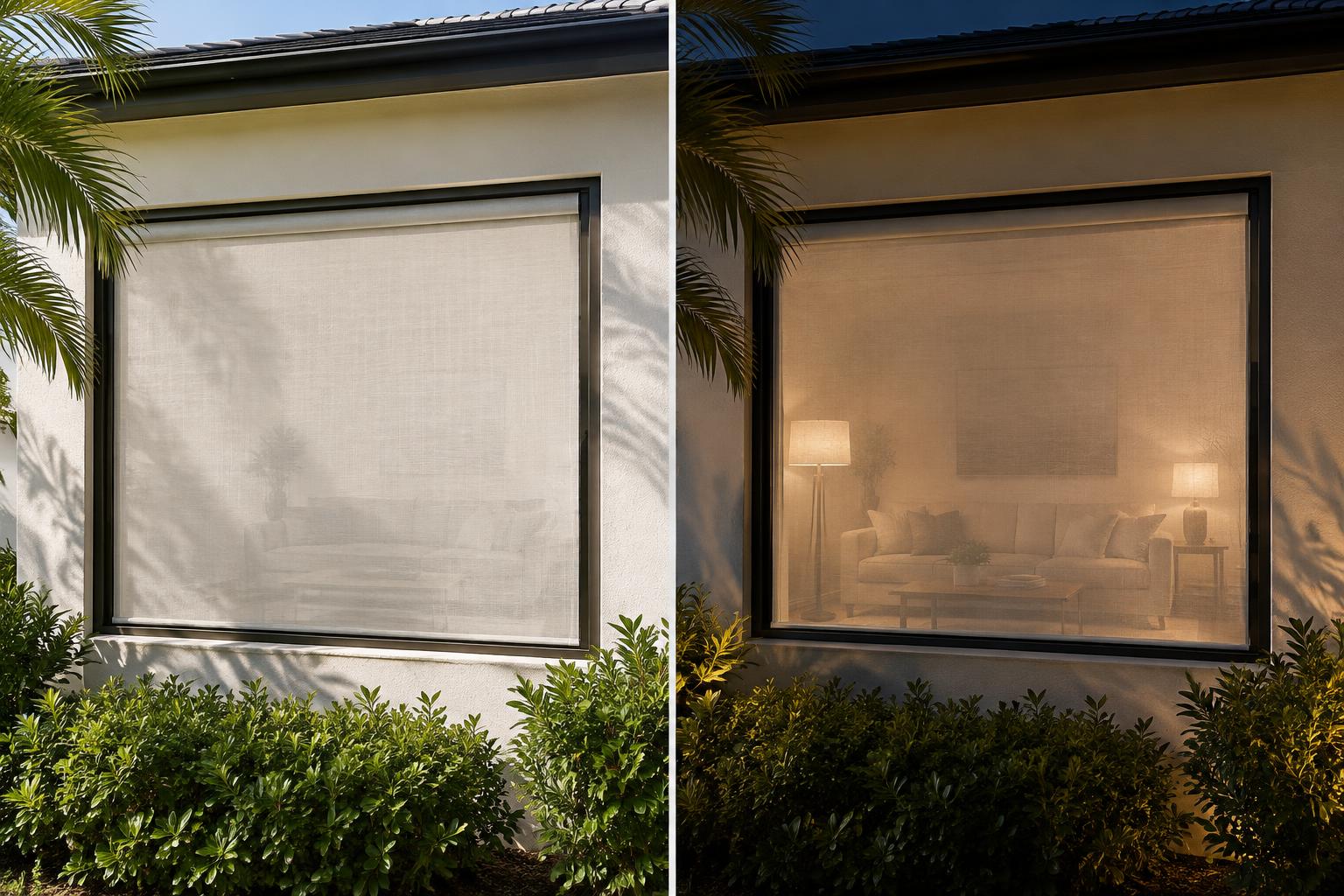
- Don't count on it. A solar fabric can be easier to see through from outside when the room is brighter than the outdoors. If the same window needs evening privacy, read how shades look after sunset.