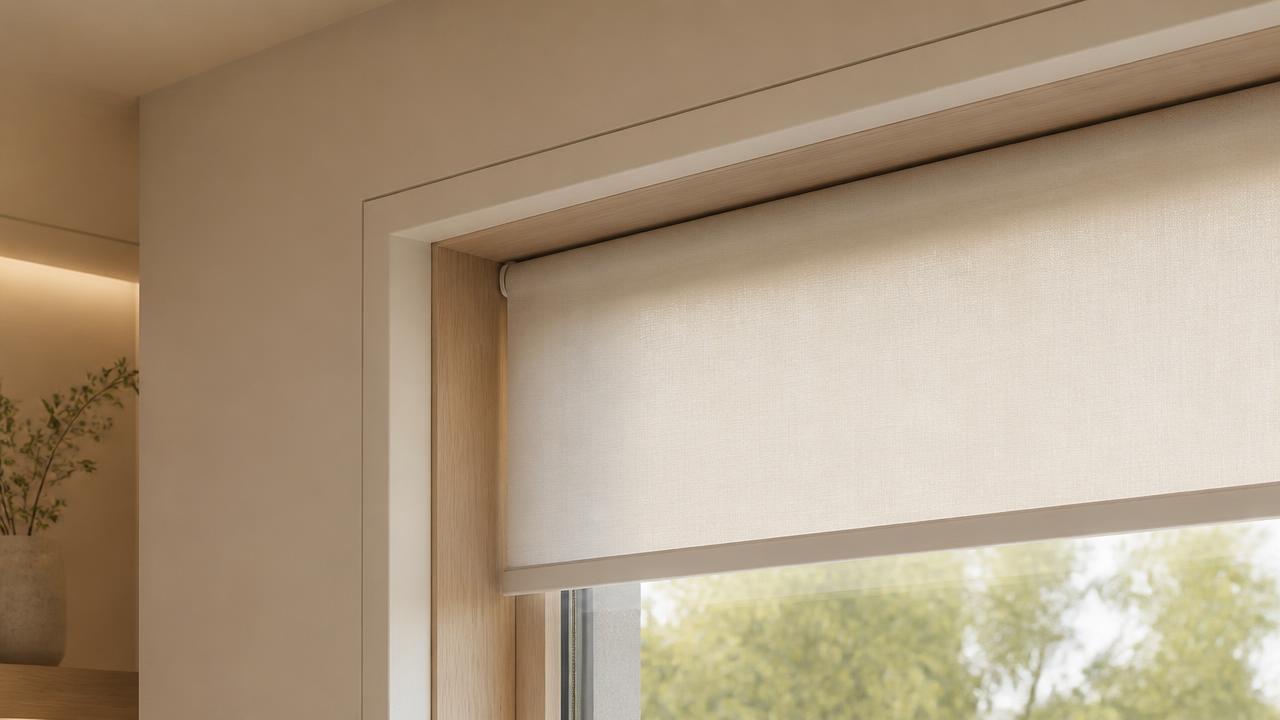
A battery-powered shade needs power again every so often, and when it does, someone has to get to it. On a window you can touch, that takes a minute. On a window 16 feet up, it takes a ladder, a plan, or a phone call.
So before you choose a battery shade for a high window, ask one question: when the battery runs low, how do I reach it?
There are four workable answers: a charging point you can reach, a small solar charger, a ladder you actually trust, or a service visit. Pick one before the shade goes up, not after.
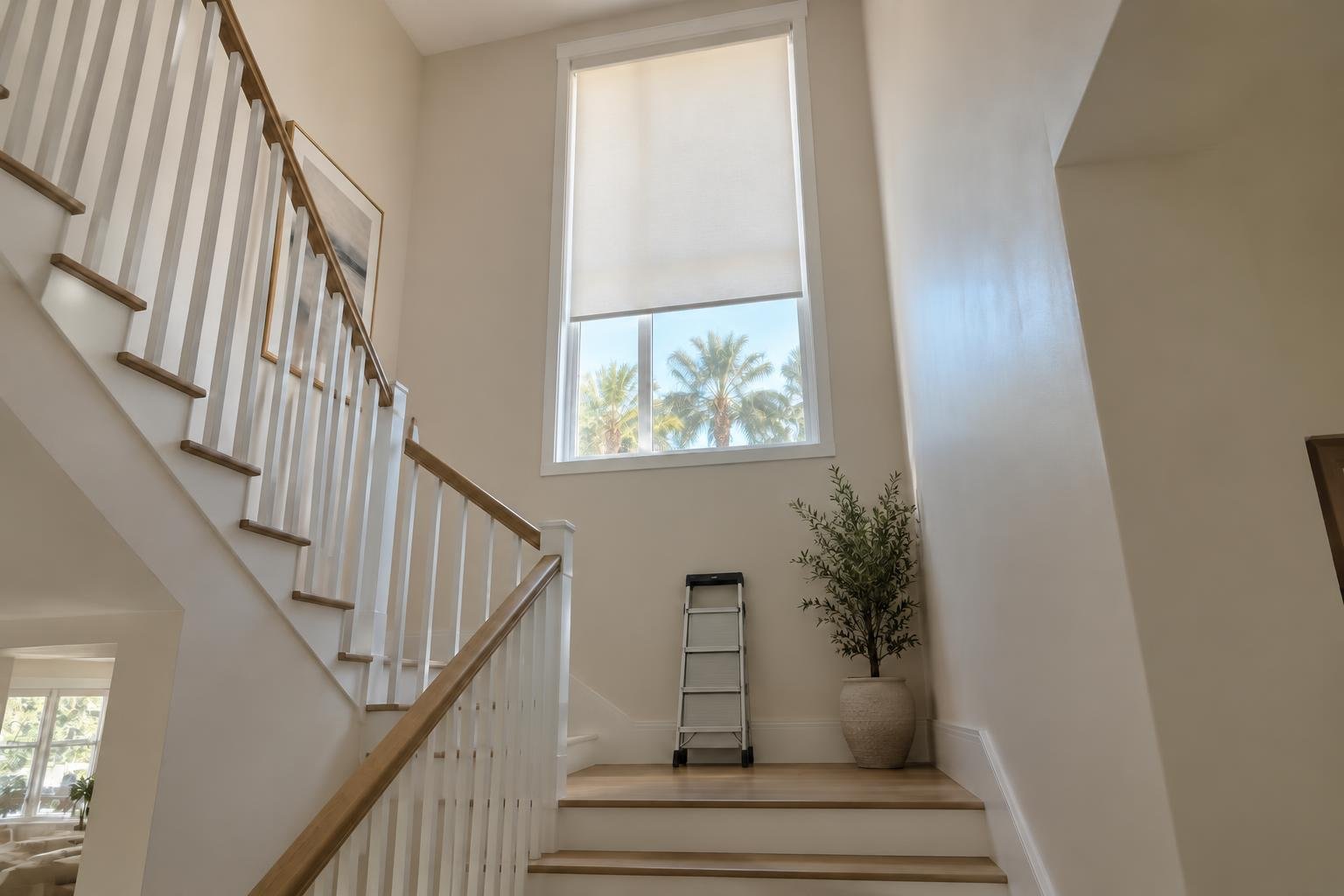
The shade over the front door worked beautifully for eleven months. Then one morning it stopped halfway, like a garage door with an opinion. The remote was fine. The battery was not. And the battery was 16 feet above a marble floor.
Nobody did anything wrong. The shade was good and the installation was clean. The one thing nobody talked about was the least glamorous part of the whole system: how the battery gets its power back.
How do battery-powered shades get recharged?
There are two families.
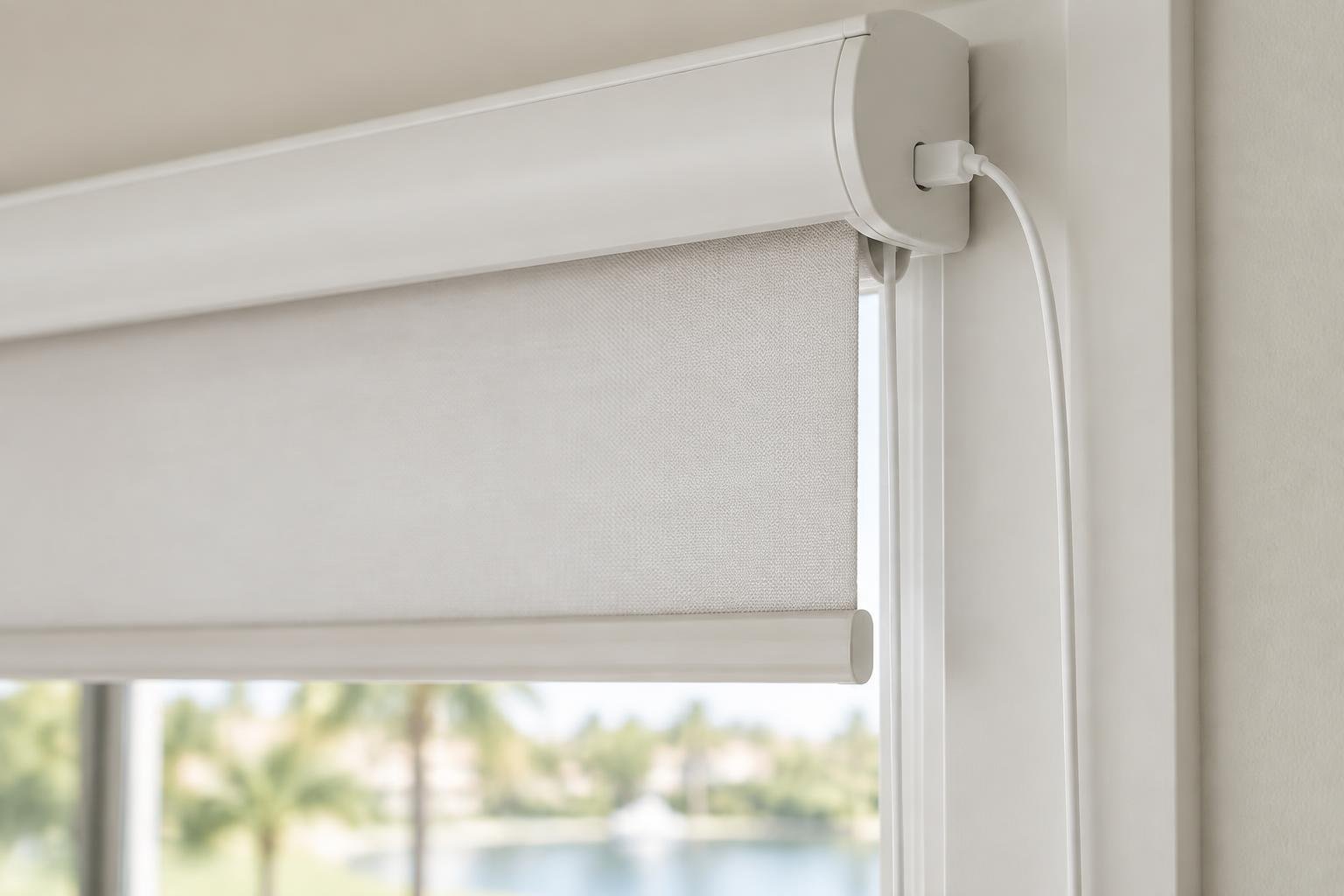
Rechargeable. The battery is built into the shade or sits just behind it. You plug in a cable for a few hours, the way you charge a phone.
Replaceable. Ordinary batteries sit in a slim tube tucked behind the shade. When they run down, you swap them.
Neither is the better one. For a high window the important part is the same in both cases: a human hand has to arrive at the shade. If you are still deciding between battery and wired power, start with battery-powered vs hardwired motorized shades.
How often do motorized shades need charging?
Less often than you fear, more often than never.
One large retailer says most rechargeable shades need charging every 6 to 9 months with regular use, and that a full charge takes about 4 to 6 hours. One major manufacturer puts the battery life of its motorized shades at about a year, depending on shade size, configuration and usage.
Those numbers describe their products, not every product. The real figure depends on the motor, on how big and heavy the shade is, and on how many times a day it moves. A wide shade that runs four times a day works harder than a small one that comes down at bedtime.
Ask for the stated battery life for your exact shade, in writing, and treat it as an estimate.
How do you know the battery is low?
The shade tells you, quietly. It starts moving slower than usual, or a small light on the shade changes. Some systems also show the battery level in an app.
It rarely dies without warning. The trouble is that a high shade is the one you look at least. Ask what the warning looks like on your model, so you recognize it when it comes.
What are your options for a window you cannot reach?
1. Bring the charging point down
Some systems keep the battery in a separate pack joined to the shade by a cable, and at least one manufacturer sells those cables in 48 and 96 inch lengths. That can put the pack where a hand can reach it.
Ask whether this exists for your exact model and where the cable would run. A white cable down a white window frame can disappear. A cable across a wall of glass cannot.
2. Add a solar charger
A slim panel sits on the glass behind the shade and feeds the battery a slow, steady trickle. In Florida this sounds like free money.
One caveat. According to one manufacturer, behind heavily tinted glass the panel may not fully charge the battery, though it still helps it last longer. Plenty of South Florida homes have tinted or coated impact glass. A retailer adds that solar panels are meant to supplement regular charging, not replace it. Ask before you count on the sun.
3. Plan the ladder
If the window is 12 feet up and you own a suitable ladder and a steady friend, a once-a-year charge is a small chore.
If the window sits over a staircase, it is not a ladder job for a homeowner. Be honest about which window you have.
4. Make it someone else's job
Ask your installer whether they offer a maintenance visit and what it involves. For a seasonal home this is often the simplest answer: the shades get attention once, on a schedule, instead of surprising you the week your guests arrive.
5. Or skip the battery on that one window
Sometimes the honest answer for one very high window is a wired shade planned with an electrician, or no motor on that window at all. A good installer will say so.
What should you ask before you say yes?
- Where is the battery, and where is the charging point?
- How do I reach it on this exact window?
- What does the low battery warning look like?
- What battery life does the manufacturer state for a shade this size?
- Is a solar charger available, and will it work behind my glass?
- If I cannot reach it, who does, and how is that arranged?
Ask to be shown, not told. Five minutes with a sample shade and its charger answers most of this. For the rest of the conversation, see 10 questions to ask a motorized shade installer.
The short version
Battery shades are a practical way to motorize a finished home. The battery is a small chore that arrives once in a long while.
On a low window you will barely notice it. On a high one, decide who meets it and how, before installation day. Then forget about it until the shade slows down.
The figures in this article are published by manufacturers and retailers about their own products. They show the range you can expect to hear, not a specification for any particular shade.
FAQ
- How do you charge motorized shades on high windows?
- It depends on the system. Options include a battery pack or charging point placed where you can reach it, a solar charger on the glass, a ladder for windows that are safely reachable, or a scheduled service visit. Decide which one applies before the shade is installed.
- How often do battery-powered shades need charging?
- It varies by product, shade size and how often the shade moves. One retailer says every 6 to 9 months for most rechargeable shades, and one manufacturer states about a year. Ask for the figure for your exact shade.
- How long does it take to charge a motorized shade?
- One retailer says a full charge usually takes about 4 to 6 hours. Check the instructions for your model.
- Do solar chargers for shades work in Florida?
- Often, but not always fully. One manufacturer notes that behind heavily tinted glass the panel may not fully charge the battery, and many South Florida homes have tinted or coated glass. Ask whether it suits your windows.
- What happens when a motorized shade battery dies?
- The shade stops where it is until it gets power again. Most systems warn you first with slower movement or an indicator light.
- Should very high windows have battery shades at all?
- They can, if there is a clear way to get power back to the battery. If there is not, a wired shade or a manual solution for that one window may be the more sensible choice.